

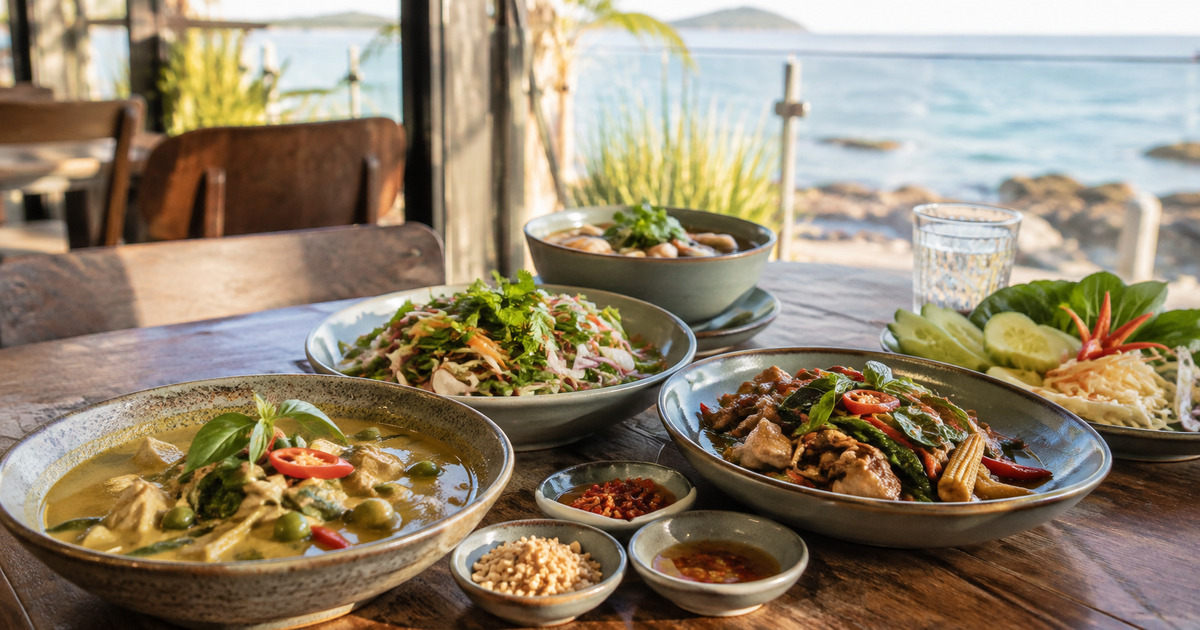
People often describe Thai food as spicy, yet chilli is only one part of the experience. The lasting appeal of Thai cuisine comes from the way cooks combine sweetness, acidity, salt, heat and gentle bitterness, then add aroma, texture and temperature. One spoonful can feel bright at first, savoury in the middle and warming at the finish. That movement is what makes a dish interesting enough to keep eating.
For diners in Albany, understanding this balance makes a Thai meal at Chanya Thai easier to explore. Instead of choosing dishes only by how hot they sound, you can build a table with contrast: a fragrant curry, a sharp salad, a savoury stir-fry and rice to connect everything. This guide explains the five core tastes, how they interact and how to recognise balance when reading a Thai food menu.
Thai food is built around balance, not a rigid formula
Balance does not mean every taste appears in equal strength. A Tom Yum soup can be led by sourness and heat, while a Massaman-style curry may feel sweeter, rounder and more aromatic. The cook adjusts the supporting flavours so the main character remains clear without becoming harsh. Salt can deepen sweetness, acidity can lift richness, and a small bitter note can make herbs and vegetables taste more vivid.
This is also why the same dish can taste slightly different from one kitchen to another without losing its identity. Skilled preparation involves tasting and adjusting rather than following a single fixed ratio. The result should feel intentional: no one element should drown out the ingredients, and the flavour should make sense from the first aroma to the final bite.
The five tastes that shape Thai cuisine
Sweet: softness, body and contrast
Sweetness may come from sugar, coconut milk, fruit, sweet vegetables or a sauce that has reduced in the wok. Its role is not simply to make food sugary. It rounds sharp acidity, softens chilli and gives sauces body. In Pad Thai, sweetness works with tamarind and savoury seasoning; in a coconut curry, it supports spice and aromatic herbs.
Sour: brightness and appetite
Lime, tamarind and other acidic ingredients create the lively edge associated with many Thai soups, salads and noodle dishes. Sourness cuts through coconut richness and fried textures, making the next bite feel fresh. A balanced sour note should wake up the palate without making the dish taste thin or aggressively acidic.
Salty: depth rather than obvious saltiness
Salty and savoury seasonings give Thai food structure. They connect herbs, protein, vegetables and rice, and they often make sweetness and acidity more distinct. The best result does not taste merely salty; it tastes fuller. When rice is part of the meal, seasoning is often judged with the rice in mind rather than by tasting the sauce alone.
Spicy: aroma, warmth and pace
Chilli can deliver fresh brightness, smoky depth or a slow-building warmth depending on the variety and preparation. Heat should have a purpose. It can energise a salad, sharpen a soup or balance coconut milk. Diners should distinguish chilli heat from flavour intensity: a mild dish can still be complex, while an extremely hot dish is not automatically more authentic.
Bitter: a small but useful counterpoint
Bitterness is usually more restrained than the other tastes. It may come from certain herbs, greens, charred edges or spices. Used carefully, it prevents rich or sweet flavours from feeling heavy and adds a grown-up finish. Too much bitterness is unpleasant, but a subtle amount can make a dish feel layered and clean.
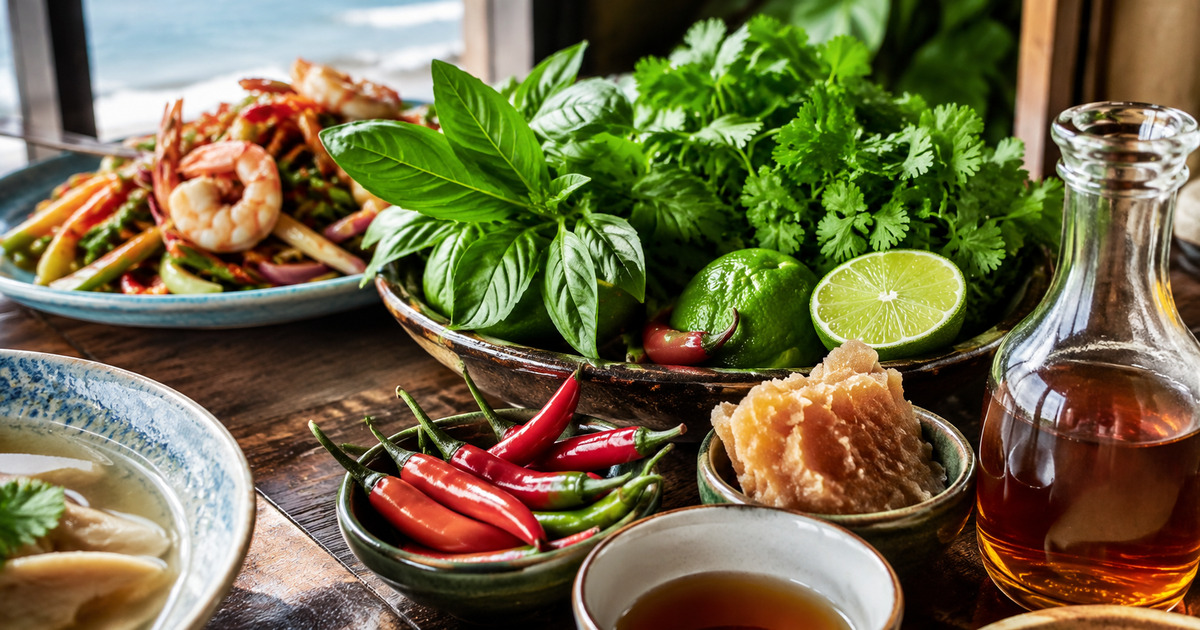
How the flavours correct and strengthen one another
Think of the five tastes as a conversation. If a sauce feels too rich, acidity can make it lighter. If sourness is sharp, sweetness may round the edge. If a curry tastes pleasant but vague, savoury seasoning can give it definition. Chilli is then adjusted so it supports the dish rather than masking the herbs. This process explains why Thai cooking often feels energetic without being chaotic.
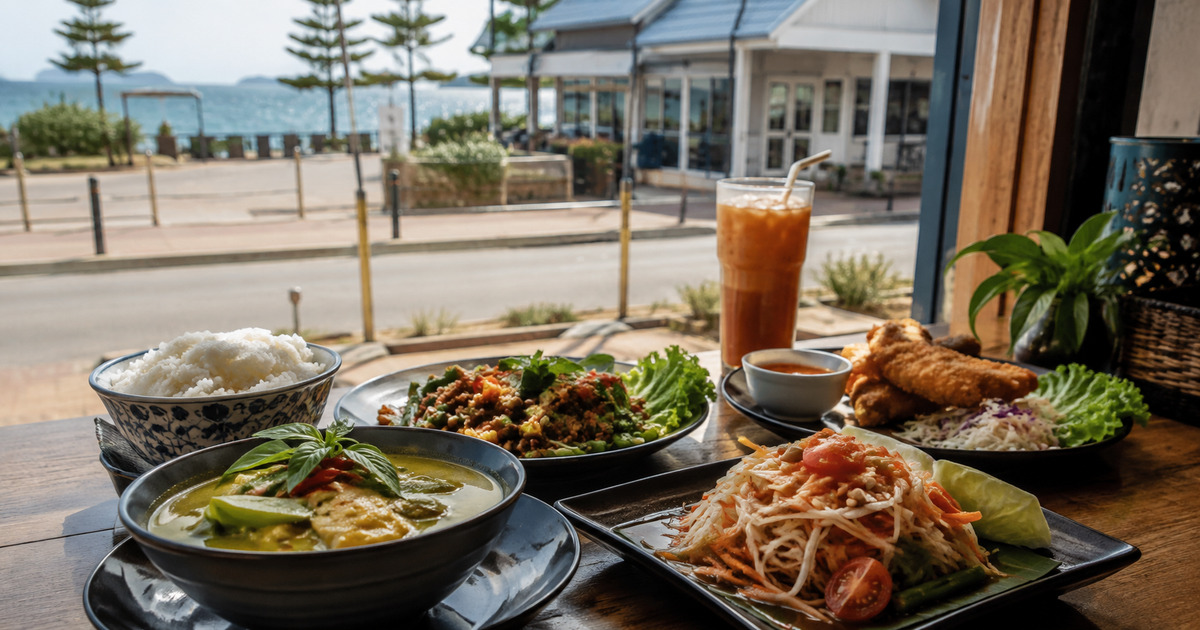
The balance also changes across a shared meal. One dish does not need to contain every sensation at the same volume because the table provides contrast. A creamy curry can sit beside a zesty salad; a savoury stir-fry can be followed by a spoonful of aromatic soup. Jasmine rice acts as a neutral centre, letting diners move between stronger flavours and set their own rhythm.
- Use rice to moderate salt, heat and richness rather than treating it as a separate side.
- Pair a rich coconut dish with something fresh, sour or herb-led.
- Add a milder dish when several people have different spice tolerances.
- Choose varied textures so the meal has crisp, soft, saucy and fresh elements.
How the balance appears across a Thai food menu
Tom Yum: sour and spicy with an aromatic backbone
Tom Yum usually leads with bright acidity and chilli, supported by savoury depth and the perfume of lemongrass, galangal and kaffir lime leaves. The soup should feel lively rather than one-dimensional. At Chanya Thai, the current menu describes Tom Yum as a spicy and sour soup with herbs, lemon juice, chilli and mushroom, making it a clear example of balance in liquid form.
Pad Thai: sweet, sour and savoury in one wok
Pad Thai demonstrates how contrasting tastes can be integrated rather than served separately. Tamarind provides tang, sweetness rounds it out, savoury seasoning creates depth, and peanuts and bean sprouts add texture. The noodles carry the sauce, but fresh garnishes and a squeeze of lime can change the final balance at the table.
Green curry: heat carried by coconut and herbs
Green curry combines chilli warmth with coconut richness, aromatic paste and basil. The sweetness of coconut does not remove the heat; it makes the spice feel rounder and helps the herbal notes linger. Served with rice, the sauce becomes part of a complete mouthful rather than something judged in isolation.
Thai salads: sharp, fresh and designed to cut through richness
A Thai salad often brings sourness, chilli, herbs and savoury dressing to the front. That makes it useful in a shared order containing curries or fried dishes. The salad refreshes the palate and changes the pace of the meal, which is one reason ordering only rich dishes can make a table feel unbalanced.

How to use flavour balance when ordering
Start by browsing the current options on the Chanya Thai website and identify one dish from different parts of the menu rather than ordering several variations of the same style. For two people, that may mean a curry, a stir-fry or salad, and rice. A larger group can add soup, noodles or an entrée so there is more contrast without turning the table into a random collection.
Tell the restaurant your preferred spice level and any dietary requirements clearly. Spice can often be discussed, but it is not the same as an allergen request. When ordering for a group, place very hot food alongside mild, aromatic or slightly sweet choices. This allows each person to build a plate that suits them while still sharing the same meal.
- Choose one rich or saucy centrepiece.
- Add one fresh, sour or herb-forward dish.
- Include rice or noodles to carry stronger flavours.
- Balance textures with an entrée, vegetables or a crisp element.
- Use the official online takeaway ordering page or reservation page and check current availability before finalising plans.
The Albany dining context
Albany’s coastal climate makes contrast especially appealing. On a cool, windy evening, a fragrant soup or curry can feel comforting; on a bright summer day, lighter stir-fries and salads may suit the mood. Local SEO should not force the word Albany into every sentence. The stronger connection comes from describing how people actually dine in the Great Southern: after work, after a day near the coast, as a family meal or as an easy takeaway for a quiet night.
Common misunderstandings to avoid
“Authentic” means extremely hot
Heat is only one tool. Authentic Thai food can be mild, medium or fiery depending on the dish and regional style. What matters more is whether sweetness, acidity, savoury depth, aroma and texture support one another.
Every dish should taste equally balanced on its own
Some dishes are intentionally sour, rich or spicy. Balance may happen across the meal, especially when dishes are shared with rice. Judge the whole table, not only one spoonful taken without its intended accompaniments.
Frequently asked questions
Is Thai food always spicy?
No. Many Thai dishes use chilli, but the amount and style of heat vary widely. Mild curries, savoury stir-fries, fried rice and coconut-based dishes can still show the balance and aroma that define Thai cuisine. Ask about spice level when ordering rather than assuming every dish will be hot.
What is the best way to introduce someone to Thai food?
Build a varied but approachable table. Include rice, a familiar noodle or stir-fry, one aromatic curry and a fresh dish. Avoid ordering only very hot items. Sharing lets a first-time diner taste small portions and discover which flavour profiles they enjoy.
Why is jasmine rice important in a Thai meal?
Rice is a foundation, not an afterthought. It absorbs sauces, moderates salt and chilli, and lets diners combine dishes in different proportions. A curry or stir-fry may taste stronger on its own because it is intended to be eaten with rice.
Where can I read more about Thai food in Albany?
Explore the Thai Food & Recipes section and the existing guide to authentic Thai cuisine at Chanya Thai. For current dishes, prices and ordering options, use the official website rather than relying on an old third-party listing.
A better way to experience Thai food
The five tastes are not a checklist that every dish must display equally. They are a flexible system for creating movement, contrast and harmony. Sweetness can soften heat, sourness can lift richness, savoury seasoning can give depth, chilli can energise, and bitterness can clean the finish.
The next time you plan Thai food in Albany, order with the whole table in mind. Explore the Chanya Thai menu and venue information, reserve a table for a relaxed dine-in meal or use the official takeaway page for an evening at home. A balanced order will usually be more memorable than simply choosing the hottest or most familiar dish.