

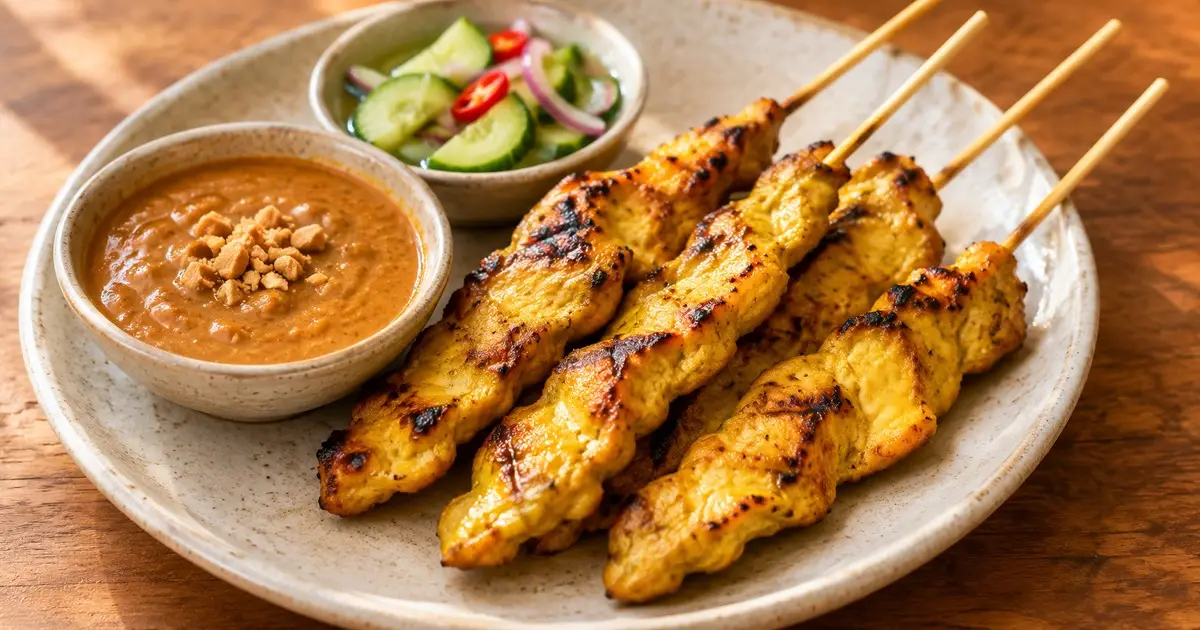
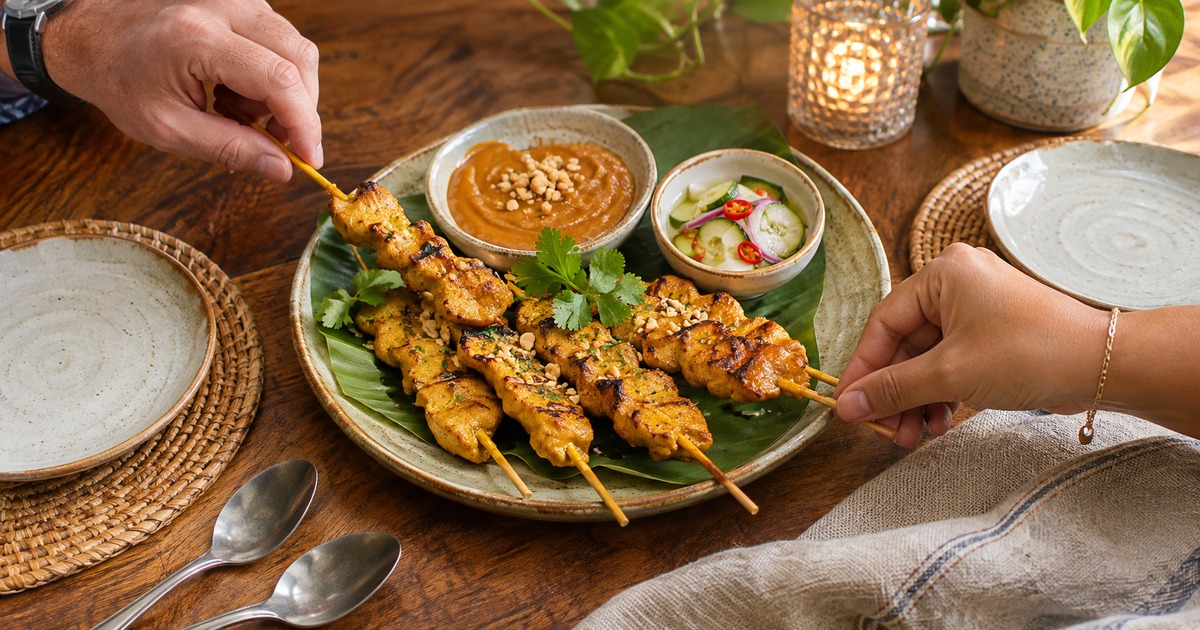
The grill marks catch your attention first, but a plate of satay offers more than a smoky surface. Chicken, sauce and a sharp accompaniment create different textures and flavours in each mouthful. When exploring Thai street food through an Albany restaurant menu, noticing those relationships can make a familiar starter more interesting.
This guide takes a simple route from reading the description to sharing the finished plate. Chanya Thai lists grilled chicken tenderloin served with peanut sauce and cucumber and onion pickles. That gives you a concrete starting point, without suggesting that every restaurant or street stall prepares satay identically. How can you enjoy the whole dish, rather than judging it by the grill alone?
Step one: read the chicken satay description
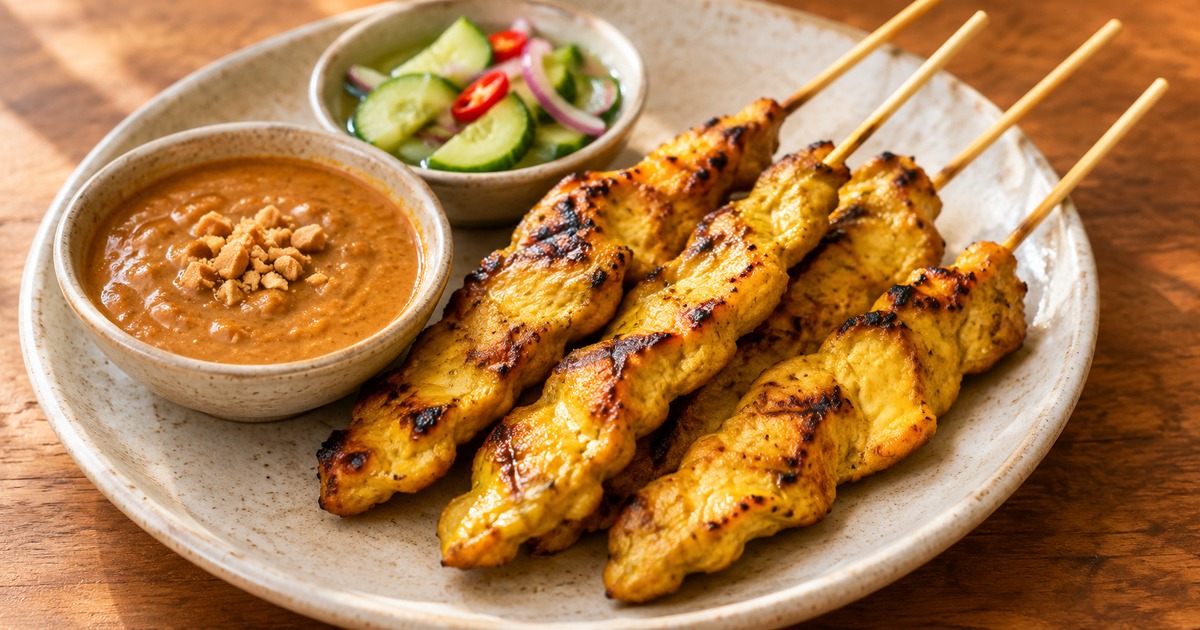
Start with what the restaurant actually says. The word satay is a useful dish name, but it does not replace information about the meat, accompanying sauce or serving arrangement. Look at the current description and ask about anything that affects your order. A photograph alone cannot tell you the complete preparation.
At Chanya Thai, the published description identifies chicken tenderloin, peanut sauce and cucumber and onion pickles. Those details suggest a plate built around several contrasts. The chicken provides the central bite, the sauce adds a different texture, and the pickles offer another way to change the mouthful.
Review the current Chanya Thai menu before deciding how the starter fits dinner. Confirm availability through the ordering channel you intend to use. When ingredients matter to a dietary requirement, discuss the particular dish and preparation directly rather than relying on a broad description.
Step two: give the chicken its own first taste
Try a manageable piece of chicken before covering it completely with sauce. This lets you notice its texture and seasoning, then decide how much accompaniment you prefer. There is no need to turn dinner into a formal tasting exercise; a small first bite is enough to establish your own starting point.
Look for the relationship between the surface and the centre. Grill marks can contribute to the appearance, but their darkness is not a complete quality test. Different pieces may have naturally uneven edges. Judge the experience of eating the chicken, rather than treating a perfectly repeated pattern as the goal.
If two diners describe the same plate differently, that need not mean either is wrong. One may enjoy a stronger grilled note while another notices the sauce first. Describe the qualities you prefer when discussing future orders. A specific observation is more useful than declaring that every other version must follow the same standard.
Handle the skewer comfortably
If eating directly from a skewer feels awkward, slide a portion onto your plate using suitable cutlery. Keep pointed ends away from other diners as plates move around. At a shared table, agree how to divide the pieces so the first person does not accidentally take more than the group expected.
Step three: add peanut sauce gradually
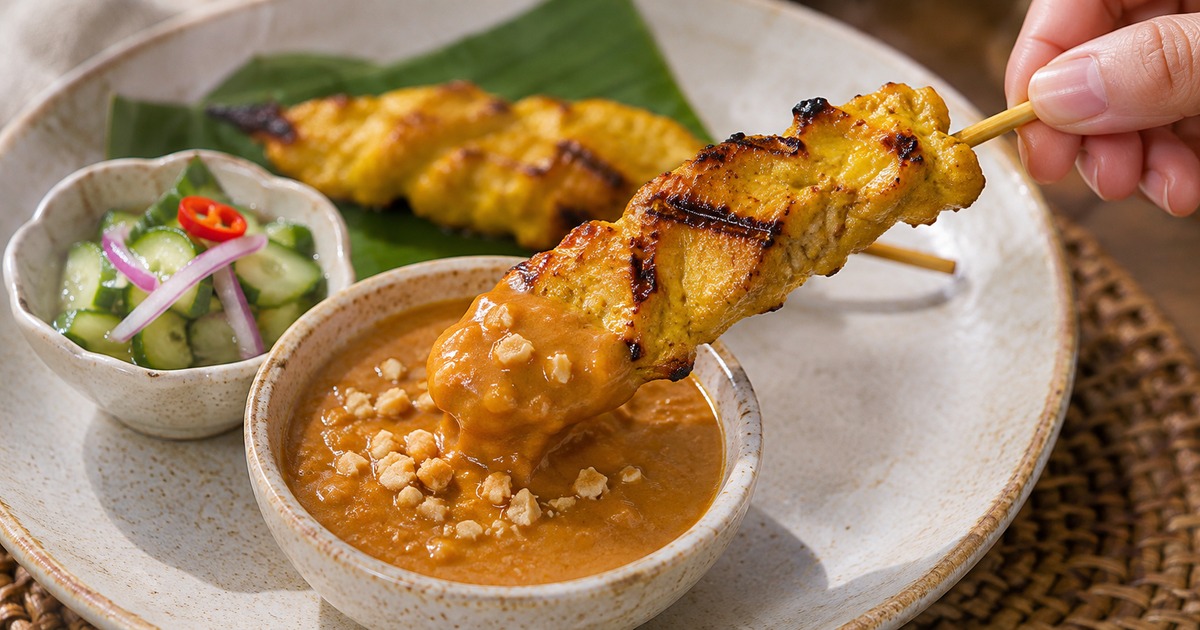
A small amount of peanut sauce changes the balance without hiding every detail of the chicken. Taste that combination, then add more if you enjoy it. Your preferred proportion may differ from the person beside you. Keeping sauce available separately makes those ordinary preferences easier to accommodate.
Notice texture as well as flavour. A sauce can feel smooth, textured, thick or more fluid, depending on the preparation and serving conditions. Avoid deciding that there is only one correct appearance for every version of the dish. What matters at dinner is whether the combination feels pleasing to you.
Do not assume another sauce is interchangeable simply because it appears beside a different starter. If the table orders several Thai starters, keep the intended accompaniments beside their dishes. Ask staff when the pairing is unclear. This preserves the chance to taste each plate as it was presented.
Step four: include the cucumber relish
The cucumber relish or pickle accompaniment deserves attention rather than becoming decoration left on the plate. Try a small amount between richer mouthfuls, or alongside the chicken. Notice the crisp cucumber and the change in flavour. You can alternate these elements without combining everything into one large bite.
Read the restaurant’s wording carefully. Chanya Thai describes cucumber and onion pickles; other menus may use different names or combinations. The useful habit is to check what accompanies your order, then taste it thoughtfully. A familiar English label does not guarantee the same ingredients at every restaurant.
When sharing, use the available serving utensils and give others access to the accompaniment. A small bowl can disappear quickly if the first diner treats it as an individual side. If you need clarification about a serving or an additional portion, ask rather than assuming it is included.
Try changing one element at a time. A bite of chicken with sauce, followed by a little pickle, makes the contrast easier to notice than mixing the whole plate immediately. If you prefer everything together, that is also a reasonable way to eat. The point is to recognise the available choices and enjoy your own balance.
Step five: decide what the satay adds to dinner
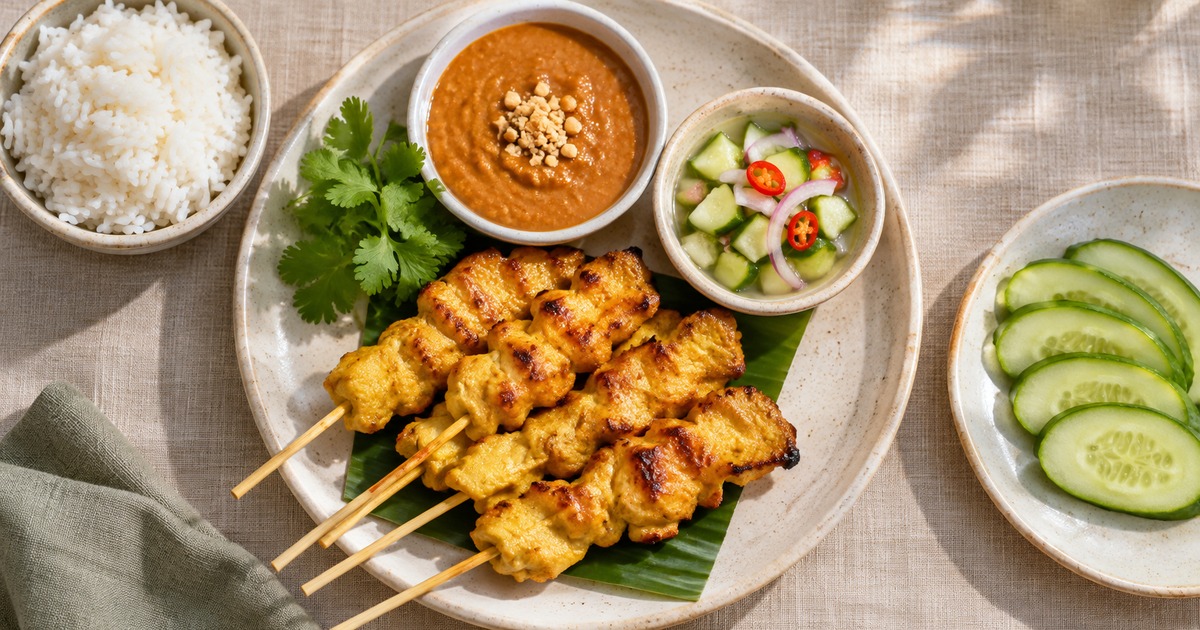
Satay skewers can provide a distinct texture alongside noodles, rice or curry, but more dishes do not automatically create a better meal. Think about appetite, diner numbers and the mains already planned. A modest starter may be enough when everyone has chosen a substantial individual dish.
For a shared dinner, choose contrasts that the group will enjoy. Chicken satay alongside another chicken main may still suit your table, while some diners might prefer a vegetable dish or different cooking style. Ask about the available choices and avoid ordering extra food solely to create an impressive-looking spread.
Timing also affects the experience. Make room for the starter when it arrives, rather than leaving it untouched while arranging every other dish. This guide to choosing which Thai dishes to eat first offers a flexible approach when several plates reach the table together.
For a first visit, an uncomplicated order can be particularly useful. Choose a few dishes the table understands, leave room to taste them properly and keep notes about what you enjoyed for another occasion. You can explore a wider selection later without making the first dinner depend on everybody liking an unfamiliar starter.
Step six: check the practical details before ordering
- Read the current satay description and confirm availability.
- Ask about ingredients and preparation when requirements affect the choice.
- Check the serving arrangement before dividing a shared plate.
- Plan enough space for sauce, pickles and individual plates.
- Choose mains around the group’s appetites and preferences.
- For collection, clarify the order and unpack it promptly at your meal location.
A restaurant that explains its dishes clearly helps you make a suitable choice. Chanya Thai provides dine-in and online takeaway options, so decide which fits your evening before ordering. For a booking, confirm the table arrangements directly; for collection, check the instructions rather than guessing where or when to collect.
Enjoy satay as a complete small plate
Exploring Thai street food through satay means looking beyond a charred surface. Taste the chicken, add sauce to your preference, include the pickles and choose the rest of dinner thoughtfully. These small steps make sharing easier and give every part of the plate a useful role.
For your next Albany meal, browse Chanya Thai’s menu and booking options. Call 08 9800 1901 if you would like to clarify the satay description, ingredients or arrangements for your table.
Frequently asked questions
Is chicken satay always served with the same sauce?
No single description covers every restaurant. Chanya Thai lists peanut sauce with its chicken satay. Check the current menu and ask about the particular preparation when necessary.
Should I cover every skewer with sauce immediately?
Try a small amount first, then adjust to your taste. Keeping some sauce separate also helps diners at a shared table choose their own proportions.
Can satay be part of a takeaway meal?
Check the live takeaway menu for current availability. Consider the rest of the order, serving plates and how the accompaniments will be shared once you reach your meal location.
Do grill marks tell me everything about the dish?
No. Consider the chicken’s texture, seasoning and accompaniments together. Appearance is one observation, rather than a complete description of the eating experience.