

Your Thai food arrives in a colourful rush: spring rolls, noodles, curry and rice all need space on the table. Everyone reaches for something different, while one person waits for a formal starter course. The overlooked issue is usually texture and timing, rather than a rule about which dish deserves first place.
A little planning helps you enjoy the most delicate elements while the table settles into a comfortable rhythm. You can taste crisp food promptly, share noodles without tangles and leave room for saucy dishes. So, when everything arrives together, what should you actually eat first?
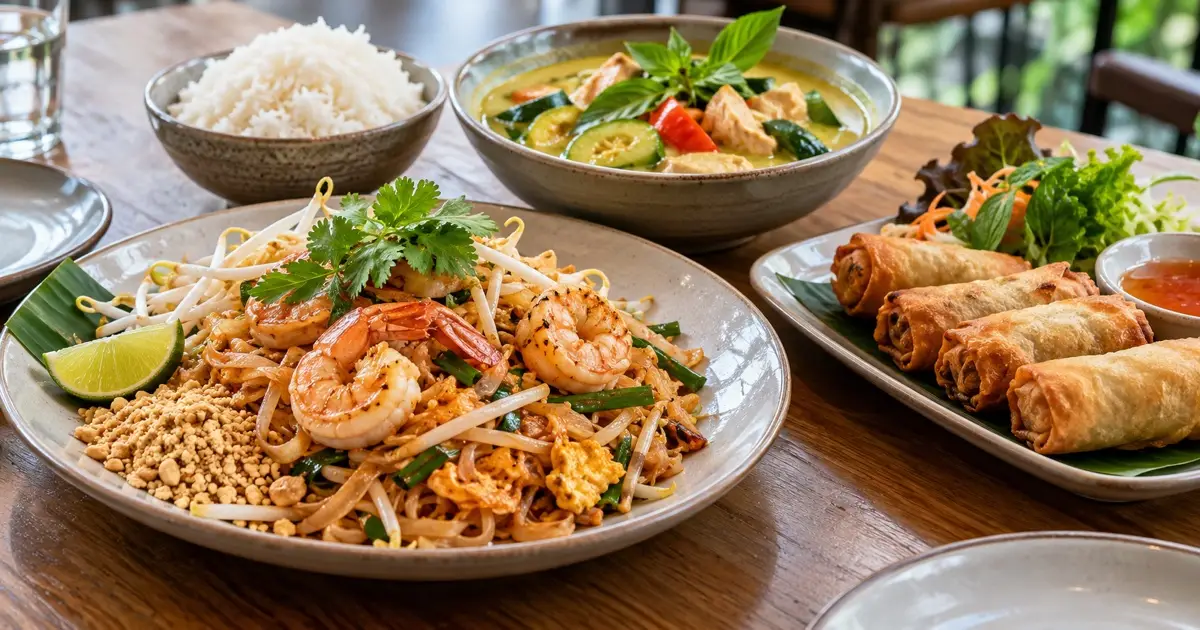
When Thai food arrives, start with the table you have
Begin by checking that everyone has a plate, cutlery and access to the dishes they can eat. Put communal serving utensils within reach and make room for rice before passing large bowls around. These small movements prevent a busy table becoming a balancing exercise.
There is no need to finish one dish before touching another. A shared meal can move between flavours, with each person taking modest portions. The useful question is which food changes most while waiting. A crisp shell softens differently from a curry sitting in its sauce.
If diners have different dietary requirements, establish the separate dishes first. Do not assume that a vegetable option is suitable for every preference or allergy. Ask about ingredients before ordering and keep dedicated utensils where a confirmed arrangement requires them.
A quick conversation also helps with ordinary preferences. Someone may want their own noodle plate while others share curry, or prefer to keep sauce away from a crisp entrée. Agree on this before the first serving so nobody has to rescue a dish after it has been mixed. There is no single arrangement that every table must follow; a clear, comfortable plan is more useful than copying an unfamiliar dining ritual.
If something is crisp, give it an early turn
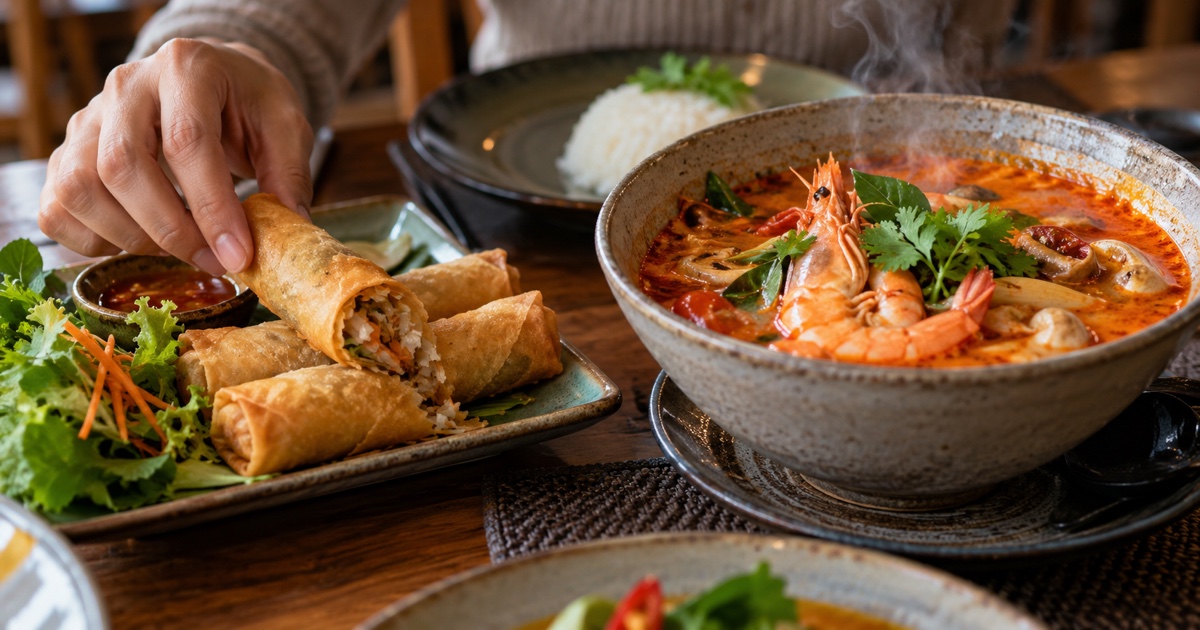
Freshly served spring rolls and pastry entrées are sensible early tastes because moisture gradually changes their exterior. Take a manageable portion and leave the rest accessible, rather than covering the platter with another bowl. A dipping sauce can stay alongside until each bite is ready.
This is a priority, not a race. Give a hot filling time to become comfortable to eat. Cutting or opening a piece also reveals its texture and makes sharing easier. Trying to preserve crunch should never make the meal hurried or awkward.
When planning a mixed order, think about how many crisp dishes your group can enjoy promptly. Several similar entrées may compete for attention. One crisp element beside noodles or curry can offer more contrast than an entire first round of fried food.
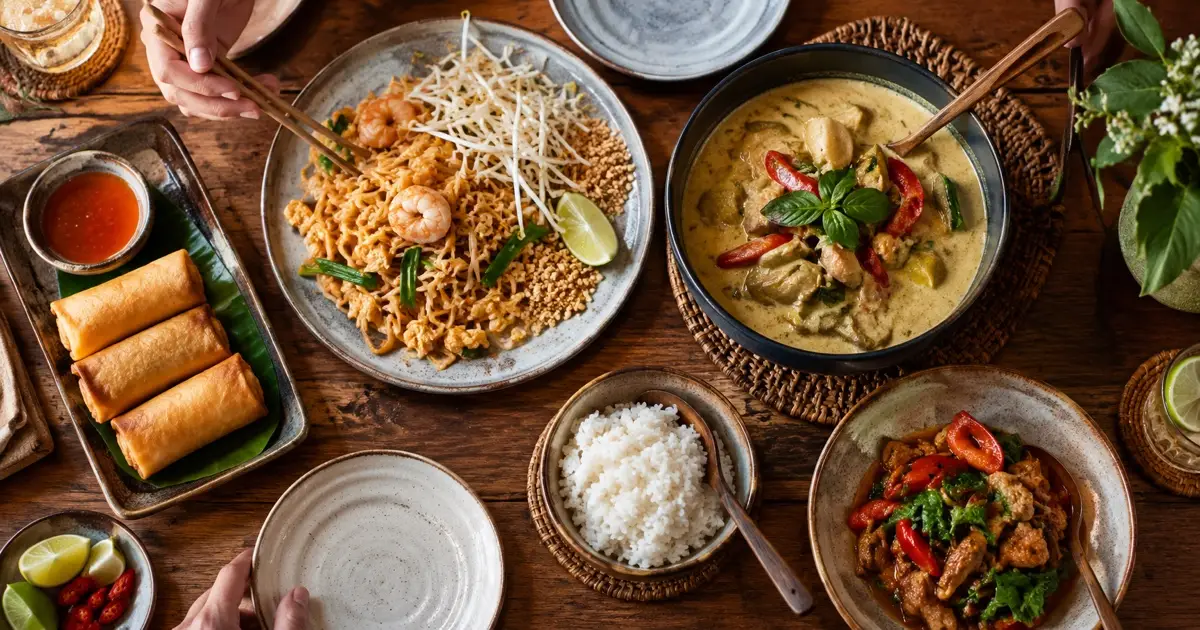
If noodles are ready, loosen the serving routine
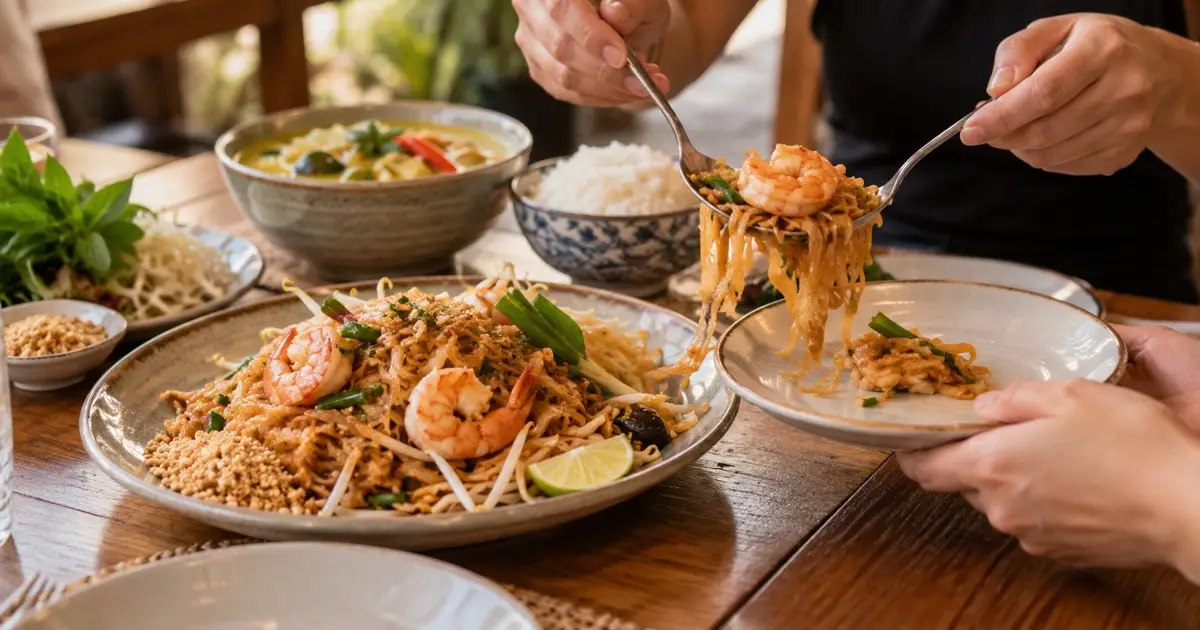
Noodles deserve an early place too, particularly when the serving is compact. Lift a small portion with suitable utensils and place it on your plate, keeping the communal platter available. This is generally easier than trying to pull away a large mound while someone holds a bowl underneath.
At Chanya Thai, Pad Thai includes rice sticks, egg, tofu, peanut and tamarind sauce. That combination provides a different eating experience from a spoonful of curry with rice. You can enjoy both without turning either into a compulsory course.
Check the current Chanya Thai menu when deciding how noodles fit your meal. Ingredients and available variations matter more than assumptions based on a familiar dish name. Consider the whole table before ordering another noodle dish simply because the first sounds popular.
Use rice and curry to build the middle of the meal
Once everyone has a first taste, rice creates an easy base for saucy dishes. Put some on your own plate, then add a little curry alongside it. Keeping portions modest lets you return to another flavour without mixing every sauce into one large serving.
A bowl of curry need not be left untouched until the crisp food has disappeared. Serve it whenever someone wants it, while recognising that its sauce makes it less dependent on a crunchy exterior. Personal preference and comfort should guide the pace.
If the table feels repetitive, alternate textures rather than adding condiments automatically. A bite of noodles, a spoonful of rice and a vegetable piece can change the experience. Our guide to building variety into a Thai food menu helps with the ordering stage.
Three common table situations and a useful response
Two diners with several favourites
Share an early taste of the crisp dish, then divide some noodles before moving between the mains. Avoid giving each person an enormous first plate: it makes the second half of the meal feel like an obligation.
A group with different spice preferences
Keep the milder and hotter dishes clearly identified. Tell everyone which serving spoon belongs where, and let people choose independently. Passing a spicy dish around the entire table is unnecessary if only two diners want it.
Takeaway arriving at home
Have plates ready before unpacking. Identify the crisp items, confirm the containers and set sauces beside their dishes. The same texture-led thinking works at home, without a restaurant table or a formal order of service.
Mistakes that make sharing harder than it needs to be
The first mistake is waiting for a universal signal while everything sits untouched. Once the table is ready and practical questions are answered, people can begin comfortably. An early taste does not prevent a leisurely dinner.
The second is mixing all dishes together immediately. A crowded plate can obscure the difference between a sauce-led curry and a tamarind noodle dish. Take smaller portions so you can notice each one.
The third is using personal cutlery in shared bowls when serving utensils are available. Place the serving spoon back with its dish and avoid transferring sauces between platters. If someone needs food kept separate, agree on that arrangement before the shared meal starts.
A practical checklist before the first bite
- Clear enough table space for every shared plate and bowl.
- Confirm which dishes suit each diner before serving.
- Set out communal utensils and keep them with their dishes.
- Give crisp entrées and freshly served noodles early attention.
- Serve rice in modest amounts, then add sauce to preference.
- Keep dips beside food rather than pouring them over everything.
- Return for another taste instead of overloading the first plate.
Use this as a flexible starting point. A diner who prefers curry first can do so; another may begin with rice while a hot entrée cools. Shared dining works best when the table accommodates both.
Choose a restaurant that suits your way of sharing
Before choosing an Albany restaurant, look for a menu with distinct cooking styles and ask how the group can be accommodated. Confirm seating, dietary questions and timing directly. A small dining room may need a little advance coordination when several people want to sit together.
Match the order to your priorities. If texture is central to the evening, dine-in may suit your plan. If you are collecting food, consider the journey and have the home table prepared. Browse Thai food and recipe guides for more ideas about contrasting flavours and textures.
Enjoy the textures, then follow your appetite
When Thai food arrives together, start by making sharing easy. Give crisp dishes an early taste, portion noodles sensibly and use rice to enjoy sauces at your own pace. The goal is a connected meal with room for individual preferences.
For your next shared dinner, review Chanya Thai’s menu, choose contrasting dishes and call 08 9800 1901 to discuss your table or any ingredient questions before booking.
Frequently asked questions
Do I have to eat Thai entrées before the mains?
No. At a shared table you can move between dishes. Give texture-sensitive food early attention, then follow your appetite rather than treating every dish as a separate course.
Should curry be poured over the whole plate of rice?
Start with a small amount alongside some rice. You can add more later, while keeping space to taste another dish without combining every sauce.
What if one diner does not want to share?
An individual meal is a reasonable option. Agree on it when ordering so portions, dietary requirements and serving utensils can be arranged clearly.