

A wok full of colourful ingredients can look generous, yet filling the pan is not automatically the best route to a lively stir-fry. In Thai cuisine, the amount cooked at once affects how ingredients meet the hot surface and how moisture behaves around them.
The overlooked distinction is between food that cooks with room to move and food that sits in its own released liquid. Understanding that difference helps explain texture without treating every stir-fry as a technical test. Why might a cook choose several smaller batches instead of one large panful?
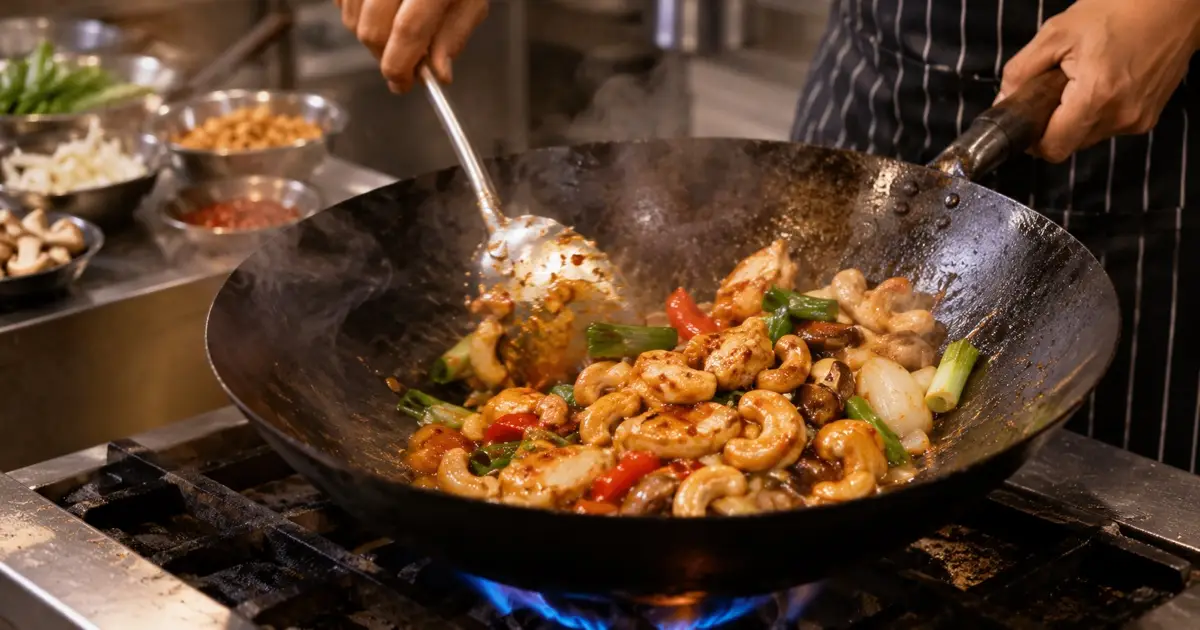
Thai cuisine in the wok: heat must reach the food
The wok supplies heat through its surface. Ingredients need contact with that surface, while tossing and stirring move different pieces through the hotter areas. The cook is managing that contact, rather than relying on a dramatic flame alone.
When more cool ingredients enter a pan, they absorb heat. A crowded batch also gives each piece less room against the surface. The result depends on the burner, pan, ingredient quantity and starting temperature, so there is no single portion size suitable for every kitchen.
Small batches give the cook another way to manage those conditions. A portion can be spread, moved and combined with sauce without burying everything under another layer of ingredients. The aim is controlled cooking, not simply cooking as fast as possible.
Compare evaporation with a crowded, wet pan
Vegetables and other ingredients release moisture as they heat. Sauce adds more liquid. In a suitable batch, some of that moisture can evaporate while the food continues to cook. In an overloaded pan, liquid can collect faster than the cooking setup removes it.
That does not make liquid undesirable. Many Thai stir-fries intentionally carry sauce, and rice is often chosen to accompany it. The question is whether the liquid supports the dish or makes ingredients feel as though they have been simmered together without the intended contrast.
A useful comparison is a few vegetable pieces moving around the pan versus a deep pile that is difficult to turn. The second arrangement changes access to the surface. Adding more heat is only one possible adjustment; reducing the batch changes the problem itself.
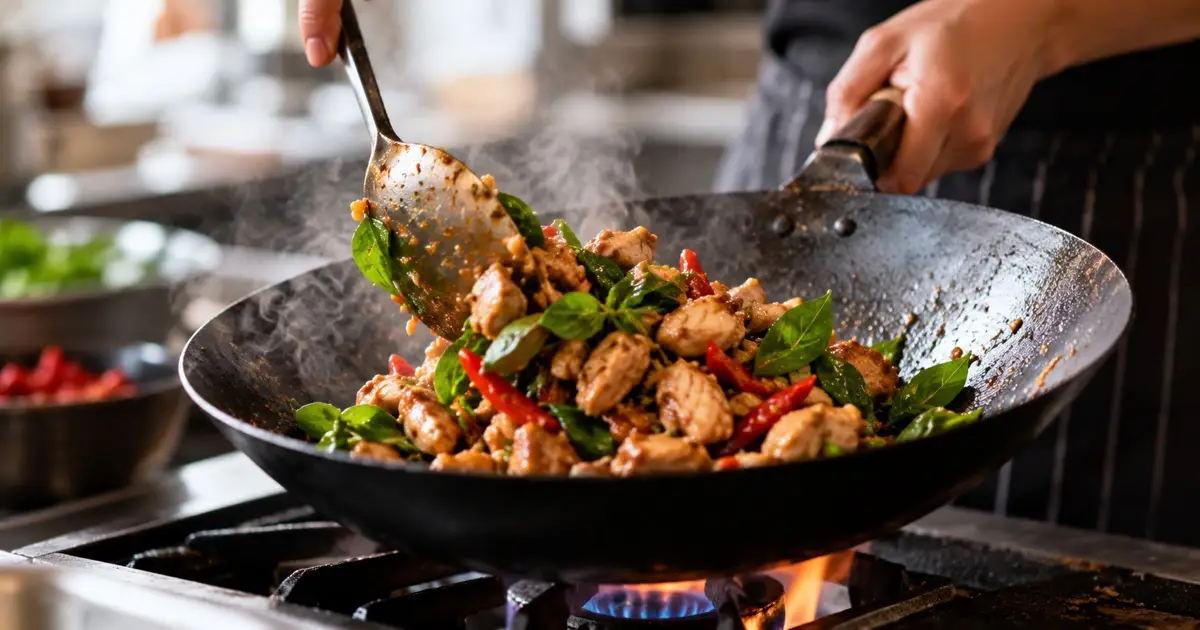
Ingredient order matters alongside batch size
Different ingredients need different treatment. A dense vegetable piece does not behave like a delicate leaf, and an aromatic added early may have a different role from one folded through near the finish. Preparation and sequence help the cook coordinate these differences.
Small batches make those decisions easier to observe and adjust. The cook can see how much liquid has gathered, whether the vegetables remain distinct and when the sauce has reached the desired consistency. A crowded pan can make those signals harder to read.
This is why “stir-fry everything together” is an incomplete description. Cutting, portioning, order of addition and final mixing all matter. The visible tossing is only one part of a process that begins before the food enters the wok.
Compare a sauce-coated stir-fry with a curry
A stir-fry and a curry can contain some similar ingredients yet offer different eating experiences. A sauce-coated wok dish may emphasise distinct pieces, a particular aromatic combination and the relationship between the ingredients and the pan.
A curry builds its character through its sauce and the way its ingredients sit within it. Neither approach is inherently more authentic, more skilful or better for every diner. Their difference gives a shared meal useful variety.
On the Chanya Thai menu, stir-fried choices sit alongside curries, noodles and rice. Read those categories as options for contrast. This article explains general cooking principles; it does not describe or certify the restaurant’s specific kitchen equipment or batch procedure.
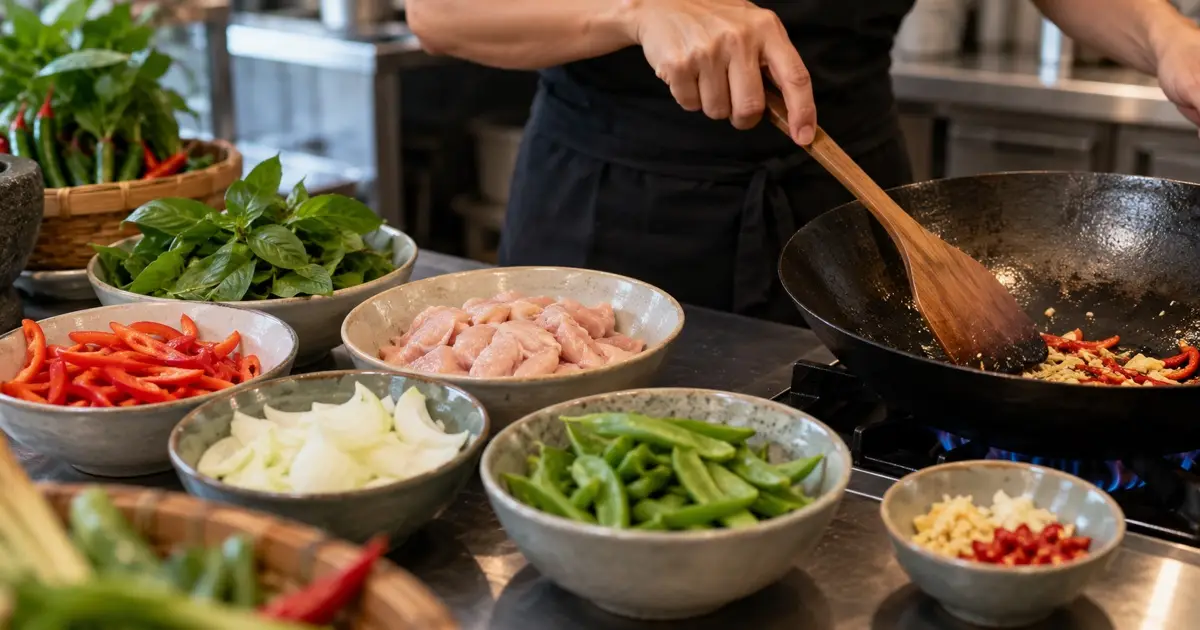
What a diner can notice without inspecting the kitchen
Begin with texture. Are the ingredients recognisable and pleasant to eat? Does each mouthful offer the contrast you expected from the description? A softer vegetable is not automatically a fault, because the intended dish and ingredient both matter.
Next consider the sauce. Does it belong with the ingredients, and is the overall balance enjoyable? Avoid judging a stir-fry solely by whether there is liquid at the bottom of the plate. Some dishes are deliberately more saucy than others.
Finally, taste the aromatic elements together. Garlic, chilli, herbs or pepper can lead in different directions. Use the menu description as your starting point, rather than assuming every wok dish should have the same smoky flavour or chilli intensity.
Why a home pan and restaurant wok need different expectations
A home cook may be working with a smaller burner, a different pan and less preparation space. Copying a large restaurant quantity into that setup can change the outcome, even when the ingredient list is similar. Batch size should respond to the equipment available.
For a home comparison, think about reducing the quantity so the pan is easier to stir and observe. Prepare ingredients first and follow a suitable recipe, rather than trying to fix crowding by turning the heat up indefinitely. The useful lesson is control.
For diners, this also explains why several dishes may be cooked and finished separately. A coordinated meal does not require every ingredient to occupy one pan. Ask about serving timing if it matters to your group, while allowing room for individual preparation.
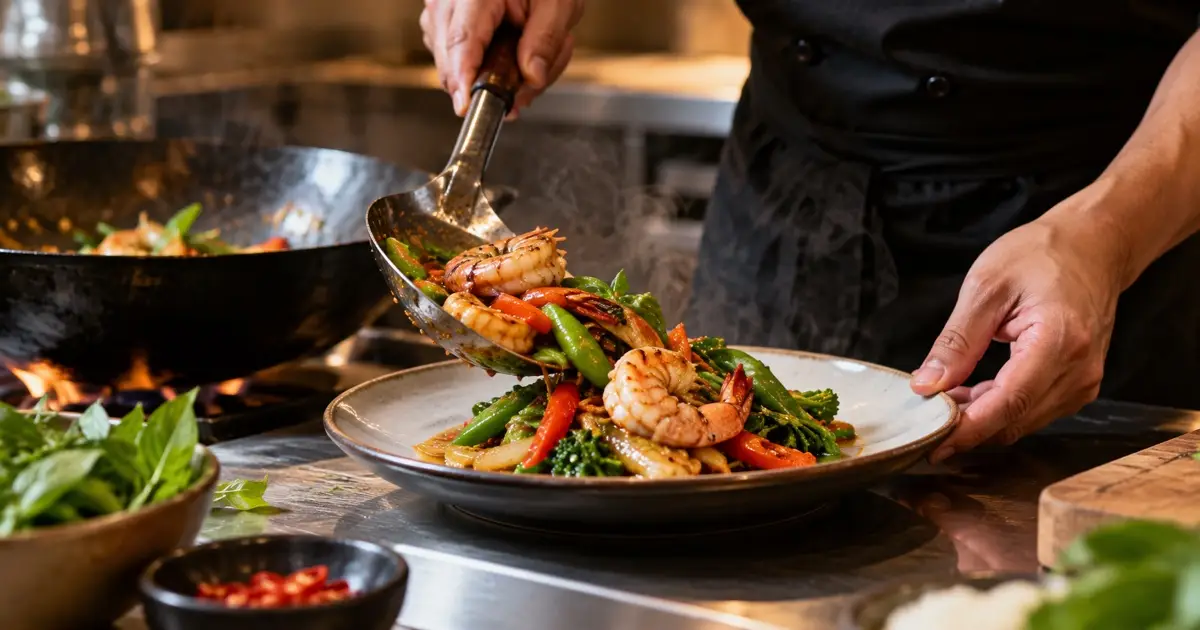
Three misconceptions about wok cooking
A high flame proves the dish will be good
Flame is visually striking, but it does not tell you how the ingredients were prepared, portioned or seasoned. Assess the food you eat rather than the spectacle alone.
Every proper stir-fry must be dry
Sauce can be an intentional part of the dish. Compare the result with the menu description and the intended eating experience, rather than applying one texture rule to all stir-fries.
A larger batch is always more efficient
Putting everything into one pan can make stirring, moisture control and even cooking harder. Several manageable portions may offer better control for the equipment and recipe.
A practical checklist for ordering a stir-fry
- Read which ingredients and sauce define the dish.
- Ask about chilli or ingredient changes before ordering.
- Choose rice when it suits the amount of sauce.
- Include another cooking style if sharing several mains.
- Judge texture against the dish rather than a universal rule.
- Enjoy the food promptly once the table is ready.
Our shared meal planning guide offers a useful way to combine wok dishes with other menu categories.
Choose a restaurant through menu clarity and meal fit
Look for descriptions that help you understand the leading ingredients and cooking style. Ask a question when the description leaves a detail important to you unresolved. A useful answer helps you order a dish you will enjoy, rather than chasing an abstract claim about wok technique.
Consider the whole meal: variety, dietary suitability, table arrangements and collection plans all influence the experience. Explore Thai food and recipe articles for more background, then use the live menu for current choices.
Small batches support control, not a single texture rule
Wok cooking in Thai cuisine brings heat, moisture, preparation and timing together. Smaller batches can make those elements easier to manage, but the finished dish still needs to be understood on its own terms.
Ready to try a contrasting shared meal? Review Chanya Thai’s current stir-fried options beside its curries and noodles, then contact the restaurant about any ingredient questions before booking or ordering.
Frequently asked questions
Why can too much food change a stir-fry?
A larger quantity absorbs more heat and gives ingredients less room against the pan. It can also hold released moisture, changing how the food cooks.
Does sauce mean a stir-fry was overcrowded?
No. Many stir-fries intentionally include sauce. The menu description, ingredient texture and overall balance are more useful guides than the presence of liquid alone.
Does Chanya Thai cook every dish in small batches?
This article explains general wok principles and does not claim a particular kitchen procedure. Ask the restaurant directly if you have a question about how a specific dish is prepared.