

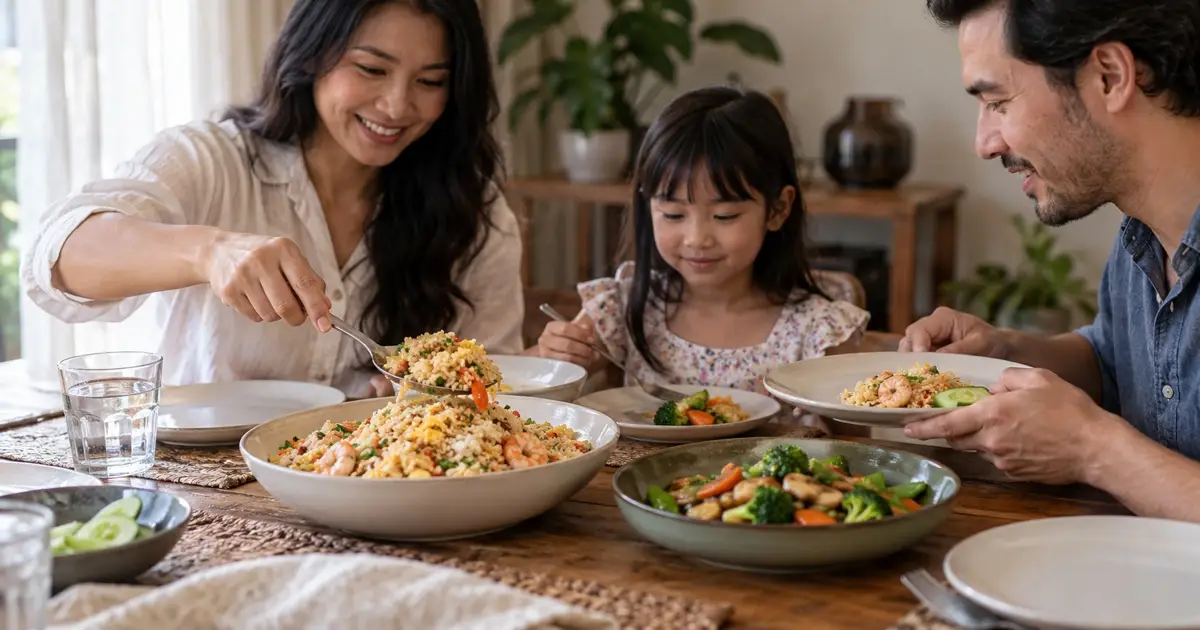
A shared Thai takeaway can become awkward when everyone wants a different plate: one child likes plain-looking rice, another dislikes sauce touching vegetables, and the adults want a broader mix. The detail often missed is that sharing an order does not require everyone to eat an identical combination. Separate plates let each person build a meal from the dishes selected together.
The useful question is how to organise that flexibility before hunger takes over. This step-by-step guide covers choosing, collecting and serving a family takeaway in Albany, with attention to preferences and clear restaurant communication. It is about practical meal organisation. Allergies and other dietary needs require their own direct discussion with the restaurant; dividing food at home does not resolve them.
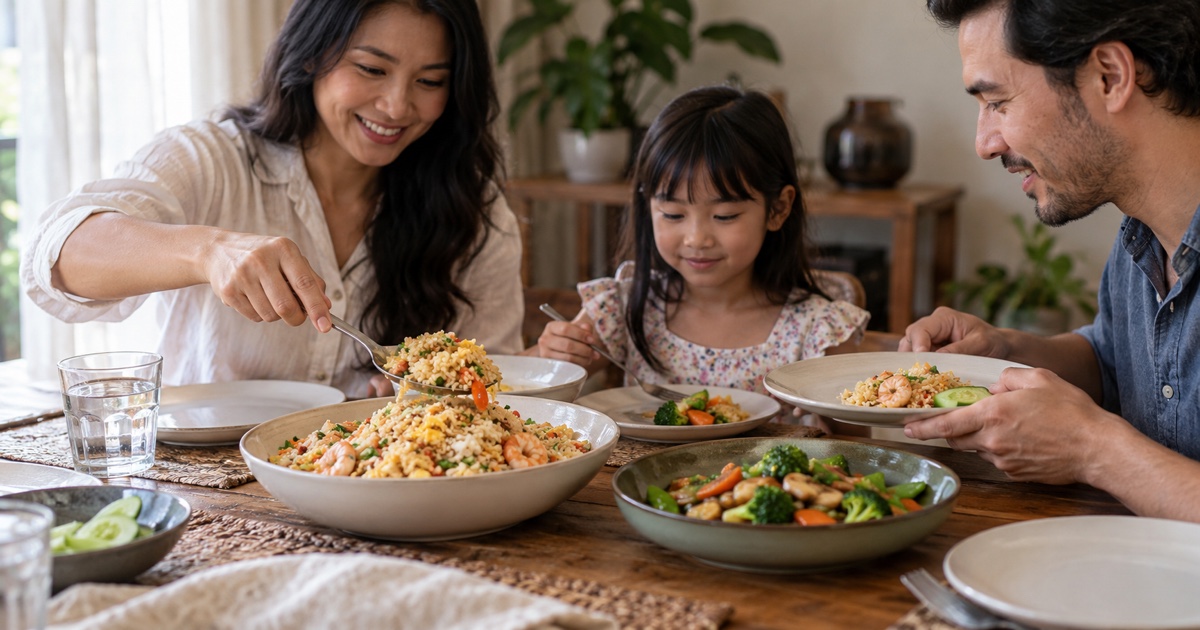
Step one: describe what each person actually prefers
Replace a broad label such as “fussy eater” with something actionable. Does the child prefer a familiar texture, dislike visible onion, or want sauce in a separate space on the plate? Adults have preferences too. Knowing the specific issue helps you select shared Thai dishes without expecting the kitchen to interpret a vague request.
Keep the conversation short and neutral. Offer a choice between dishes you would be happy to order rather than inviting an unlimited menu negotiation. A child might choose whether to start with rice or noodles, while the adults choose another main for the centre of the table. The purpose is a workable family meal, not an obligation to sample everything.
Separate preferences from dietary requirements
Write dietary requirements in a different part of your notes. A preference for less chilli is not the same as a peanut allergy, and a vegetarian preference is not automatically answered by removing a visible piece of meat. Ask the restaurant about ingredients and preparation before ordering. If it cannot meet a requirement, choose another confirmed option rather than relying on a serving trick.
Step two: choose Thai takeaway with a role for each dish
Begin with a familiar centrepiece, then add a dish for the rest of the family. For example, Thai fried rice and another shared main may provide a simple starting point. Check the current Chanya Thai menu for ingredients and available choices. The menu description is a starting point for questions, not a promise that a dish can be altered.
Think about how you will divide the food. Rice is easy to serve in separate spoonfuls; noodles may need their own serving utensil; a saucy dish benefits from a spoon that transfers both solids and sauce. Choose the mix that fits your household instead of ordering a large collection of unfamiliar dishes simply because sharing sounds economical.
Ask about requested changes clearly and accept that some components may already be combined. “Could you confirm whether this can be prepared with less chilli?” is more useful than “make it child-friendly”. Do not assume a mild dish is allergen-free, suitable for every child, or available without every ingredient mentioned in its description.
Step three: organise collection and the table together
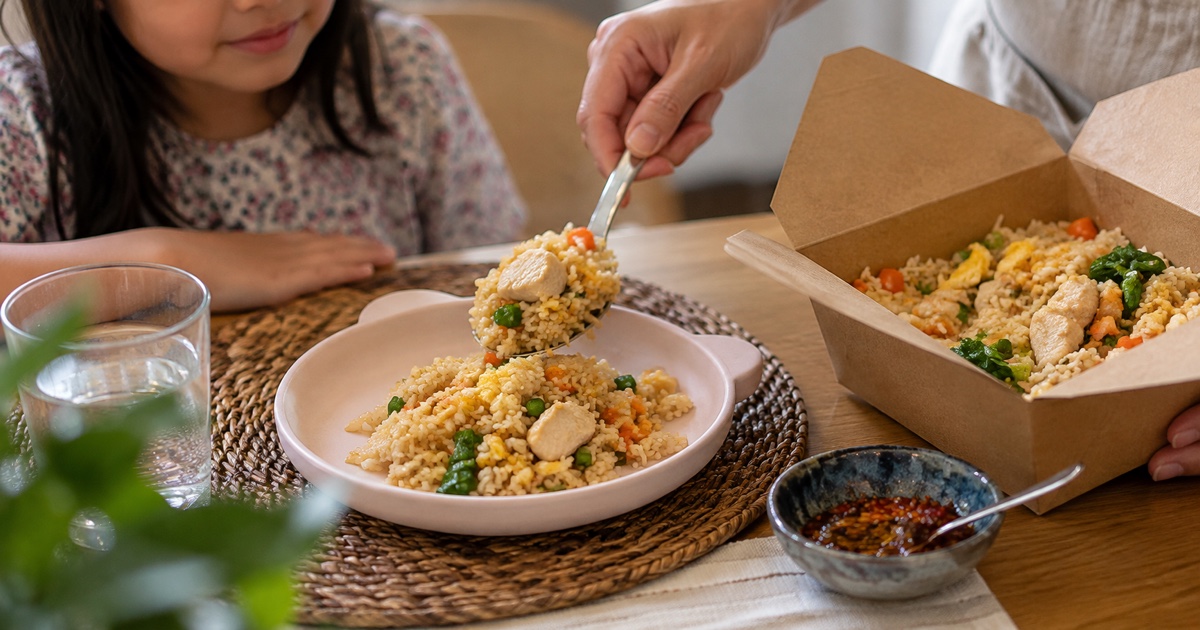
Before placing the order, check who is collecting and when the family intends to eat. Use the available collection arrangements shown during ordering and keep the confirmation. If plans change, contact the restaurant rather than assuming the requested time can move automatically. A clear collection plan prevents one adult preparing the table while another is still guessing whether the food is ready.
At home, put out plates of suitable sizes, cutlery and clean serving utensils. Make space for containers without crowding the children’s places. Keep the order details nearby until you know which container holds which dish, especially when several look similar. An uncluttered table makes it easier to serve intentionally and notice a missing item before everyone starts eating.
Choose individual mains when sharing creates extra work
Shared ordering is an option, not a rule. If two people want completely different dishes or a dietary requirement needs a separately confirmed meal, individual orders may be simpler. You can still sit together and enjoy the same occasion. Select the arrangement that reduces confusion rather than treating sharing as a test of family cooperation.
Step four: serve small, separate starting portions
Ask each person what they would like first and place that portion on their own plate. For someone who dislikes foods touching, leave clear spaces between rice and other components. Put sauce only where requested when the dish allows it. Start modestly so the diner can ask for more, rather than building a full plate around an adult’s estimate of their appetite.
Keep shared dishes accessible to the adult serving and use a suitable utensil for each. Do not move a spoon through several containers if separate serving matters to your plan. Where allergies are involved, follow the restaurant’s confirmed guidance and the diner’s existing arrangements; changing spoons does not make a shared meal free from cross-contact.
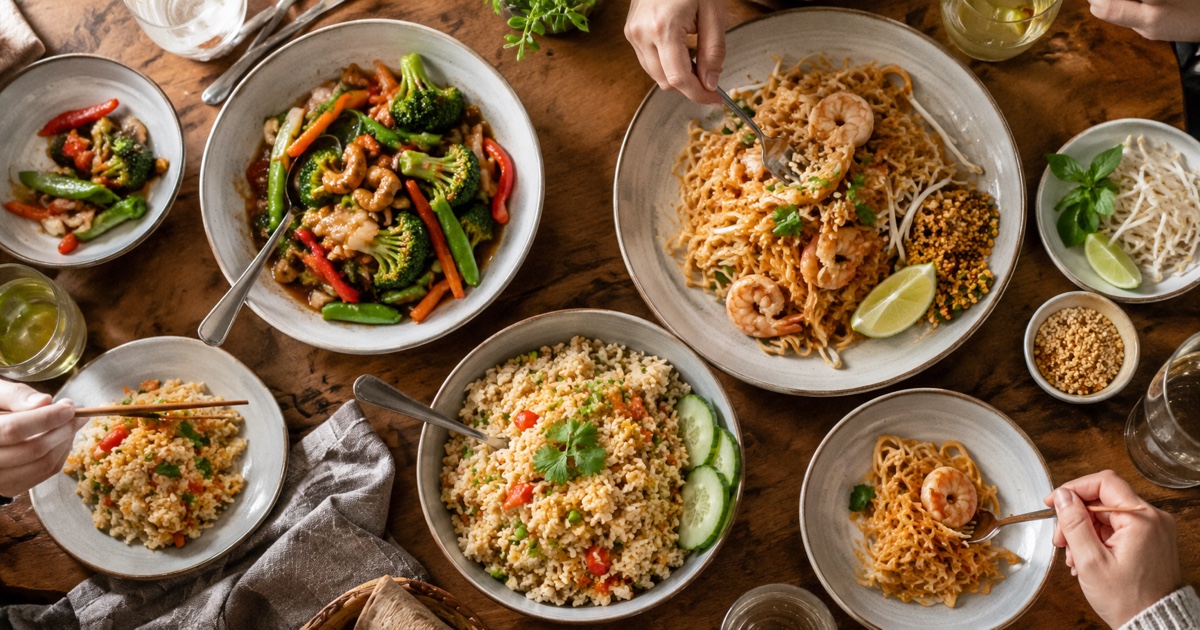
Let adults add dishes to their own plates without making children follow the same sequence. Someone may eat rice first and another person may combine several items immediately. A calm explanation such as “you can ask for another spoonful” is often more practical than repeated encouragement to finish an oversized serving. Leave room for individual appetite and enjoyment.
Step five: adjust the serving, not every person’s expectations
Three avoidable mistakes create most serving confusion: mixing the whole order before checking preferences, pouring sauce across every plate, and describing an unfamiliar dish inaccurately. Be honest about what is on the table. If you do not know an ingredient, check the menu or ask the restaurant rather than guessing that it is something familiar.
Keep the rest of the meal flexible. A child who declines a second dish does not need a replacement order to make the original plan successful. Adults can enjoy the broader selection while the child eats their chosen components. For ideas on choosing dishes that complement one another, see our guide to a varied Thai meal.
Afterwards, make one brief note about what worked: the dish name, preferred serving arrangement and any request the restaurant confirmed it could accommodate. Record preferences without turning one evening into a permanent label. A future meal may call for a different mix as appetite, company or tastes change.
Step six: choose a restaurant and check the plan
For a family takeaway, useful restaurant criteria include clear dish descriptions, accessible contact details, a practical collection arrangement and a willingness to explain what can be accommodated. A long menu alone does not answer those questions. Check current information and discuss dietary needs before paying.
- Each diner has at least one chosen dish or component.
- Dietary requirements have been discussed directly and distinguished from preferences.
- Requested changes have been confirmed rather than assumed.
- Collection details and the order confirmation are clear.
- Separate plates and serving utensils are ready at home.
- The first serving leaves space for more food if wanted.
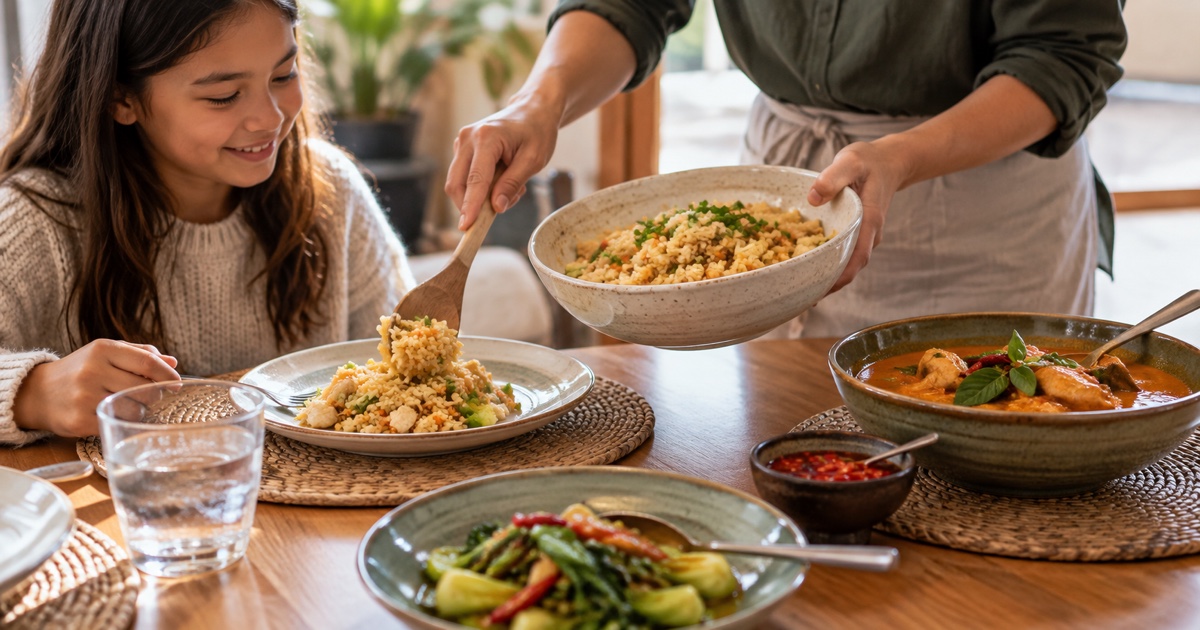
A shared order can still create individual meals
Successful Thai takeaway for children and adults begins with a modest plan: choose suitable dishes, clarify important requests, and serve each person on their own plate. Separate portions give preferences somewhere practical to go, while shared dishes allow the adults and children to enjoy a meal together without identical plates.
Plan your next family dinner with the Chanya Thai online takeaway options. For ingredient questions or requests that need discussion, call 08 9800 1901 before completing the order.
Frequently asked questions
What is a useful first dish for a shared family order?
Start with a dish the diners already recognise and check its actual ingredients. Thai fried rice or noodles may suit some families, but preferences and dietary requirements vary.
Does less chilli make a dish suitable for allergies?
No. Chilli preference and allergen requirements are separate issues. Ask the restaurant directly about ingredients, preparation and whether it can accommodate the specific requirement.
Must every diner try every shared dish?
No. Separate plates allow different combinations. A small first portion and the option to request more can make the meal easier to manage without pressuring everyone to eat the same selection.