

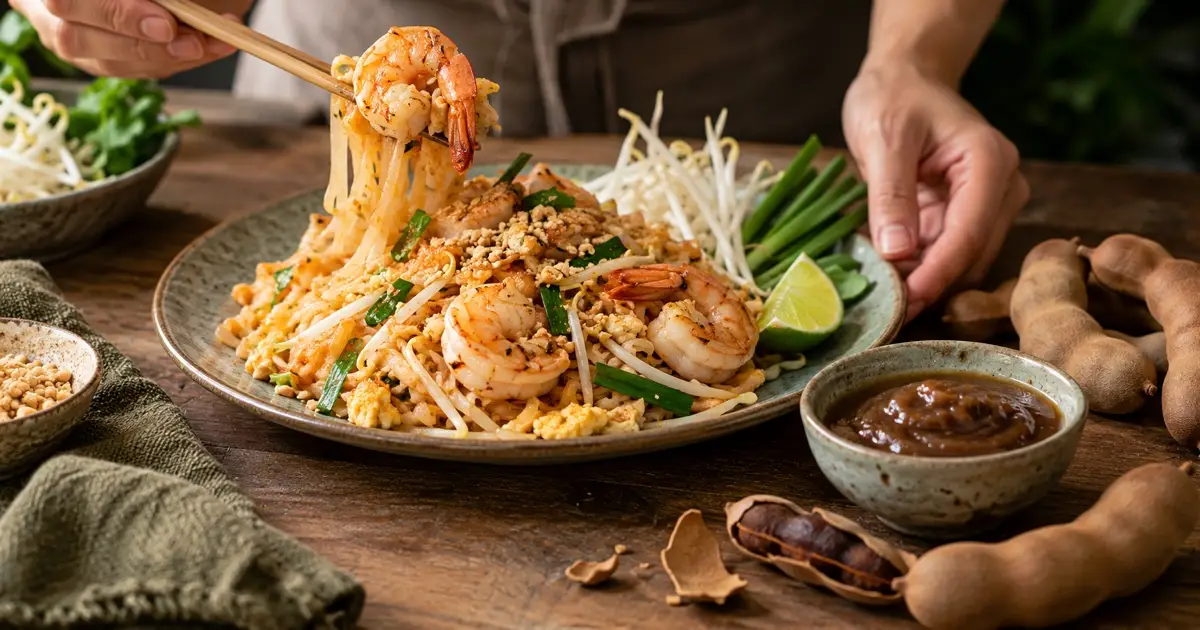
A plate of noodles can look familiar while its flavour is difficult to describe. Diners searching for authentic Thai food sometimes focus on chilli, colour or the protein, overlooking the sauce that connects the dish. In Pad Thai, tamarind offers a useful starting point for understanding the sweet and sour balance without reducing the meal to a single ingredient.
How can you recognise tamarind’s role without expecting every kitchen to produce an identical plate? This guide follows the ingredient through the sauce, noodles and accompaniments, then addresses common misunderstandings. The outcome is a more informed way to read a menu and explain your preferences, whether you already enjoy Pad Thai or are considering it for your first Thai meal in Albany.
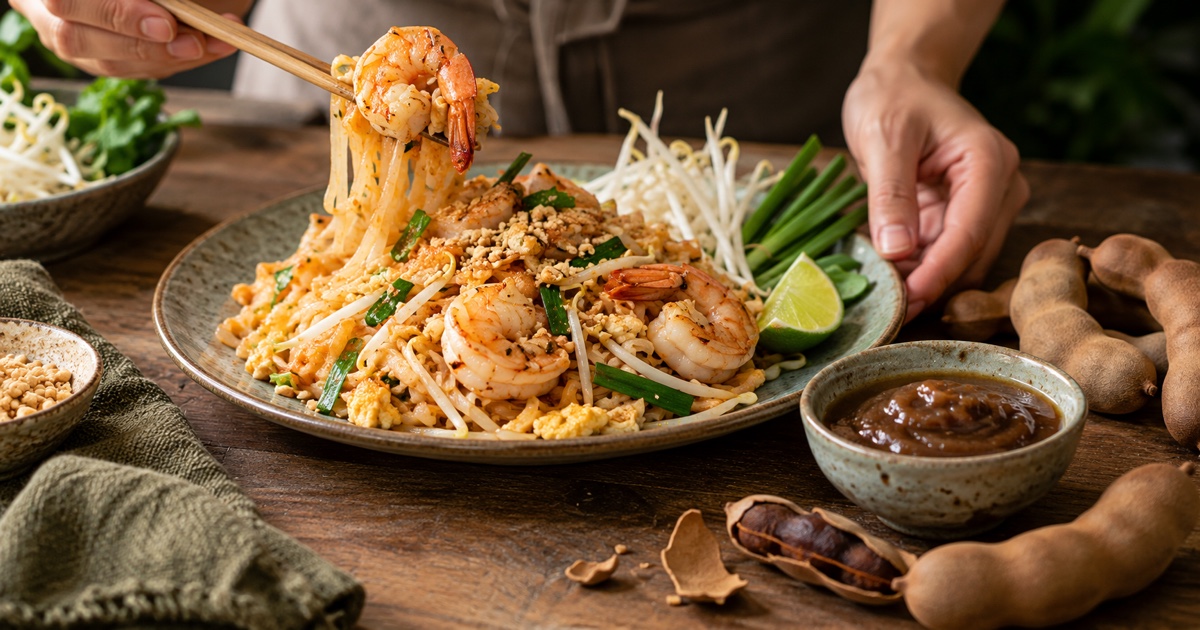
Authentic Thai food: what can tamarind in Pad Thai teach us about authentic Thai food?
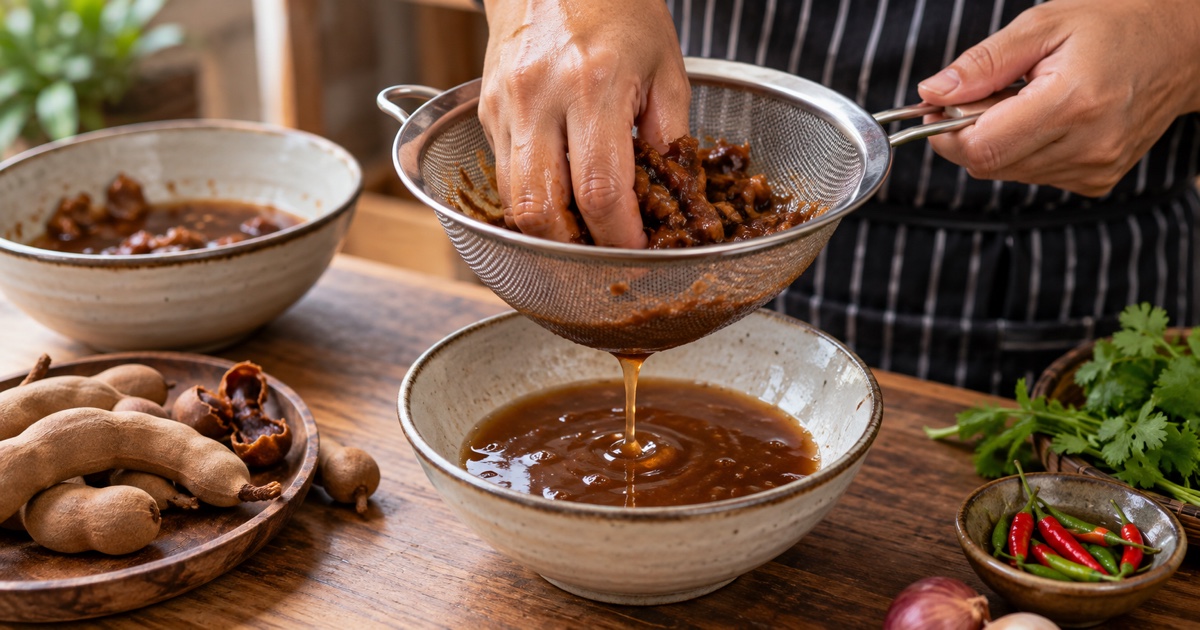
Tamarind contributes a tangy, fruity sourness. In a prepared Pad Thai sauce, that sour character sits alongside sweetness and savoury seasoning rather than operating on its own. Thinking in terms of relationships is more helpful than looking for a loud, separate tamarind taste in every mouthful. Sauce is meant to connect the components, not make the noodles feel like a tasting exercise.
Tamarind appears in the Pad Thai ingredient list published by Thailand’s Department of Agricultural Extension. That provides a clear example of its place in the dish. It does not establish a single required recipe for every restaurant, nor does the presence of tamarind by itself settle whether a complete meal expresses Thai cooking well.
Start with the actual menu description
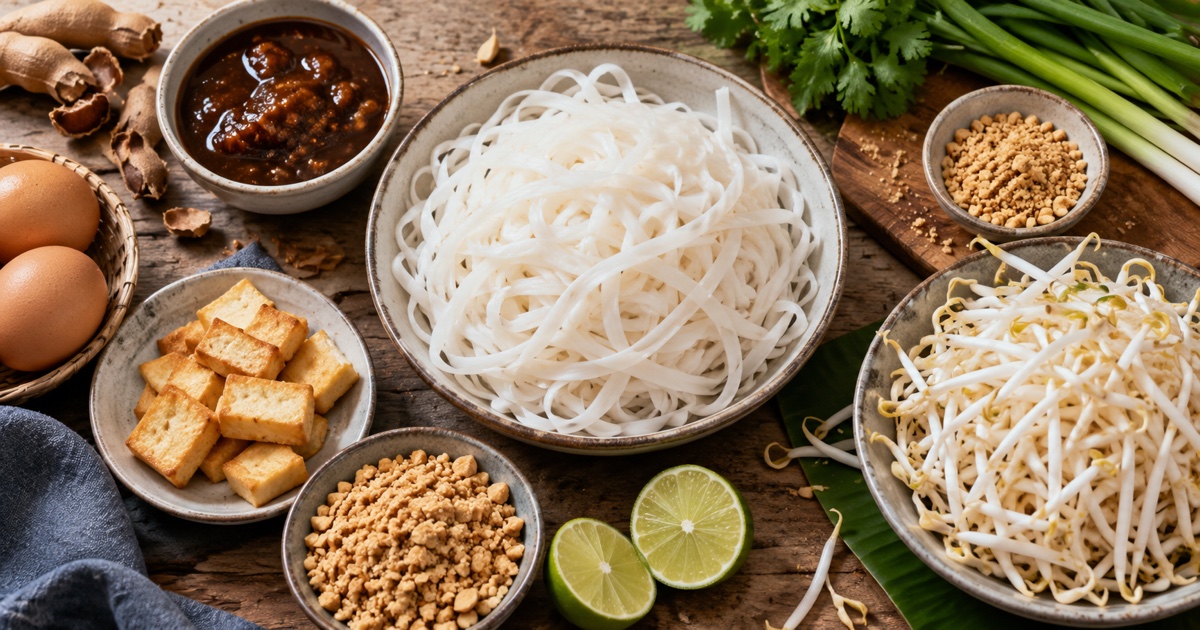
Chanya Thai describes its Pad Thai with rice sticks, egg, red onion, sweet radish, tofu, ground peanuts, beansprouts and sweet tamarind sauce. Read the current menu on the Chanya Thai website when choosing your order. This is more useful than assuming a photograph reveals every ingredient or that a remembered version from another restaurant will match exactly.
The wording “sweet tamarind sauce” also helps set expectations. It signals that the sauce is a prepared combination, not simply sour pulp poured over noodles. Ask about a relevant ingredient if you need clarification. The menu cannot tell you every preparation detail, and a server’s explanation is more reliable than trying to reconstruct the recipe from appearance.
Problem: the dish tastes sweet, so the sour element seems absent
Sweetness is often the easiest flavour to name first. Pause before deciding that a sweet initial impression means there is no sourness. Taste a small mouthful containing noodles and sauce, then notice how the flavour changes as you chew. Is there a tang that keeps the sweetness from becoming the only impression? Your own preference may favour more or less of that contrast.
The practical solution is descriptive language. “I enjoy a tangier Pad Thai” communicates more than “I want the authentic one”. If you are choosing between dishes, ask how the restaurant describes its sauce. Avoid assuming that staff can change a sauce already prepared as a mixture. A request should allow the kitchen to explain what is possible.
Problem: a sharper bite is mistaken for the whole sauce
A mouthful with an added accompaniment can differ from a mouthful of noodles alone. Taste the dish as served before adding anything offered alongside it. Then adjust gradually if you wish. This helps you understand the original balance and avoids judging the entire plate by one unusually sharp or heavily seasoned bite.
You do not need to identify exact proportions to enjoy the dish. Restaurant dining is not a recipe examination, and individual palates differ. A useful observation describes your experience without turning it into a universal rule. You may prefer the sweetness of one version and the tang of another while recognising that both involve choices about balance.
For example, two friends sharing the same plate may describe it differently because one notices sweetness first and the other focuses on tang. That disagreement does not require a winner. Ask each person what they would prefer next time and use that information when choosing. The aim is to connect language with an enjoyable order, rather than use a single tasting impression to reconstruct the kitchen’s exact ingredients or rank an entire cuisine.
Problem: colour becomes a shortcut for authenticity
Food photographs encourage quick comparisons. A diner may expect every Pad Thai to match the shade of a memorable plate, then interpret a different colour as proof that something is wrong. Appearance cannot provide that certainty. Lighting, camera settings and the visible mix of ingredients influence what a photograph shows, and a photograph cannot tell you the complete sauce composition.
Move the question back to what can be checked: the dish description, the ingredients the restaurant confirms, and the eating experience. Searching for authentic Thai food is more useful when it creates curiosity about cooking than when it creates a colour test. Ask a precise question instead of treating one visual cue as a verdict.
Problem: sauce is discussed without considering the noodles
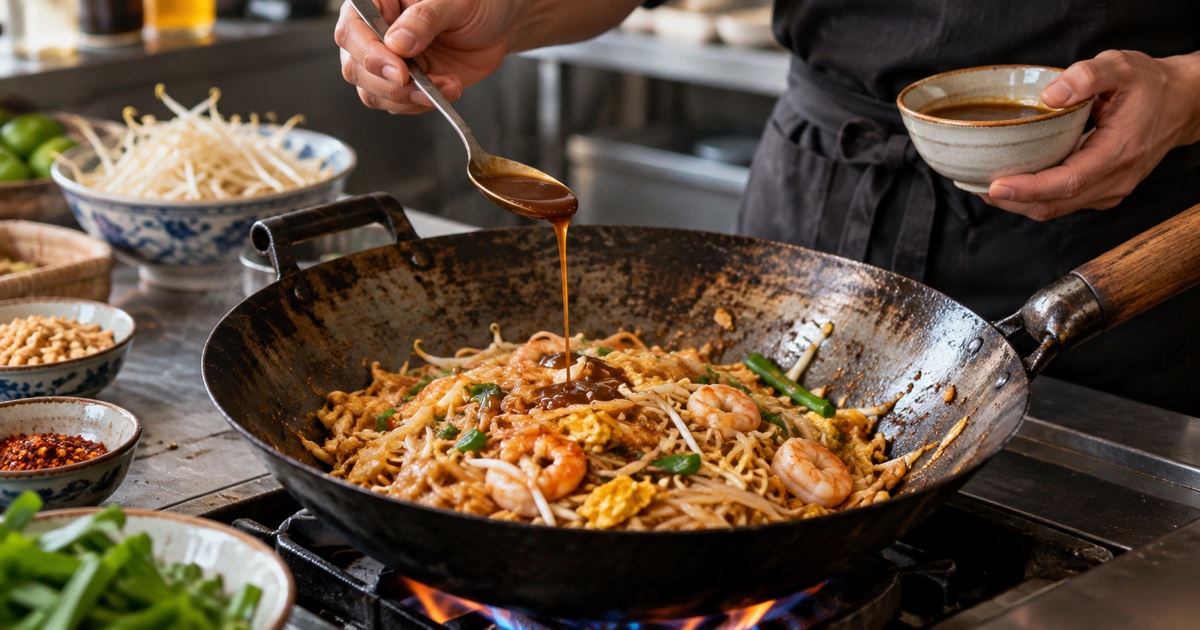
Pad Thai is eaten as a combination. Rice noodles carry the sauce, while egg, tofu, beansprouts and peanuts contribute different textures. A forkful dominated by noodles will feel different from one with more sprouts or peanuts. Notice whether the elements work together rather than expecting each mouthful to deliver the same proportion of every ingredient.
This is also why sauce quantity alone is an incomplete measure. A diner might ask for “more sauce” when what they really want is a tangier flavour, softer noodles or a different balance of ingredients. Describe the preference directly before ordering. The restaurant can then advise whether Pad Thai or another Thai noodle dish is a better fit.
Make the rest of the meal relevant
If Pad Thai is part of a shared order, consider what accompanies it. Another sweet-led dish may repeat a flavour you already have, while a contrasting choice may make the noodles feel different within the meal. Our guide to building variety from a Thai menu offers another way to think about the overall selection.
Neither approach requires adding more food. You might replace a dish, reduce duplication or simply keep Pad Thai as an individual main. Choose according to appetite and the people eating. An informed order is one that fits the occasion, not one that includes the greatest number of categories.
Choosing a restaurant: a practical Pad Thai checklist
Look for a clear menu, contact details for questions, and a restaurant that can explain relevant ingredients without promising every alteration. Those criteria tell you more about whether your order can meet your needs than an unsupported claim to have the only authentic version. If you have an allergy or dietary requirement, discuss the specific issue before ordering.
- Read the full description rather than the dish name alone.
- Identify the protein or other variation you want.
- Explain flavour preferences in concrete terms, such as tangier or less chilli.
- Ask whether a requested change is possible before relying on it.
- Check dietary requirements directly, including sauce and preparation questions.
- Taste the dish before adding optional accompaniments.
Follow the balance, then choose what you enjoy
Tamarind gives you a useful path into authentic Thai food because it draws attention to how sourness, sweetness and savoury elements interact. In Pad Thai, its role makes most sense alongside the noodles and other ingredients. Clear observations and sensible questions will teach you more than judging by heat or colour alone.
Explore Pad Thai in Albany through the Chanya Thai menu and online ordering options. If you need help with ingredients or a particular request, call 08 9800 1901 before placing your order.
Frequently asked questions
Can Pad Thai contain tamarind and still taste sweet?
Yes. Tamarind can form part of a sauce containing several flavour elements. Sweetness and sourness are experienced together, and the balance varies between preparations and personal preferences.
Does authentic Pad Thai need to be very hot?
Heat alone does not explain the dish. Consider its sauce, noodles, textures and confirmed ingredients, and ask the restaurant about chilli if that affects your choice.
Does a tamarind sauce make Pad Thai suitable for my diet?
One ingredient cannot answer that question. Check the whole dish, sauce and preparation directly with the restaurant, especially where allergies or strict dietary requirements apply.