

Dessert can be the last decision in a group meal and still create the most awkward serving moment. An organiser planning Thai food catering may choose something appealing without checking whether it fits the main course, the available equipment or the way guests will eat. The overlooked issue is often the finish as a whole, rather than the individual dessert.
This question-led guide helps you move from the main meal to a manageable dessert plan. It uses dishes listed on Chanya Thai’s menu as examples, while group quantities and service arrangements must be confirmed directly. The website does not establish a dedicated catering service. The core question is: which available dessert can your guests enjoy comfortably within the event you are actually organising?
Thai food catering desserts: how should the main meal guide Thai food catering desserts?
Begin with the food already planned. A meal built around several curries, noodles and rice may leave guests wanting only a small finish. A shorter meal may allow dessert to take a more prominent role. These are planning observations, not fixed serving rules: appetite, guest numbers and the occasion still matter. Ask whether dessert is central to the event or simply an optional final course.
If the main meal is undecided, settle its shape first. Otherwise dessert quantities can become a guess based on a meal that later changes. The guide to choosing variety from a Thai menu can help you consider how the savoury dishes relate. Then revisit dessert with a clearer picture of the evening.
If some guests may decline dessert, how will you handle that?
Ask about preferences before committing to identical portions for everyone. Some guests want a full dessert, some prefer to share and others may not want one. Decide whether your event needs an allocated course or a more flexible choice. Check with the restaurant before assuming individual dishes can be divided or supplied in a different format.
Will guests eat seated, standing or in separate groups?
Seated diners can manage a bowl and spoon more easily than guests already holding a drink at a standing event. Think through the physical action of eating, not just the appearance of the dessert. Where will people put a bowl down? Is there a table? Will the host be serving everyone or will guests approach a shared area?
If service is complicated, simplify the plan before adding another dessert. A clear sequence with appropriate bowls and spoons may work better than several choices requiring different equipment. Ask what packaging or serving format the restaurant can provide, and what you must organise yourself. Do not infer trays, staff, transport or event equipment from a standard restaurant menu.
Is the restaurant serving it, or are you organising the finish elsewhere?
These are different arrangements. For a restaurant meal, discuss guest numbers, timing and available dessert choices with the venue. For an event elsewhere, ask whether the restaurant can accept the required order and explain its collection and handling instructions. Confirm the entire arrangement before describing it to guests as a booked Thai food catering service.
For any dessert involving ice cream, handling deserves particular attention. Ask what the restaurant recommends for the proposed journey and serving plan. If the arrangement does not suit the dessert, select another confirmed option or change the plan. Avoid creating your own universal transport or holding time from a photograph or an unrelated recipe.
Which Thai desserts match the kind of finish you want?
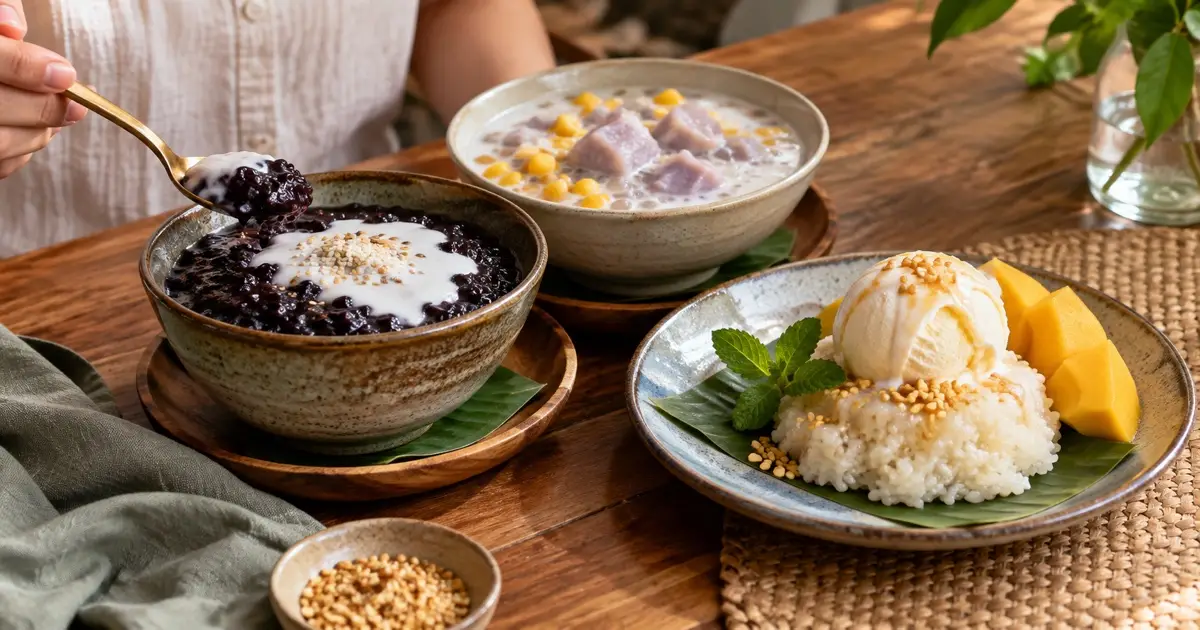
Read the current Chanya Thai dessert menu as a list of possibilities to discuss. It includes black glutinous rice pudding, coconut sago with taro and sweet corn, and sticky rice desserts. Current availability and group ordering quantities need confirmation. A listed individual dessert does not automatically establish that a larger event order can be prepared.
Do guests want a rice pudding-style finish?
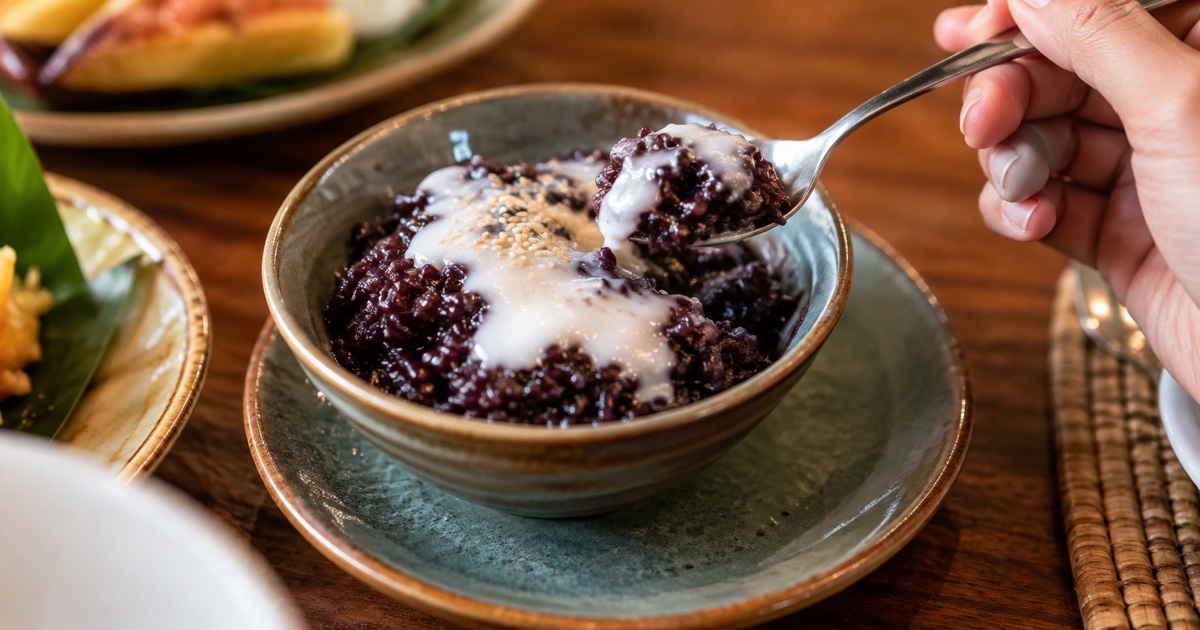
Black glutinous rice pudding is described with coconut cream on top. It offers a clear direction for guests who enjoy rice-based desserts and a spoonable finish. Ask about the current portion and serving presentation rather than estimating from a generated illustration. If your main meal already contains several rice dishes, consider whether that repetition suits your guests or whether they prefer another texture.
Would a dessert with several small textures appeal?
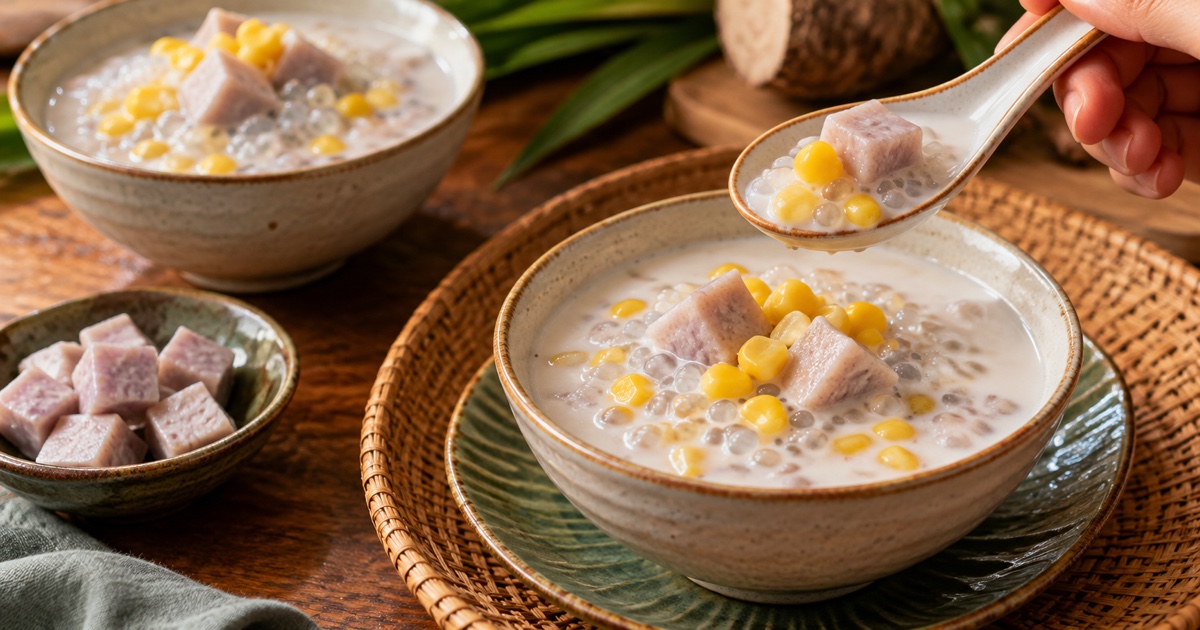
Coconut sago with taro and sweet corn introduces a different combination of components. Guests unfamiliar with it may appreciate a plain description rather than a promise that it tastes like another dessert. Include the name when asking about preferences, and check ingredients directly where a dietary requirement applies. Coconut in a dish name is not a complete ingredient or allergen statement.
Is a sticky rice dessert the preferred choice?
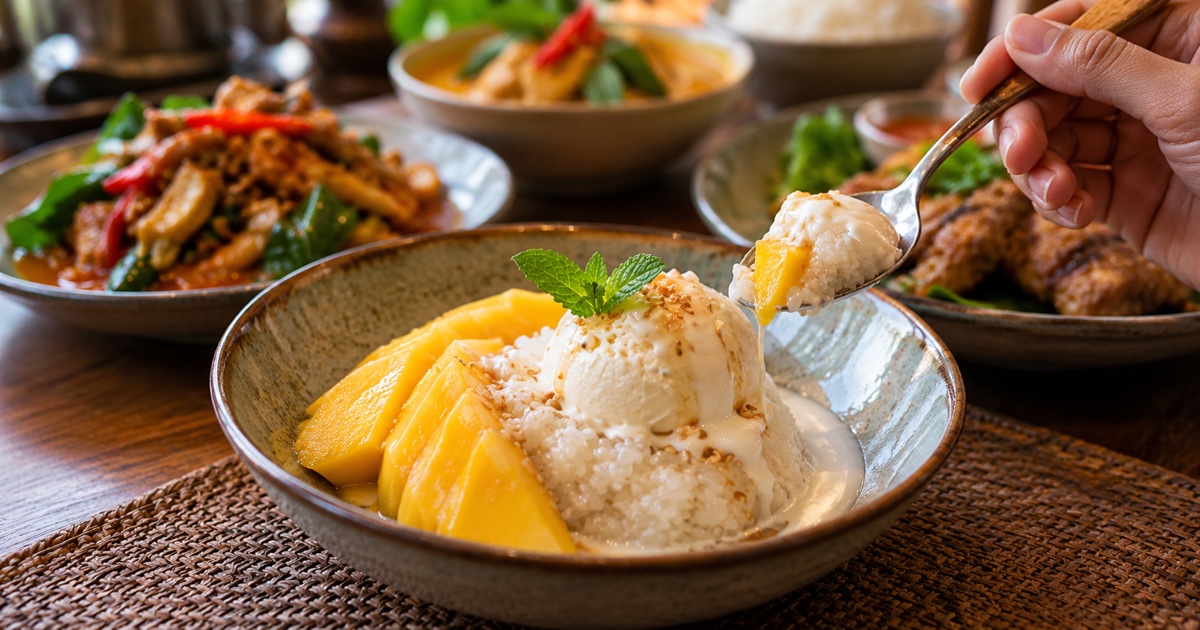
The menu lists sticky rice with ice cream and coconut sauce, plus a sticky rice with mango option. Check the current description and components before ordering; do not assume fresh mango or a particular presentation from the name alone. Consider whether the combination suits the main meal and whether the serving arrangements support it. Familiarity is useful, but details still matter.
A mixed selection may suit a group with varied preferences, provided the restaurant can accommodate it and the organiser can distribute it clearly. One choice may be simpler for an event with limited serving space. Choose variety because it helps guests, rather than because a table appears incomplete with fewer dishes.
Have dietary requirements been discussed before choosing quantities?
Collect requirements early and communicate them accurately. Avoid inferring dairy-free, vegan, gluten-free or allergen suitability from a dessert’s main ingredient. A rice-based dish can contain other components, and a topping changes the complete dessert. Ask the restaurant about the specific requirement, preparation and whether it can be accommodated for your proposed order.
Keep preference notes separate from those requirements. Someone who dislikes taro needs a different conversation from someone with a confirmed allergy. If a suitable dessert cannot be provided, plan an agreed alternative rather than quietly leaving the person out. Confirm the final arrangement with the guest concerned instead of making a dietary decision on their behalf.
What mistakes make group dessert planning harder?
The common errors are ordering before confirming attendance, assuming every guest wants the same portion, and overlooking bowls, spoons or service space. Another is treating a menu listing as confirmation of event capacity. Keep those decisions visible. A short written summary of the proposed order is easier to verify than a series of changing messages about individual dishes.
Choose one organiser to discuss the order with the restaurant. They should record the agreed dishes, quantities, collection or dining arrangement, and any confirmed requests. Share that final information with whoever is serving. This does not require a complicated event document; a clear note can prevent an attractive dessert plan becoming confusing at the table.
Which restaurant criteria and final checks matter?
For group dessert planning, look for a restaurant that can explain its available menu, answer relevant ingredient questions and clearly confirm whether it can accept your proposed order. Assess the practical fit before comparing presentation. Explore the Chanya Thai blog for further meal-planning ideas while keeping current order details with the restaurant.
- The main meal and dessert’s role are clear.
- Guest preferences and dietary requirements have been checked.
- The restaurant has confirmed dishes, quantities and the service arrangement.
- Bowls, spoons, serving space and responsibilities are organised.
- Any handling questions have been answered for the specific desserts.
- The final plan matches the budget and the guests who will attend.
Let the whole meal guide the finish
A useful Thai food catering dessert plan starts with the event, then works towards a confirmed order. Consider the main meal, how guests will eat and which available dishes suit them. A simple, well-organised finish can be more enjoyable than a larger selection whose serving arrangements remain uncertain.
Discuss your group meal with Chanya Thai by calling 08 9800 1901, or visit the official website for current menu and contact information. Ask directly about availability and whether your proposed group order can be accommodated before making event commitments.
Frequently asked questions
Does Chanya Thai provide dedicated catering?
This guide does not confirm a dedicated catering service. Contact the restaurant to discuss the group order and any arrangements you need.
How much dessert should I order for a group?
Check attendance, preferences and the main meal, then ask the restaurant about current portions and available quantities. Avoid using a fixed rule without those details.
Can several people share one dessert?
That depends on the portion, guests and serving arrangement. Ask about the dish and practical presentation before planning shared servings for an event.