

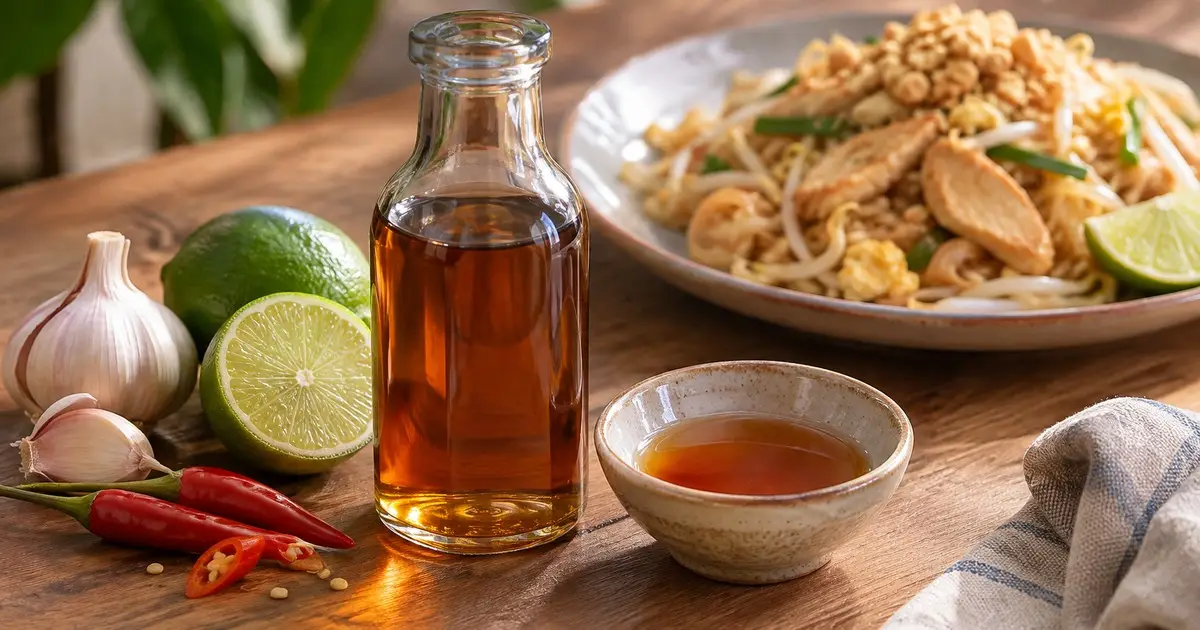
Taste a finished Thai dish and its seasoning may feel surprisingly connected: lime seems brighter, herbs remain distinct and the savoury flavour carries through the mouthful. Fish sauce can contribute to that effect, although its most obvious feature is often saltiness. Understanding this ingredient helps you ask better questions about authentic Thai food without reducing a whole cuisine to one bottle.
The common mistake is to judge fish sauce in isolation, then assume every dish containing it should taste the same. This guide works through familiar tasting puzzles and practical responses. It explains a seasoning’s possible role; it does not identify Chanya Thai’s supplier or publish the restaurant’s recipes. How can you recognise balance before adding more to your plate?
Problem: the seasoning seems to offer only salt
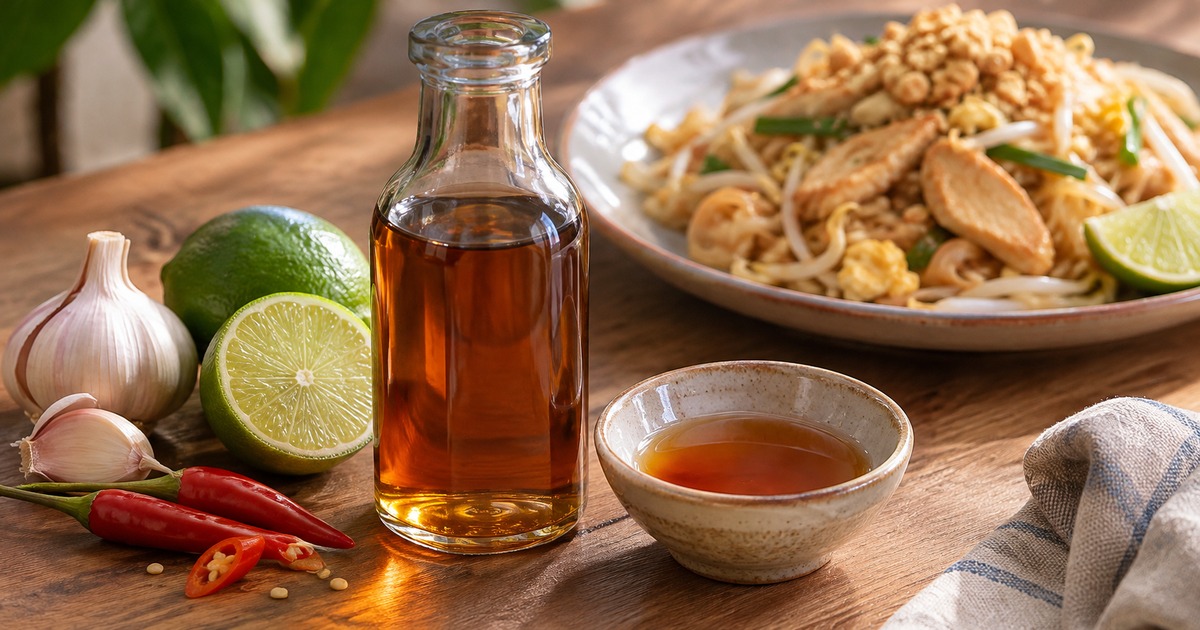
Saltiness is easy to recognise quickly, especially when tasting a concentrated condiment on its own. In a finished dish, however, fish sauce can also contribute aroma and savoury depth. That deeper, rounded impression is often described as umami flavour. It is useful to separate those observations rather than using “salty” as the only word available.
Fish sauce is a fermented fish product, and its taste involves more than dissolved salt. Research on fish sauce fermentation discusses amino acids associated with savoury taste, including glutamic and aspartic acids. You do not need to analyse a sauce scientifically to enjoy dinner; the practical point is that adding it can alter several aspects of a mouthful at once.
Try a complete bite of the prepared dish before reaching for a condiment. Include some of the main ingredient and its sauce, then notice what happens after the first salty impression. Does the flavour feel rounded? Can you still recognise the herbs and other ingredients? Those questions give a fairer picture than judging one drop from a bottle.
Problem: the aroma seems stronger than the dish tastes
A concentrated sauce can have an assertive smell that is different from its effect once incorporated into food. Smelling an open bottle is therefore a poor shortcut for predicting how a completed curry, salad or stir-fry will taste. Preparation, quantity and the surrounding ingredients all influence the final impression.
Begin with the dish as served. Notice whether the aroma sits alongside the other features or seems to dominate them. A diner who is unfamiliar with fermented seasonings may need a moment to identify the contrast. That personal response does not establish that a dish is badly made, and a stronger smell does not automatically indicate greater authenticity.
If you have an ordinary flavour preference, explain it specifically when asking about the menu. “I prefer a gentler fermented aroma” is more useful than asking for something that tastes “less Thai”. Staff can discuss suitable choices or explain limitations. Ingredient requirements need a separate, direct conversation before ordering; a milder aroma does not establish a different ingredient list.
Problem: adding more does not make the food feel balanced
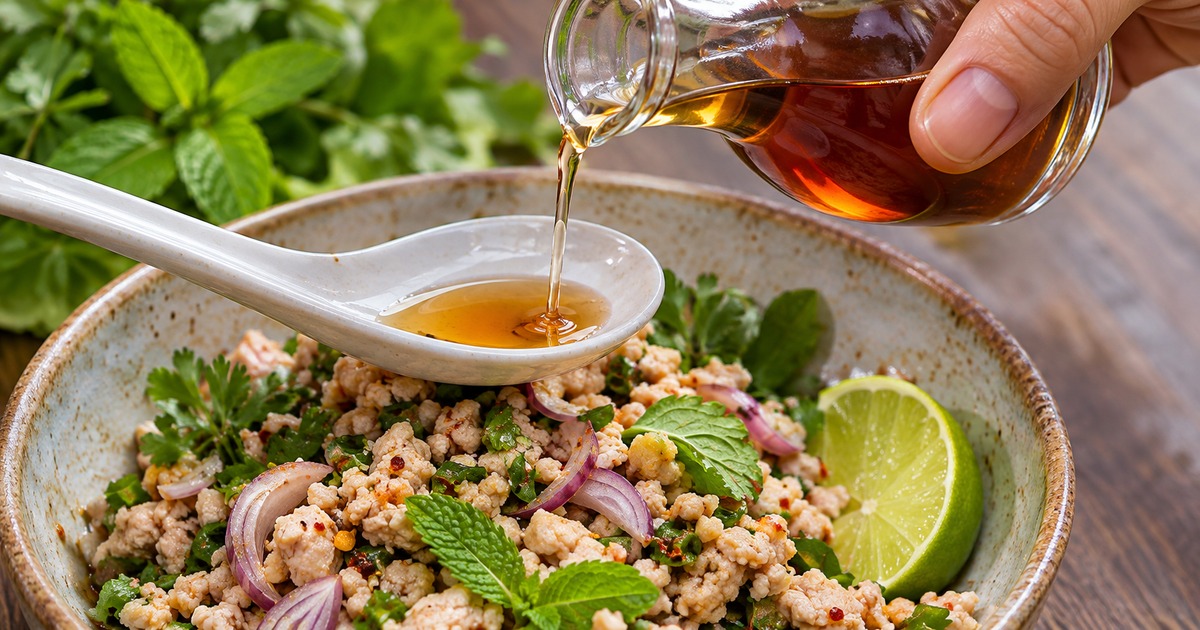
When a dish feels incomplete to your palate, more saltiness may not be the missing element. Thai seasoning can involve contrasting sourness, sweetness, heat, savoury depth and aroma. Increasing one element can make another harder to notice. This is why an extra splash of fish sauce is not a universal answer to every tasting question.
Take a small portion first and taste it without changing the shared serving bowl. If a suitable condiment is provided, add a little to your own plate and compare. Keep the original dish available so the rest of the table can enjoy the preparation as intended. Personal adjustment works better when it does not silently become everyone’s adjustment.
Think about the other food in the mouthful too. Rice, noodles and a strongly flavoured sauce create a different balance from sauce alone. Our guide to enjoying shared Thai dishes offers ideas for moving between contrasting plates without mixing every flavour together.
Problem: the dressing is treated as one interchangeable sauce
A salad dressing may combine several seasonings before it reaches the table. Its appearance does not tell you the proportions, and a clear or brown liquid is not a reliable ingredient list. Ask what is included when the information matters to your order. Do not assume that every dressing beside a Thai salad is simply fish sauce and lime.
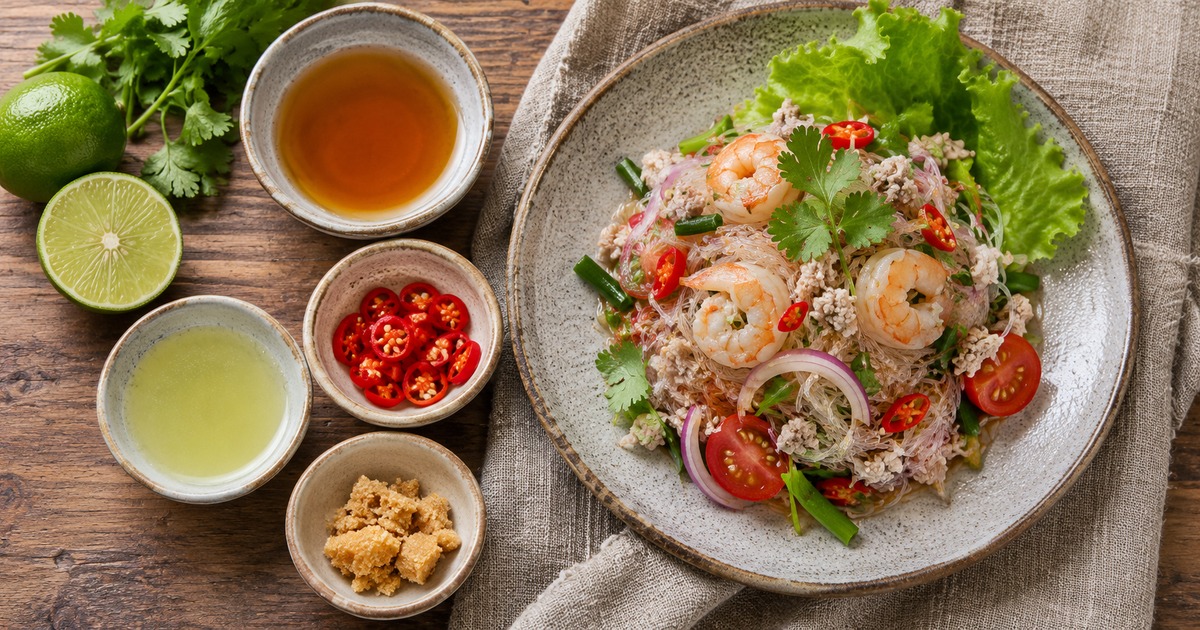
Chanya Thai’s menu describes a glass noodle salad with prawns, chicken mince, herbs, onion, Thai dressing and roasted peanuts. That description is a starting point for a question, rather than a complete recipe. If you want to know how a specific dressing is prepared or supplied, ask the restaurant directly before ordering.
For home serving, keep separately supplied sauces identifiable. Taste the intended salad combination before adding another accompaniment from a different dish. The change may be enjoyable, but it becomes your personal variation. Distinguishing the original preparation from your additions makes future ordering decisions more useful.
Problem: a substitution is assumed to be identical
Fish sauce and ordinary salt do not bring exactly the same aroma or overall taste. Other sauces also have their own ingredients and flavour profiles. Replacing one seasoning with another can change a dish beyond its saltiness, even when the amount added looks similar.
For a restaurant order, ask whether a suitable preparation is possible rather than prescribing an unconfirmed substitution. Staff need to consider the whole dish, including components prepared earlier. A vegetable or tofu option does not by itself establish which seasonings are used. Discuss the specific requirement and choose another dish if a clear answer or suitable arrangement is unavailable.
You can still explore the menu through flavours you recognise. Ask about cooking style, the main ingredients and whether the overall result is rich, bright or gently savoury. That conversation is more productive than expecting a single replacement ingredient to reproduce an entire preparation unchanged.
Choose a meal around contrasts you want to explore
Authentic Thai food contains many cooking styles and individual interpretations. For flavour balance, a useful meal might contrast a noodle dish with a salad, or a creamy curry with a different entrée. Check the current Chanya Thai menu and ask which choices fit your preferences instead of using one ingredient as a pass-or-fail authenticity test.
Tamarind offers another example of an ingredient doing more than one obvious job in a finished dish. Read our guide to tamarind’s place in Pad Thai for a complementary way to think about sourness and balance. Comparing these roles can make familiar dishes more interesting without needing to order an unnecessarily large meal.
A tasting checklist before you adjust the plate
- Taste a complete mouthful of the dish as supplied.
- Notice savoury depth as well as the first salty impression.
- Identify whether your question concerns aroma, heat, sourness or saltiness.
- Keep any personal condiment adjustment on your own portion.
- Ask directly about ingredients instead of reading them from colour or aroma.
- Describe preferences clearly when choosing the next dish.
Keep your comparisons specific. A short note such as “liked the bright dressing with the herbs” is more useful for a future visit than a broad judgement that a dish was simply strong or mild.
Enjoy fish sauce as part of the whole dish
Fish sauce can help explain the savoury character of authentic Thai food, but its value is easiest to understand in context. Taste before adjusting, notice the other ingredients and ask precise questions about any preparation that matters to your order.
Ready to explore a different Thai dish in Albany? Review Chanya Thai’s menu and call 08 9800 1901 to discuss flavour preferences and ingredient questions before choosing your meal.
Frequently asked questions
Is fish sauce the same as adding salt?
It contributes saltiness, but also aroma and savoury character. Replacing it can change several features of a dish rather than only its salt level.
Should I add fish sauce before tasting?
Try the dish as supplied first. If a suitable condiment is available, adjust a small individual portion so you can compare without changing everyone else’s meal.
Does every Thai dish contain fish sauce?
Do not assume that a cuisine label establishes an ingredient list. Ask the restaurant about the particular dish and any relevant preparation requirements.
Which fish sauce will be used in my dish?
Ask the restaurant about the current product and preparation if those details matter to your order. A general description of fish sauce cannot identify a particular kitchen’s supplier.