

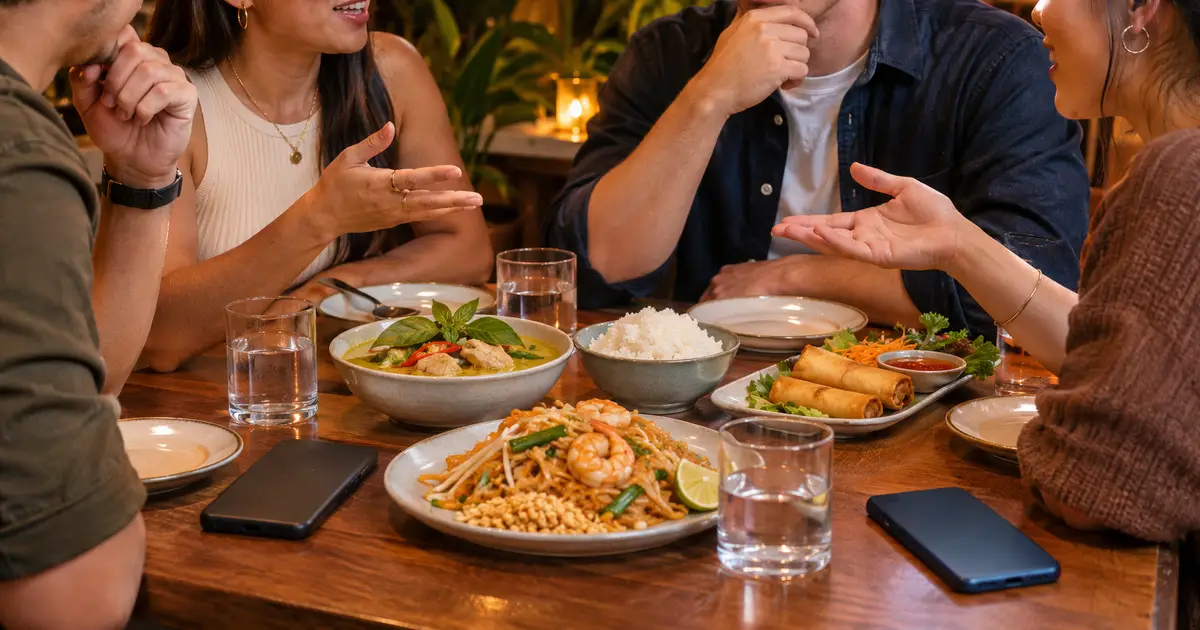
An offer that looks straightforward for one diner can become confusing when six friends share the table. Someone wants their own noodle dish, another orders for the group, and two guests expect to pay separately. With restaurant deals, the overlooked question is often who qualifies and how the restaurant applies the arrangement to the actual order.
Sorting this out beforehand protects the meal budget and keeps a friendly dinner from ending with an awkward discussion. This guide follows three common group dining situations, then gives you a practical way to check the details. It does not announce a current Chanya Thai promotion: any offer and its conditions need confirmation directly with the restaurant.
Scenario one: everyone wants the same advertised offer
Imagine four friends choosing a Thai dinner because they have seen the same offer. They arrive together and expect identical treatment. Before booking, check whether the arrangement applies to each diner, each table, each booking or a particular item. Those are different units, even when the advertisement appears to describe a group meal.
Ask what each person must order and whether there are exclusions. An arrangement attached to selected mains may not include the entrée that one guest prefers. A table requirement could also depend on the whole party participating. Read the current wording, then ask a specific question where the group does not fit the example shown.
Keep the answer with the booking details rather than relying on four separate recollections. One organiser can explain the confirmed arrangement in the group chat, including any ordinary-price alternatives. That lets guests decide what they actually want to spend before they sit down. A shared expectation is more useful than assuming that matching arrival times guarantee matching eligibility.
Scenario two: the group shares several dishes
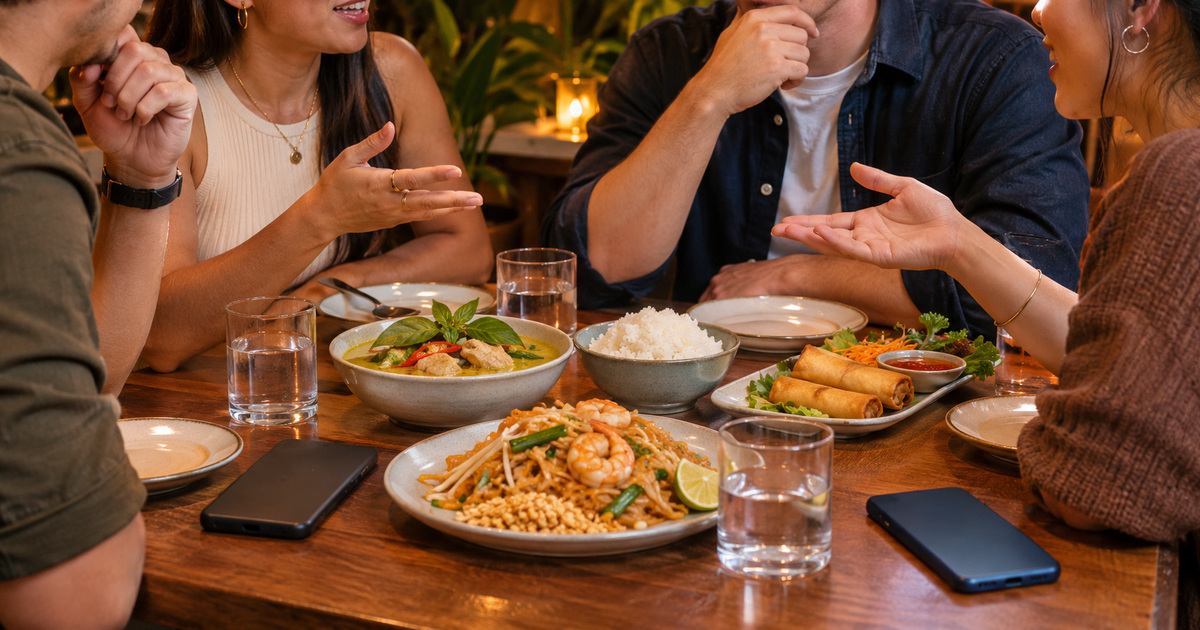
A shared Thai meal changes the calculation. Curry, rice, noodles and starters may be passed around, while an offer might attach to individual orders. Start by listing the proposed dishes and asking how the relevant offer conditions apply to sharing. Do not translate a per-person description into a table-wide discount without confirmation.
Consider a table that orders two curries, one noodle dish and several rice portions. If everyone tastes everything, it may be difficult to associate a particular main with a particular diner. The restaurant needs to explain its own arrangement; the group needs to decide how it will divide whatever total is confirmed. These are related tasks, but neither automatically settles the other.
You can still build a flexible order. Compare the full menu price of the meal first, then check the effect of any valid offer. Choose dishes the group would enjoy without the saving. Our guide to sharing Thai dishes when they arrive together can help you plan the table around texture and appetite as well as cost.

Scenario three: only some guests qualify
Sometimes a group includes a person with an individual offer and others without it. Ask whether it can be used at a mixed table, what order it covers and whether the booking needs to identify the eligible person. A companion should not assume that one guest’s eligibility extends to everyone sitting nearby.
Explain the arrangement without asking anyone to share unnecessary personal information. If evidence is required, the eligible diner can confirm directly what they need to present. The organiser only needs enough information to plan the meal and payment fairly. Avoid promising that a screenshot, forwarded message or another person’s account will be accepted.
Choose a simple fallback before the evening. A diner might order separately at the ordinary price, or the group might select a meal that suits everyone’s budget without using the offer. If the conditions are unclear, pause the assumption rather than putting staff under pressure after the food has been eaten. The purpose of restaurant deals is a workable dining choice, not a surprise at the end.
Separate offer eligibility from payment arrangements
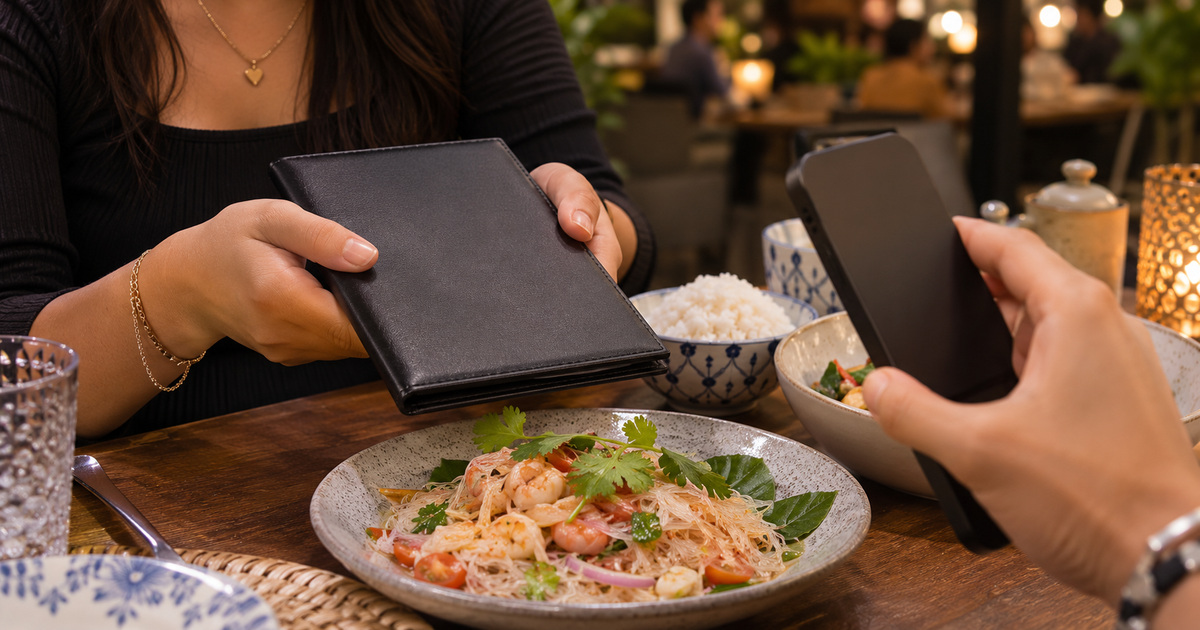
Split payments describe how a bill is paid. They do not establish who qualifies for an offer. Ask separately whether the restaurant can accept your proposed payment arrangement, and whether using it changes any relevant condition. Do this before booking if several individual payments are essential to the group.
Decide what fairness means for this particular table. Equal sharing may suit friends who order similar amounts. Paying for individual dishes may suit people with different appetites. Neither approach works well if it is imposed only when the bill arrives. Agree how shared rice, starters and any confirmed extras will be counted.
If one person will pay the restaurant, the group can agree its own reimbursement plan beforehand. Keep that conversation separate from the restaurant’s payment process. Confirm the final total before paying and ask about a specific discrepancy politely. Clear descriptions of the order and agreed conditions help staff check an issue more easily than a general complaint that the evening should have cost less.
One useful habit is to nominate a single person to keep track of additions during the meal. If the table orders another starter or an extra rice portion, that person can check that everyone understands how it will be shared. This is especially helpful when guests join the table later. The final conversation then follows decisions already made, rather than asking people to reconstruct the whole evening from memory.
A short checklist before the group commits
- Check the current offer source, dates and eligible dining period.
- Ask whether eligibility applies to a person, item, booking or table.
- Confirm any minimum order, exclusions and sharing restrictions.
- Explain if the party includes guests who will not use the offer.
- Ask about the proposed payment arrangement separately.
- Compare the full meal budget, including rice, drinks and starters chosen.
- Keep a suitable ordinary-price alternative if the arrangement does not fit.
Give the restaurant a concrete example rather than asking whether it has “good deals”. State the party size, intended date and the dishes or dining style you are considering. A clear example makes it easier to identify a condition that would otherwise be missed.
Choose the restaurant around the occasion as well
An attractive saving is only one part of group dining. Consider the menu, table availability, communication and whether the setting suits your party. Chanya Thai describes a small dine-in space, so discuss group size and preferred timing before treating a table as reserved. A request and a confirmed arrangement are different stages.
Check the official Chanya Thai website for current menu and booking options. Its listed dishes provide different ways to build a meal, from individual noodles to curries and shared entrées. Discuss ingredient questions directly instead of assuming that one group order suits every dietary requirement.
Timing can matter as much as the bill. Review our guide to planning around dine-in time windows if your group is coordinating work, travel or another commitment. The best arrangement is one everyone can comfortably use.
Confirm the details, then enjoy the meal
Useful restaurant deals fit the actual people and order at the table. Confirm eligibility, sharing rules and payment arrangements separately, then communicate the answer before the evening. That approach gives the group a realistic budget and more room to enjoy its Thai dinner.
Planning a group meal in Albany? Review Chanya Thai’s current menu and call 08 9800 1901 to ask about table availability, payment arrangements and any current offer you are considering.
Frequently asked questions
Can everyone at the table use one person’s offer?
Do not assume so. Check whether the arrangement is individual or table-wide, whether mixed participation is allowed and what evidence the eligible diner must provide.
Does paying separately create separate offer eligibility?
Not automatically. Payment method and eligibility are separate questions. Confirm both with the restaurant before relying on individual payments to obtain a particular result.
Can shared dishes count towards an individual offer?
That depends on the current conditions. Describe the intended shared order and ask how it would be treated before the group chooses its dishes.
Is a group promotion confirmed for Chanya Thai here?
No specific promotion is verified by this guide. Contact the restaurant for current availability and conditions, and use the ordinary menu price when an offer has not been confirmed.