

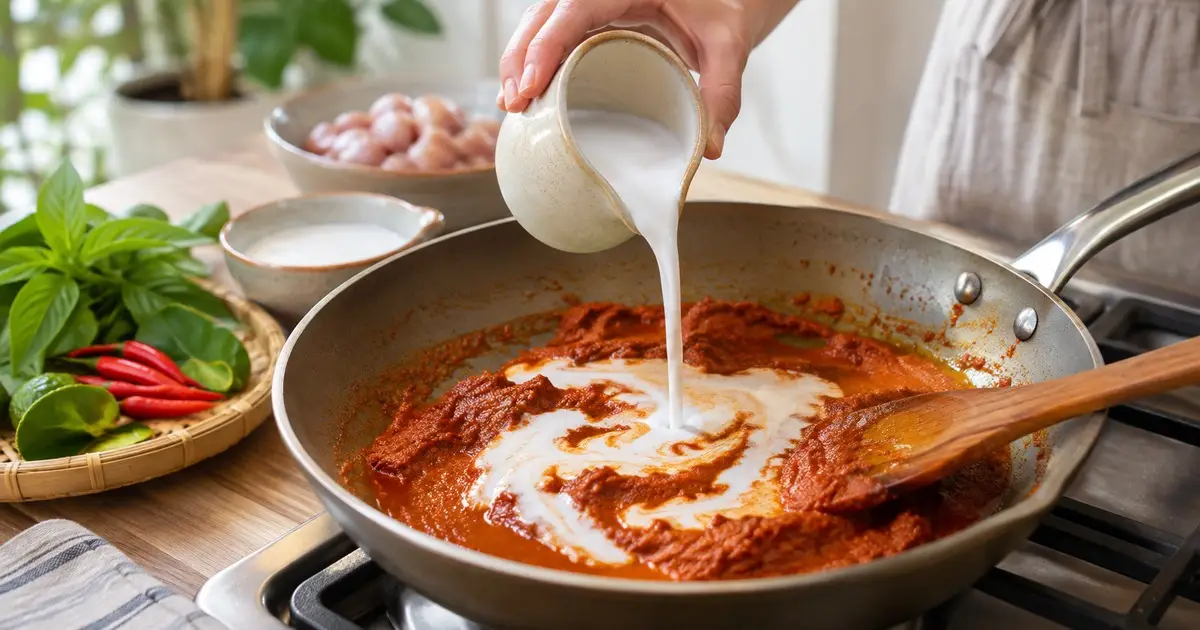
A Thai curry can look smooth when it arrives, then show a little coloured oil around the edge as you serve it. Another may have a thicker sauce that clings to the meat. When exploring Thai cuisine, these differences are useful clues about the dish, but they are not a complete quality test on their own.
Coconut milk contributes richness, flavour and body while changing during cooking. Understanding that behaviour helps Albany diners read a menu and describe the curry sauce texture they enjoy. This explainer compares the main observations without turning the restaurant’s recipe into a set of guesses or treating every variation as a mistake.
Coconut milk is a mixture that responds to heat
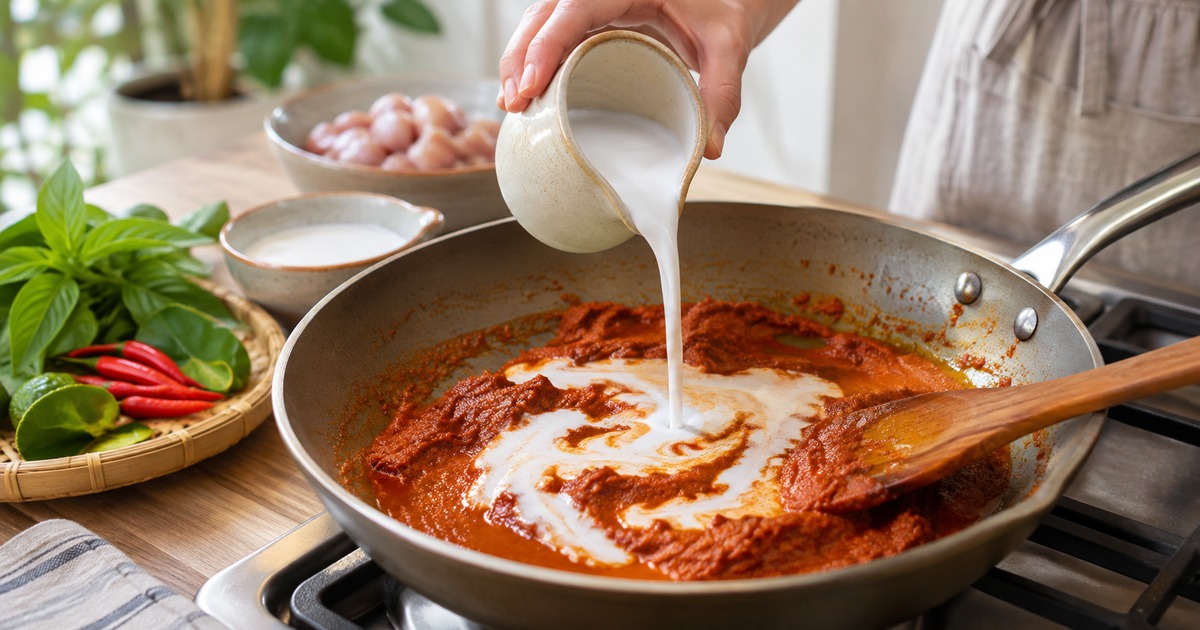
Coconut milk contains oil droplets dispersed in a watery mixture. Its naturally occurring proteins help stabilise that mixture. Heating can change how the droplets interact, so the result does not always remain visually uniform. Research on heating and coconut milk emulsions found changes in droplet aggregation and stability under the conditions studied.
For a diner, the practical point is simple: a coconut milk curry is not an unchanging white liquid with flavour added. The cooking process brings the coconut ingredient together with curry paste, other liquids and the dish’s remaining ingredients. Those elements help explain why different preparations can have different appearances.
This does not reveal exactly how an individual kitchen cooks its curry. Chanya Thai’s menu describes particular dishes, but a finished photograph cannot establish the product, proportions or sequence used behind the scenes. Use the basic explanation to ask better questions, rather than to announce a recipe that the restaurant has not supplied.
Compare the body of the sauce, not just its thickness
A fuller-looking sauce can coat a spoon or sit closely around the main ingredients. A looser sauce can spread more readily around rice. Neither description automatically means better. The useful question is whether the body suits the complete dish and your preferred way of eating it.
The starting coconut ingredient and the amount of liquid in a recipe can influence that result. Products labelled coconut milk, coconut cream or coconut drinks are not necessarily interchangeable in a home recipe. Read the product description and the recipe’s intention before assuming a substitute will behave identically.
During cooking, a sauce may also become more concentrated as liquid leaves it. That changes the experience of a spoonful, so thickness should be considered alongside seasoning and the amount served. Comparing one sauce immediately after serving with another after it has stood for a while can create a misleading impression about their original consistency.
Visible oil and coconut milk separation need context
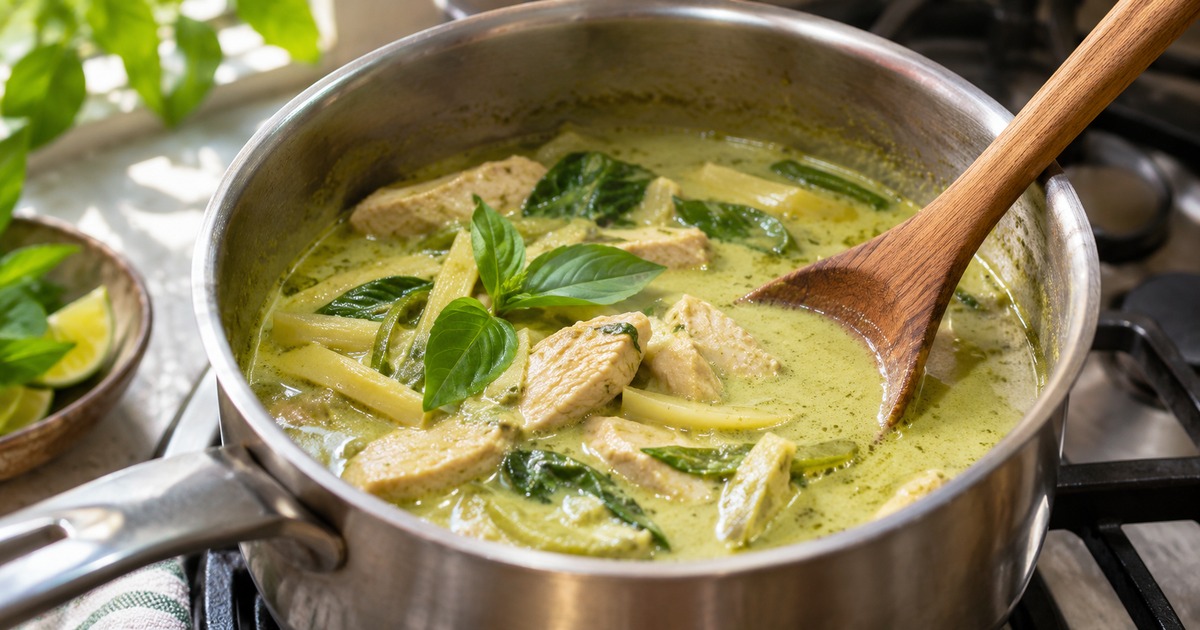
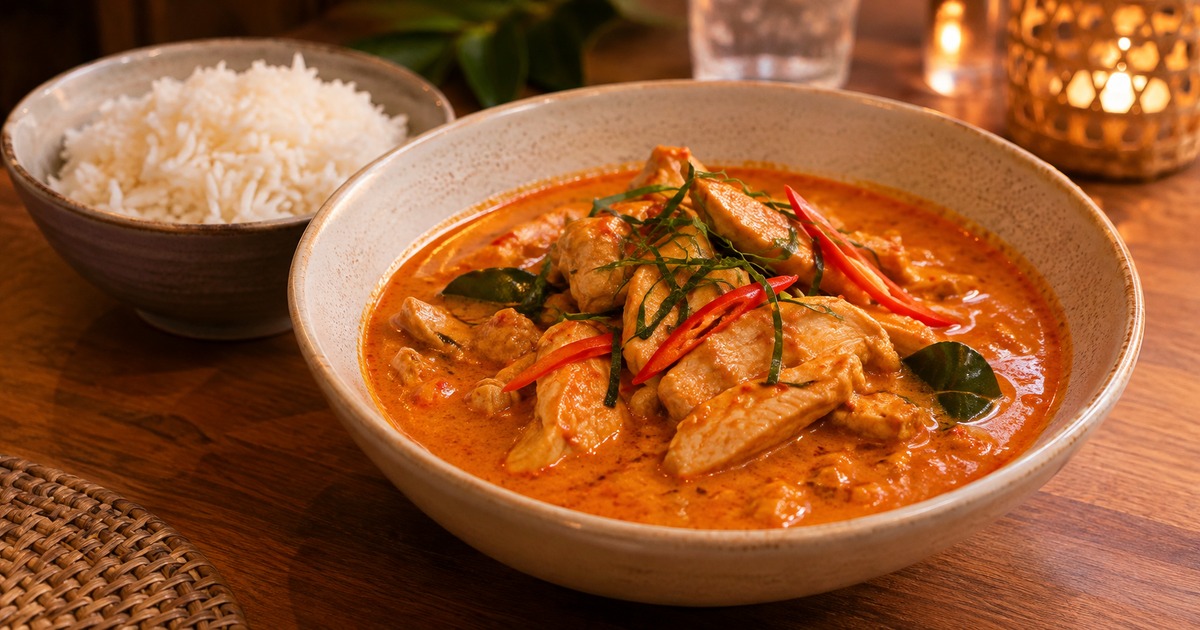
A little coloured oil at the surface can make a Thai coconut curry look different from a uniformly blended sauce. Because coconut milk contains fat within a mixture, visible separation is a possible physical change. Coconut milk separation should therefore be described as an observation before it becomes a judgement about the whole meal.
Look at the dish as a whole. Is the sauce pleasant to eat with the other ingredients? Does the texture suit the preparation? Are you comparing the same kind of curry under similar conditions? A photograph of a glossy surface cannot answer every one of those questions, and it cannot establish the restaurant’s intentions.
If something about the meal concerns you, describe the actual experience to staff promptly and clearly. Saying that the sauce seems different from the version you expected gives them a specific point to discuss. Avoid presenting a general internet rule about separated coconut milk as proof that a particular kitchen has made an error.
Compare complete dishes when exploring Thai cuisine
Chanya Thai lists green, red and Panang curries, alongside other preparations. Its green curry description identifies a choice of main ingredients with vegetables and sweet basil. The red curry description refers to red chilli paste, coconut milk and vegetables. Read each current entry rather than treating the colour as the entire recipe.
The menu also describes Chu Chi as a creamy coconut preparation with red curry paste, makrut lime and sweet basil, offered with seafood options. These descriptions provide a more useful basis for choosing an Albany Thai curry than simply asking for the thickest or creamiest-looking bowl.
A curry-flavoured stir-fry can be another category again. Pad Pong Karee is described with yellow curry powder and egg, so its name does not imply the same kind of sauce as every coconut-based curry. Our guide to understanding Thai menu preparation terms helps connect the dish name with the food you actually intend to order.
Use a small tasting comparison instead of a visual ranking
At the table, begin with a modest spoonful of sauce and some rice. Then taste a piece of the main ingredient with it. This makes it easier to notice the relationship between the sauce and the rest of the dish before adding another curry or stir-fry to the same part of your plate.
If two people are sharing different curries, use separate serving utensils and leave room to taste each one distinctly. The comparison may reveal that one diner likes a fuller sauce while another prefers a different balance of herbs and vegetables. Those are useful preferences to remember, rather than reasons to turn one style into a universal winner.
Texture also changes across a shared dinner as dishes are served and combined. Our guide to eating Thai dishes when they arrive together offers a flexible way to organise the table. There is no need to race through every curry, but tasting each preparation separately gives you a clearer impression.
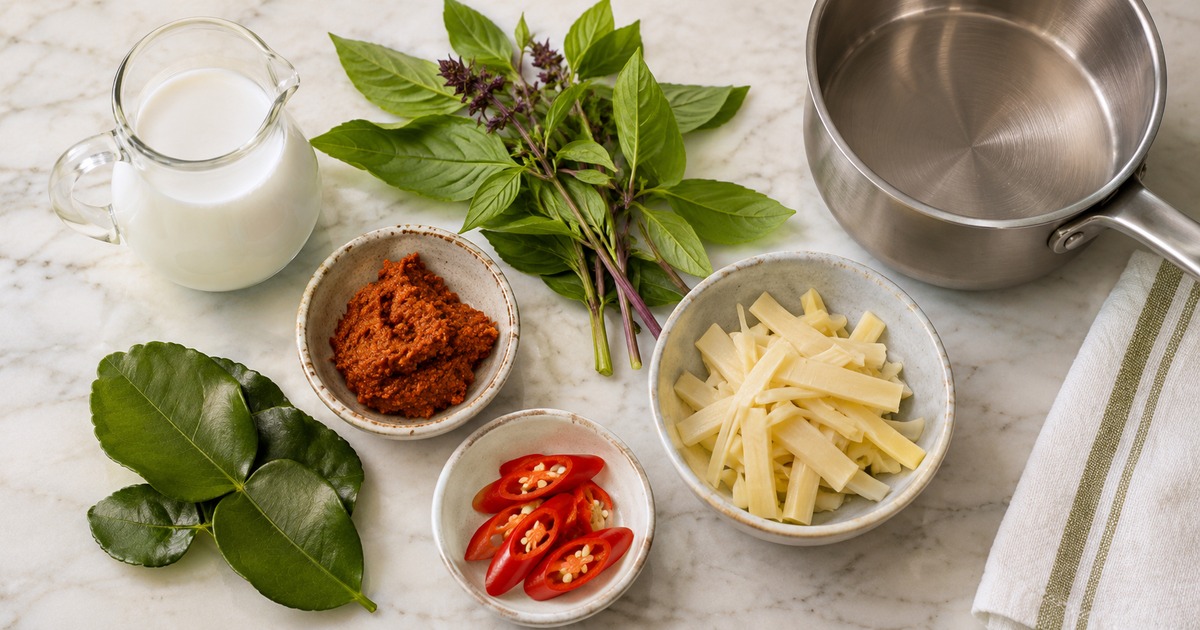
For a first comparison, keep the rest of the order straightforward. Two curries, plain rice and several strongly flavoured side dishes can make it difficult to remember which combination you preferred. You may learn more from one chosen curry with a familiar accompaniment. If you do compare two, note the complete names and selected main ingredients. That detail is more useful on a return visit than remembering only a green bowl or an orange sauce.
Ask questions that connect the menu with your preference
Choose a restaurant that can explain the listed preparation and the options currently available. A preference for a creamy sauce, a particular vegetable or a seafood variation is easier to discuss when you name the dish. A broad request for an authentic curry may leave both sides interpreting the same words differently.
- Read the full description of the chosen curry.
- Check the available main ingredient or protein option.
- Ask what accompanies the dish and whether rice is separate.
- Describe the sauce texture or flavour balance you prefer.
- Discuss ingredient requirements directly before ordering.
- Confirm whether a requested change is actually possible.
Coconut milk in the description does not answer every dietary question about a finished dish. Curry paste, sauces and other ingredients also need consideration. Ask the restaurant about the relevant preparation instead of treating a single ingredient as a complete account of the meal.
Understand the sauce and choose the dish you enjoy
Exploring Thai cuisine becomes more rewarding when appearance, texture and menu descriptions are considered together. Coconut milk responds to cooking, and a curry’s body or visible oil is only part of the eating experience. Compare the complete preparation, then use what you notice to make a clearer choice next time.
Browse Chanya Thai’s current menu or call 08 9800 1901 to ask about your preferred curry before planning your Albany meal.
Frequently asked questions
Does oil on a curry automatically mean something is wrong?
Appearance alone is not a complete quality test. Coconut milk is a mixture containing fat, and cooking can affect its stability. Discuss a specific concern about your meal with the restaurant.
Is a thicker coconut sauce always better?
No. Thickness should suit the preparation and your preferences. Consider the sauce with the main ingredients and rice rather than judging only how it looks in a bowl.
Are coconut milk and coconut cream interchangeable?
Do not assume every product works the same way. Read the recipe and product description when cooking at home; ask the restaurant about the finished dish when ordering.
Does every dish with curry in its name use coconut milk?
No assumption based on the name alone is reliable. Read the listed preparation, because curry-flavoured stir-fries and coconut-based sauces can be different dishes.