

You choose chicken from a Thai food menu, then discover the dish is quite different from the chicken meal you enjoyed last time. One was a finely textured salad; the other contained distinct slices in a stir-fry. The protein stayed the same, but its preparation changed the experience.
Words such as minced, sliced and whole are easy to skim past when you are concentrating on sauces or chilli. Yet those words help explain how a dish will feel, how it can be shared and whether you might need to work around shells or bones. What can they tell you before you order?
What does minced mean on a Thai food menu?
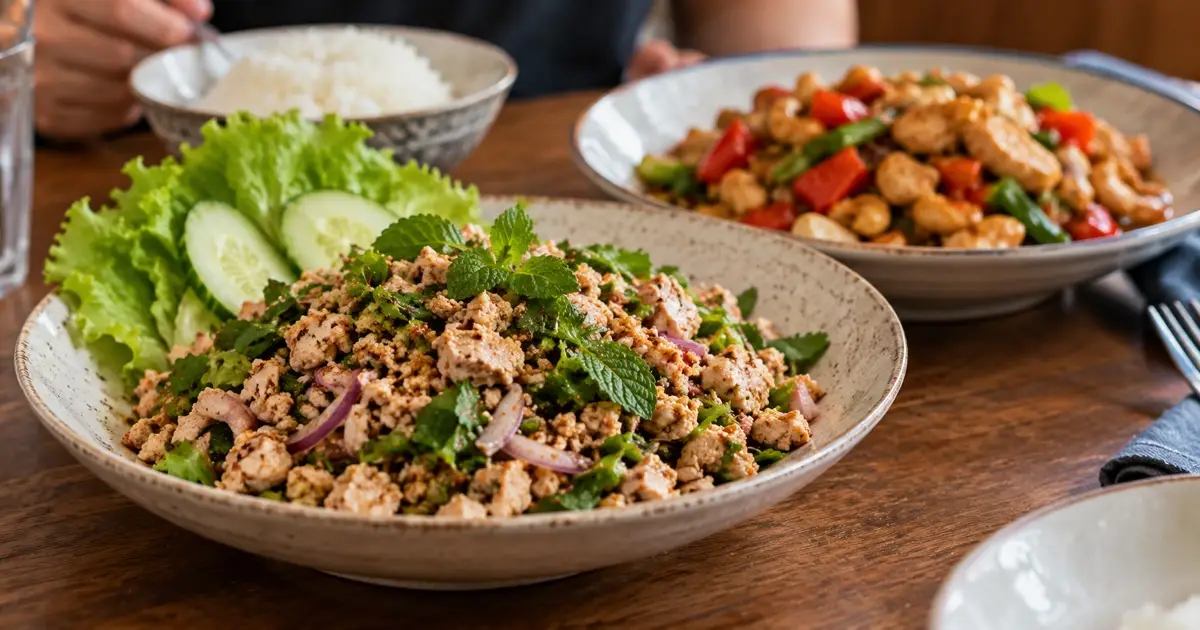
Minced meat is broken into small pieces rather than served as larger slices. The pieces may look fine or slightly coarse depending on preparation. The term describes the form of the ingredient; it does not tell you the complete seasoning, cooking method or spice level.
Chicken larb is a useful example. Thai cook Pailin Chongchitnant’s larb gai recipe uses ground chicken with herbs, lime, fish sauce, chilli and toasted rice powder. Those details show why a minced chicken salad can provide a different experience from chicken in a sweet or creamy sauce.
For diners, the practical point is to read the rest of the description. Minced chicken does not automatically mean a mild dish or one prepared for children. If you want a gentle flavour, ask about the actual seasoning and whether any adjustment is possible.
How might minced ingredients affect serving?
Small pieces can be convenient to spoon onto a plate, but the dish may include chopped vegetables and garnishes too. Use the serving utensil provided and take a balanced spoonful if you want to taste the components together. If you are sharing, avoid removing all the meat while leaving the herbs for somebody else.
How are sliced ingredients different?
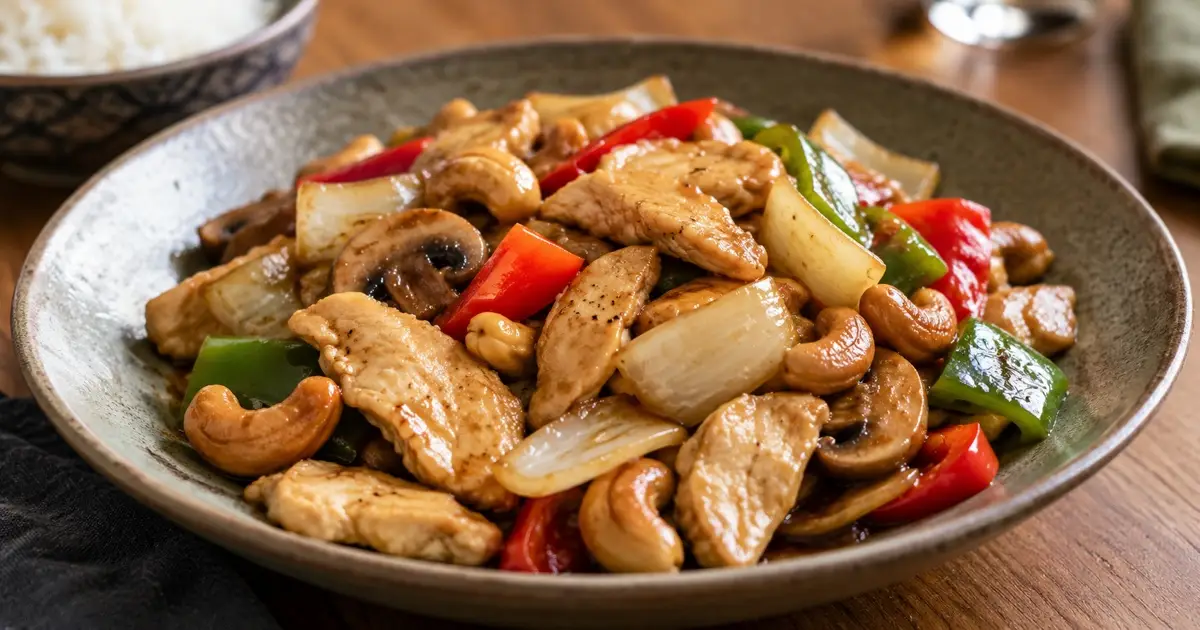
Sliced chicken or beef arrives in recognisable pieces cut from the meat. A bite may include one piece of protein, some vegetables and sauce rather than the more distributed mixture you find in a minced dish. Neither form is automatically better; each suits a different preference.
A chicken cashew stir-fry offers a useful comparison. You can notice the chicken separately from the nuts and vegetables, then combine them on your spoon or fork. Chanya Thai’s menu lists Pad Med Mamaung with cashews, onion, mushroom and sweet chilli, with protein choices. Check the current description and ask how your selected version is prepared.
If texture matters to you, ask directly: “Is the chicken sliced, minced or crispy in this option?” That is clearer than requesting “normal chicken”, which may mean something different to the person taking the order.
Does whole mean there will be shells or bones?
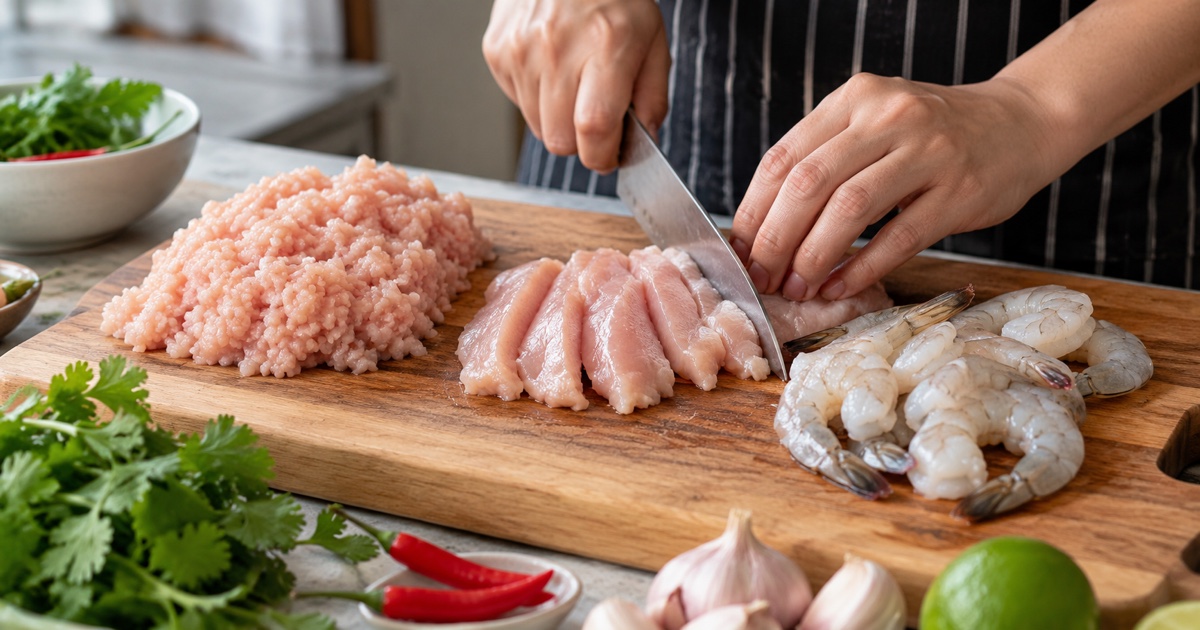
Whole tells you that an ingredient has not been divided in the way a sliced or minced ingredient has, but its practical meaning depends on the food. Whole prawns may be presented differently between dishes and kitchens. Ask whether heads, shells or tails remain if that will affect your meal.
Do not use a photograph as the only answer. An illustration might show peeled prawns while a restaurant’s current preparation differs. A menu description may also be brief. The useful question is specific: “Are the prawns peeled, and do they have tails attached?”
For fish, ask whether the menu refers to a whole fish, a fillet or pieces. Those are distinct expectations, especially when ordering for someone who wants to avoid working around bones. Let the restaurant explain the item it actually serves rather than inferring from a short dish name.
Why ask about prawns in soup?
When prawns arrive in broth, the ingredient and the liquid need handling together. If shells or tails are present, you may want an extra plate or a suitable utensil. Checking before ordering lets you decide whether that style suits a quick lunch, a shared dinner or a meal for a child.
Why can the same protein feel so different?
Ingredient form is one part of the answer. Cooking style, sauce and accompanying vegetables also shape the dish. Minced chicken in a herb salad and sliced chicken in a stir-fry should not be expected to taste alike simply because both use chicken.
When comparing two choices, read them in the same order: main ingredient, preparation, cooking method, sauce and accompaniments. This gives you a fairer comparison than picking one familiar word from each description.
For a shared meal, different forms can create useful variety. You might prefer one dish with distinct pieces and another with a finer mixture. Our guide to avoiding repetitive Thai meal choices explains how to think about the table as a whole.
Can ingredient size tell me the portion size?
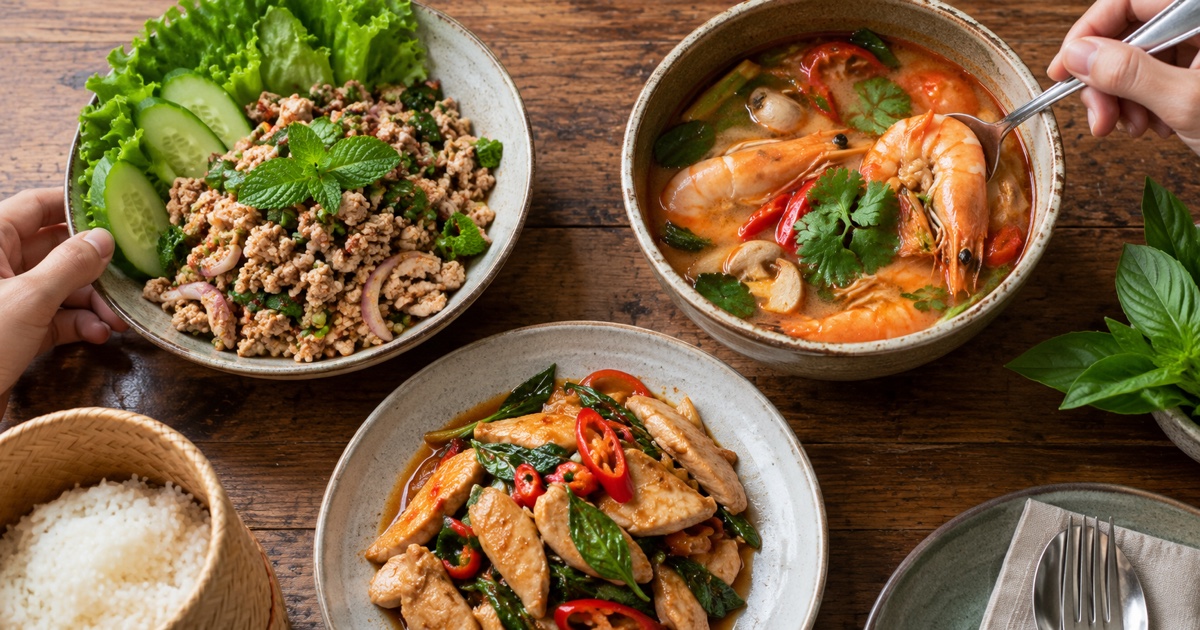
No. Several large pieces can look different from a finely minced mixture without revealing which dish contains more food. Photographs, bowl shapes and garnishes also change the visual impression. Ask about the serving format rather than trying to calculate portions from an image.
Find out whether a dish is usually chosen as an individual meal or shared with rice and other dishes. Confirm whether rice is included or ordered separately. Those answers help you plan dinner more directly than comparing how many pieces are visible.
If you are ordering for several people, describe the group and the other dishes you intend to choose. Ask for guidance using that complete picture. A question about one ingredient in isolation gives staff less context for useful advice.
How can I make a clear request?
Begin with the exact menu item and selected protein. Then ask the one preparation question that matters most. For example: “For the chicken larb, is the chicken minced?” or “In the prawn soup, are shells or tails left on?”
Explain a preference in practical terms. If a diner dislikes minced textures, say that before choosing the dish. If you are unsure about bones or shells, ask what to expect and choose an alternative if necessary. A request for information is easier to answer than an assumption embedded in the order.
Dietary requirements need a separate discussion about ingredients and preparation. Knowing that meat is sliced or prawns are peeled does not establish anything about sauces, shared cooking equipment or other components. Give staff the relevant requirement before the order is prepared.
Which menu-reading mistakes are worth avoiding?
Choosing from the protein alone. Read the whole description so you understand how the ingredient appears in the dish.
Assuming minced means mild. Texture and chilli are different questions. Ask about both if they matter.
Interpreting whole without context. Confirm shells, tails or bones for the particular menu item.
Treating an image as a serving guarantee. Use current menu details and staff advice to establish what you will receive.
What should I check before choosing the restaurant?
- A current menu describes dishes clearly enough to compare.
- Staff can explain the preparation questions relevant to your order.
- The available choices suit your group’s texture and flavour preferences.
- Rice, sides and the serving format are understood before payment.
Explore Chanya Thai’s Thai food articles for more culinary background, then check the live menu rather than relying on an old description.
Read the preparation words before you decide
A Thai food menu becomes easier to navigate when you notice how ingredients are cut and served. Minced, sliced and whole provide useful clues, while a short question resolves what the wording leaves open.
Ready to choose your Albany meal? Review Chanya Thai’s current menu or call 08 9800 1901 to ask about a particular dish before ordering.
Frequently asked questions
Are minced and ground meat similar terms?
Both describe meat broken into small pieces. The exact texture varies, so ask about the dish if you have a strong preference.
Does a whole prawn always include its shell?
Do not assume that from the word alone. Ask whether heads, shells or tails remain in the restaurant’s preparation.
Is minced chicken automatically suitable for children?
Ingredient size does not establish flavour or suitability. Read the full description and ask about seasoning, accompaniments and your child’s preferences.