

Your meal is nearly organised, but reaching the front door involves a staircase you cannot easily use. A standard address field may accept your unit number without explaining where the food can actually be handed over. Planning food delivery in Albany is easier when access needs are discussed before payment.
The overlooked issue is the difference between a complete address and an agreed handover. A driver may find the building yet still have no workable way to reach you. The useful question is: what arrangement can this provider confirm for this particular entrance and order?
This is general access planning advice. Chanya Thai’s website provides online takeaway ordering, but delivery availability and any delivery assistance are not confirmed here. Contact the restaurant before assuming a delivery option exists.

Problem: food delivery has not been confirmed
Resolve availability before discussing the stairs. Ask whether the restaurant currently offers delivery to your exact address and through which ordering channel. An online menu, a takeaway button or a delivery search result does not by itself confirm that your address is covered.
Give the suburb, street and building details needed to establish the service area. Then ask who handles delivery: the restaurant itself or an independent provider. The party taking the food to your door needs to receive and understand the access arrangement.
If delivery is unavailable, consider whether a willing household member or friend can collect. Another possibility may be choosing a different confirmed service. Make the decision before submitting a collection order that you cannot retrieve. Do not assume a note asking for delivery will change the selected ordering method.
Problem: the entrance description is too vague
“There are stairs” leaves several questions unanswered. Describe where they begin, what they lead to and where you need the handover to happen. You do not need to provide private medical details to explain a practical access requirement.
A clear enquiry might be: “The unit is upstairs, and I cannot come down to the entrance. Is delivery to the unit door available at this address?” If you need assistance beyond the entrance, state that specifically and ask whether it is offered. Let the provider explain its limits before you decide.
If there is an alternative route, check it yourself or with someone who knows the building. A rear entrance, lift or shared lobby is useful only if it is accessible, available and permitted for the handover. Avoid directing someone through a route you have not confirmed.
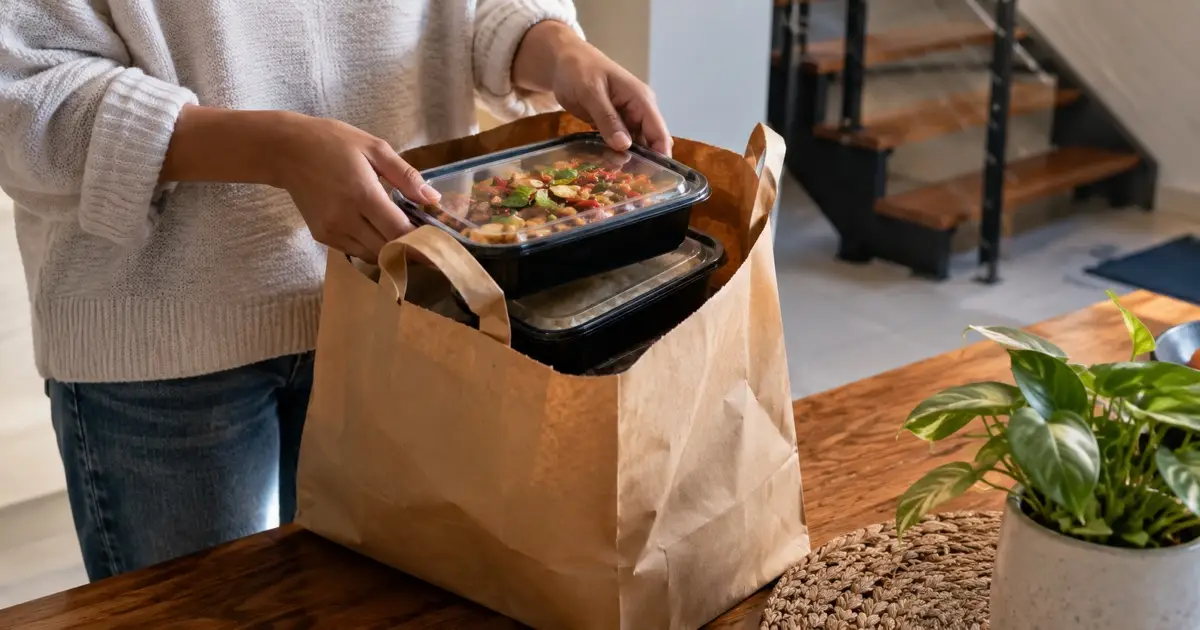
Problem: nobody has agreed where the food will go
Separate three possibilities: delivery to the unit door, meeting at a shared entrance, and handover to another authorised person. Ask which option the provider can support. An accepted order does not necessarily mean a special access request has been accepted.
For a shared entrance, choose a precise landmark such as the main lobby door facing the street. Avoid “out the front” when a building has several sides or businesses. If another person will receive the order, make sure they have agreed and can be contacted at the expected time.
If you cannot reach the suggested meeting point and nobody is available to help, say so before ordering. The next step is to find another workable arrangement, not to hope the issue disappears when the meal arrives. A clear answer early gives you more choices.
Use one reliable contact person
Provide a number that will be answered during the arrival window. Decide who speaks with the provider if someone else placed the order. Passing messages through several people can turn a straightforward access question into conflicting instructions.
Have the order reference available, together with the agreed entrance and recipient. Keep any private building codes within the provider’s appropriate communication channel. Do not place access credentials in public reviews or shared event messages.
Problem: the order note cannot explain everything
Use the note field for a short summary after the arrangement has been confirmed. Lead with the action needed, followed by the entrance and contact details. For example: “Agreed lobby handover at the main street entrance; please call the order contact on arrival.”
If the note is too long, call or use the supported contact method. Ask whether the message will reach the person completing the delivery. Some ordering systems separate kitchen requests from driver instructions, so confirm where the information belongs rather than entering it wherever there is space.
Save the confirmation and review the address displayed on the completed order. An old saved unit number can undo an otherwise careful conversation. Our restaurant planning articles cover other ordering details worth checking before a meal is underway.
For holiday accommodation or a building you are visiting, ask the host how food handovers normally work. Check whether reception will accept an order and whether you need to be present. Treat that information as a starting point, then confirm it with the actual delivery provider. Building custom and the provider’s service may not line up automatically.
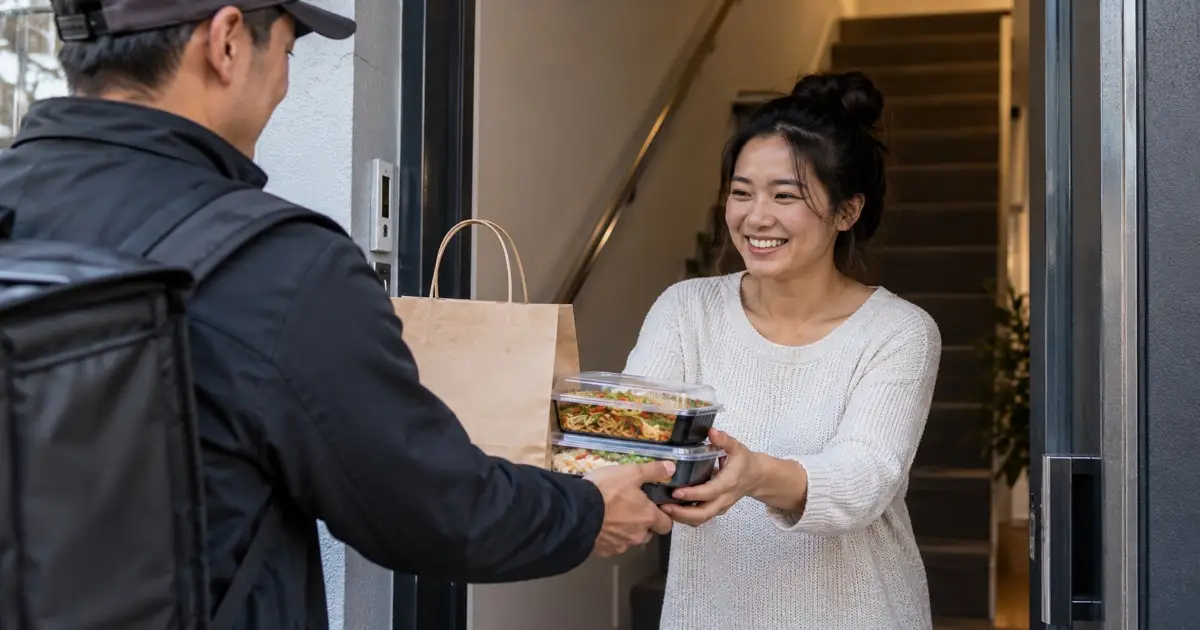
Problem: the arrangement changes near arrival
Contact the provider promptly if a lift stops working, a lobby is locked or the intended recipient becomes unavailable. Explain what changed and ask which options remain possible. Keep the new instruction consistent across everyone involved.
If the arriving person cannot complete the agreed route, pause and clarify the obstacle. Refer to the earlier arrangement calmly. Ask whether another accessible handover point or authorised recipient can resolve it. Do not promise that a neighbour will help unless that person has actually agreed.
When there is no workable solution, ask the relevant provider what happens next and how the order will be handled. Outcomes depend on the service and circumstances. Keep the order details and any messages so that a later enquiry can focus on the facts.
Common mistakes that create avoidable confusion
Calling a difficult route “easy”. Describe the entrance plainly. Minimising an obstacle can leave the provider unprepared and the customer waiting.
Assuming stair access is part of every service. Ask what the provider offers at your address. An arrangement that worked once with a different business is not confirmation for this order.
Changing the recipient without telling them. The person receiving the food needs the time window and order name. Confirm their availability before adding them to the plan.
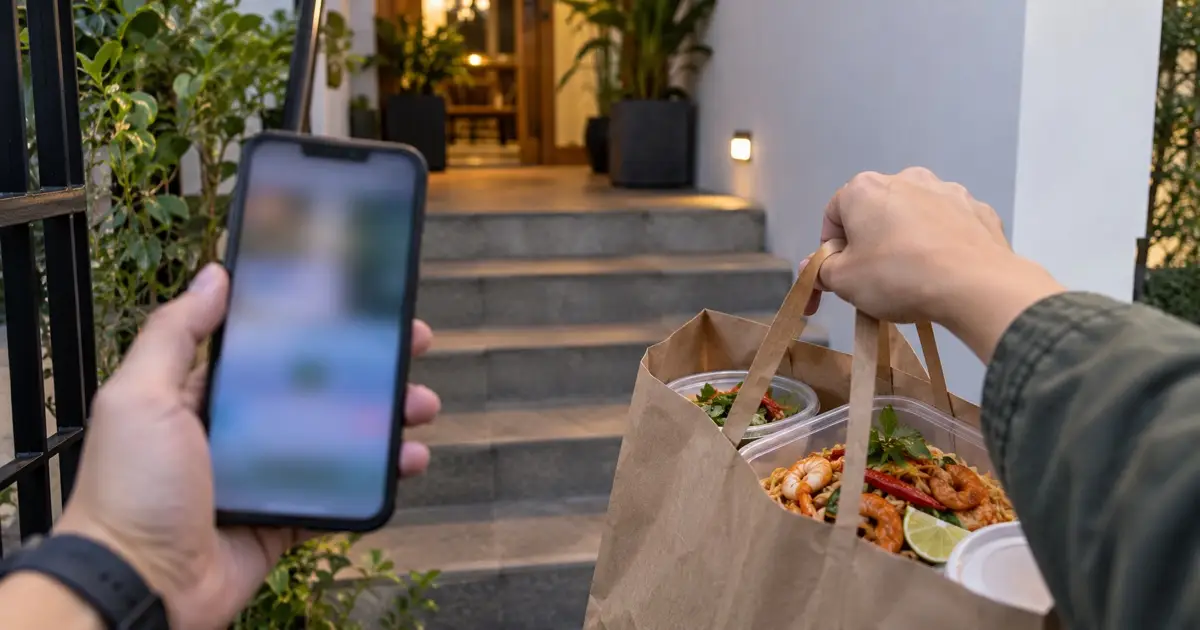
A practical checklist before placing the order
- Delivery to the exact address is currently available through the chosen channel.
- The provider knows about the stairs and has confirmed the handover point.
- The recipient can reach that point or has agreed assistance.
- The order shows the correct unit, entrance and contact number.
- A realistic alternative has been discussed if the arrangement cannot proceed.
Choose a restaurant or ordering service that can answer these questions clearly. Also check that the menu suits your group, rather than solving access first and discovering nobody wants the available dishes. Our guide to a balanced Thai meal can help you plan food preferences separately.
A confirmed handover makes dinner easier
Good food delivery planning connects the address with a practical way to receive the meal. Confirm availability, describe the stairs and agree who meets whom, where and how. A short conversation before ordering can prevent a difficult conversation at the entrance.
Considering Chanya Thai in Albany? Check the official website’s takeaway options or call 08 9800 1901. Ask directly about any current delivery availability and discuss your access needs before placing an order.
Frequently asked questions
Does delivery always include carrying food upstairs?
No universal arrangement should be assumed. Ask the specific provider whether delivery to your unit door is available and explain the access route before ordering.
Do I need to explain why I cannot use stairs?
Describe the practical arrangement you need. You can ask about accessible handover options without sharing personal medical information.
Does Chanya Thai offer food delivery in Albany?
Delivery is not confirmed here. Contact the restaurant to ask about current options, coverage and any access arrangements relevant to your order.