

A plate of chicken and rice can look straightforward until several bowls arrive beside it. Which sauce belongs with the meat? Is the broth part of the meal? Should the rice be treated as a plain side? Khao man gai is a useful introduction to Thai street food because its familiar ingredients invite you to notice small differences.
The easily missed point is that chicken, rice, sauce and broth work together. Understanding the whole serving makes ordering more confident and gives you a better way to describe your preferences. This guide explains how to prepare for that conversation, whether you encounter the dish in Thailand or on a menu elsewhere.
Khao man gai is discussed here as culinary education. Its availability at Chanya Thai is not confirmed. Always check the restaurant’s current menu before planning your meal around a particular dish.
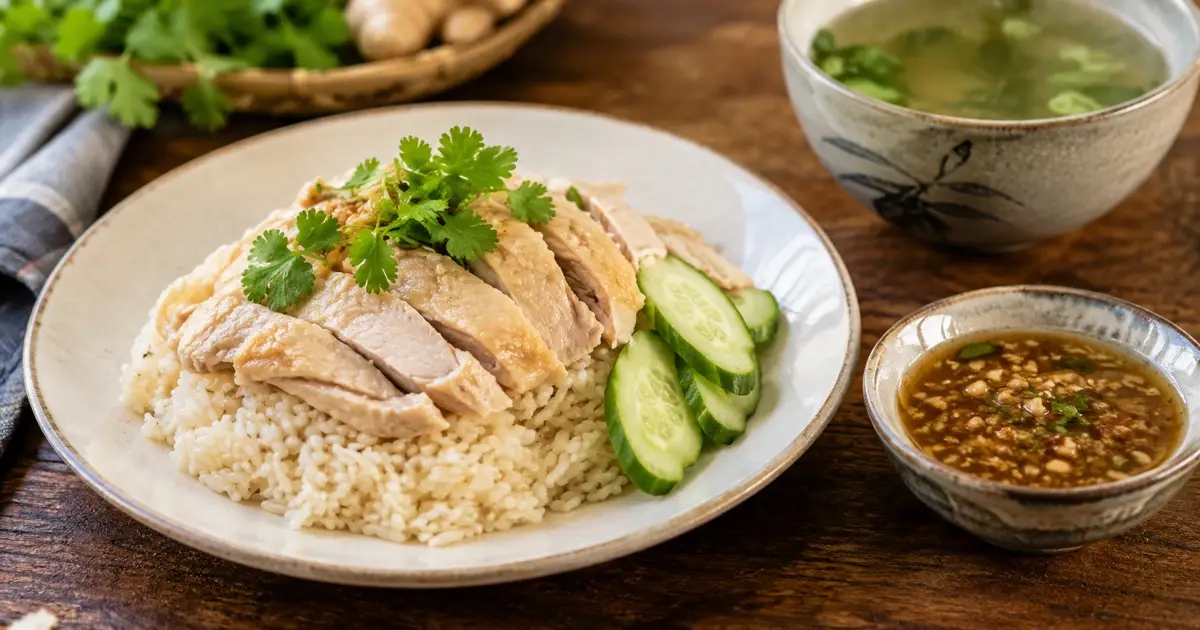
Step 1: recognise this Thai street food dish
Khao man gai is the Thai version of Hainanese chicken rice. In her family recipe and explanation, Thai cook Pailin Chongchitnant describes poached chicken with rice cooked using chicken fat and broth, accompanied by sauce and cucumber. The flavour comes from the preparation of each component rather than a large amount of sauce covering the entire plate.
You may see spellings such as khao mun gai or kao man gai. Look at the description and accompanying picture together, then ask if the wording is unclear. A familiar-looking name should not replace reading what the particular kitchen serves.
Thailand’s Tourism Authority identifies chicken rice among the dishes sold by food stalls. That context helps explain why a complete meal can arrive as a compact plate with small accompaniments. It does not mean every Thai restaurant abroad offers the same dish.
Step 2: ask what chicken is being served
Start with the cooking method stated on the menu. If you are seeking the poached version, confirm that before ordering rather than assuming every chicken rice dish is interchangeable. If more than one version is offered, ask the staff to explain the difference in their own kitchen.
Next ask any practical questions that affect your enjoyment. Is the portion sliced and ready to eat? Are there bones to work around? Can a preference about skin or a cut be accommodated? These are requests to check, not choices every seller can necessarily provide.
For a child or a diner who prefers simpler flavours, explain the actual preference: sliced chicken, rice and sauce separately if possible. “Make it plain” can mean different things to different people. A specific request lets staff tell you what is feasible without changing the dish beyond recognition.
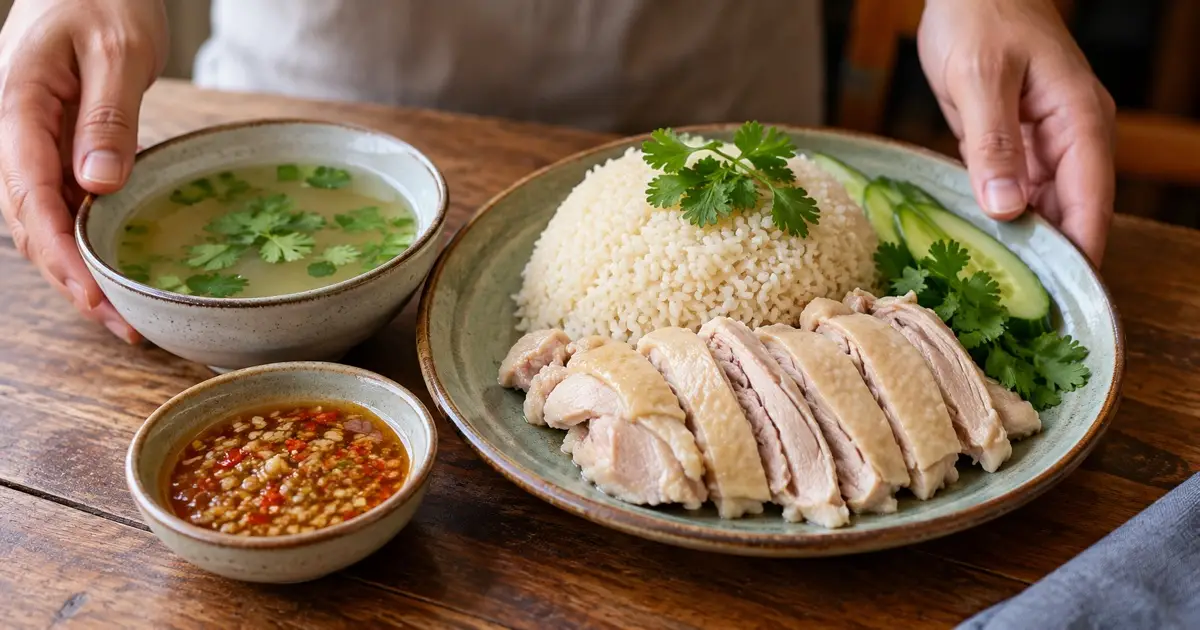
Step 3: pay attention to the rice
The rice is part of the main dish, not an incidental filler. The Tourism Authority’s description of a Bangkok chicken rice specialist highlights aromatic rice cooked with chicken oil alongside chicken and soup. That is a useful reminder to taste the rice before adding a lot of sauce.
If you are comparing menu choices, ask whether the chicken rice is a complete individual meal or whether other sides are required. Avoid automatically ordering extra rice just because you would do so with a shared curry. The serving format may already suit one diner.
When sharing, decide how the rice will be divided before everyone starts. Keep a serving spoon available if the meal is in communal dishes. You can still explore different textures and flavours while making sure each person receives the components they expected.
Step 4: clarify the sauce and broth
A common Thai dipping sauce for this dish includes ginger and fermented soybean paste; chilli can make it quite different from the mild-looking chicken. Recipes vary. Ask about the sauce provided rather than inferring its ingredients from colour.
Pailin’s simplified chicken rice recipe serves sliced chicken and rice with dipping sauce, cucumber and broth. Her preparation shows how the serving can remain recognisable even when the cooking method is adapted. At a restaurant, the menu description and staff explanation should guide your expectations.
For personal preference, try a small amount of sauce with one mouthful before dressing the whole plate. Keep the broth as a separate part of the meal unless you prefer otherwise. There is no need to empty every accompaniment over the rice immediately.
If you have a dietary requirement, describe it clearly before ordering. Ask about the complete dish, including sauce, rice preparation and broth. Removing a visible garnish alone cannot tell you what was used during cooking.
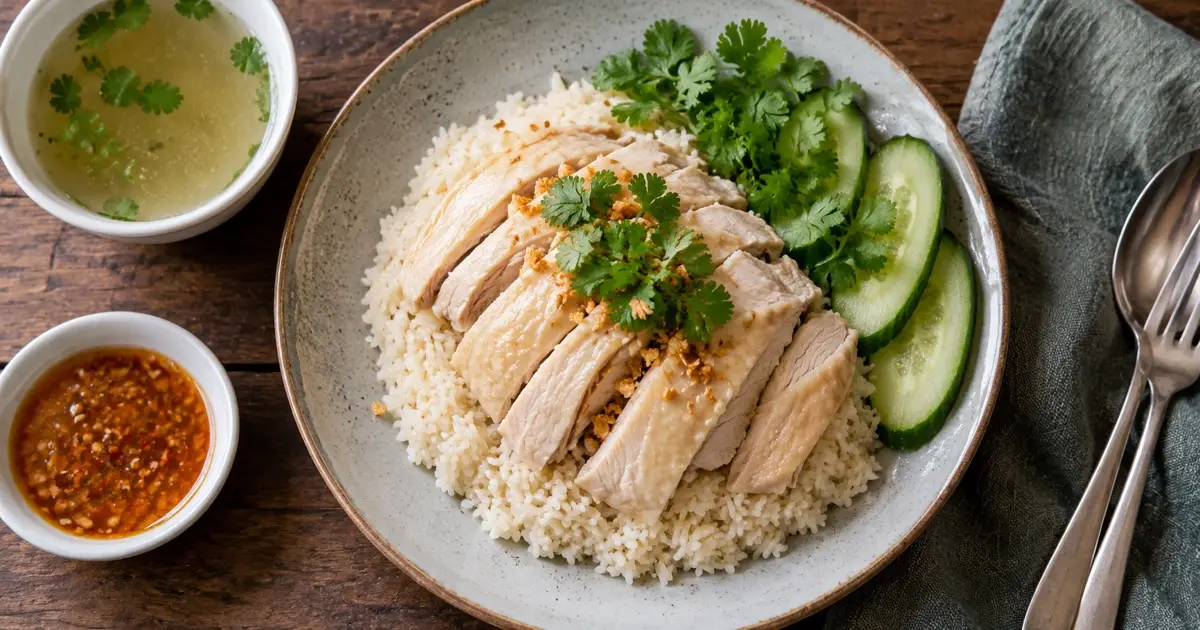
Step 5: match your order to the occasion
Decide whether this will be your individual main or one part of a shared meal. An individual plate needs a different conversation from several communal dishes in the middle of a table. Ask how the meal is presented if that affects your plans.
For takeaway, check which accompaniments are included and whether they come in separate containers. Confirm that the order contains what you discussed before leaving. A simple component check is more useful than discovering at home that you expected broth or sauce which was never part of that serving.
When ordering for someone else, send them the full dish description first. They may recognise chicken rice but have a preference about sauce, skin or presentation that you would not anticipate. Record the answer alongside the exact menu name. That is clearer than passing on a request such as “the usual chicken meal”, especially if this is the person’s first visit. If the kitchen cannot meet a request, discuss an available alternative before the order is prepared.
If your preferred dish is unavailable, choose from the actual menu rather than asking the kitchen to recreate a meal it does not offer. Our guide to choosing varied Thai dishes offers a useful starting point for assembling a different meal.
Ordering mistakes that hide the point of the dish
Judging it only by chilli heat. Give the chicken and rice your attention before deciding a gentle flavour means something is missing. Sauce can be added gradually to suit your preference.
Assuming similar rice dishes are identical. Read the complete name and description. Cooking method, accompaniments and serving style matter more than a shared word such as chicken.
Expecting every Thai menu to include it. Thai street food covers many dishes and specialist vendors. A restaurant’s selection reflects its own kitchen. Check the current offering before promising a particular meal to your group.
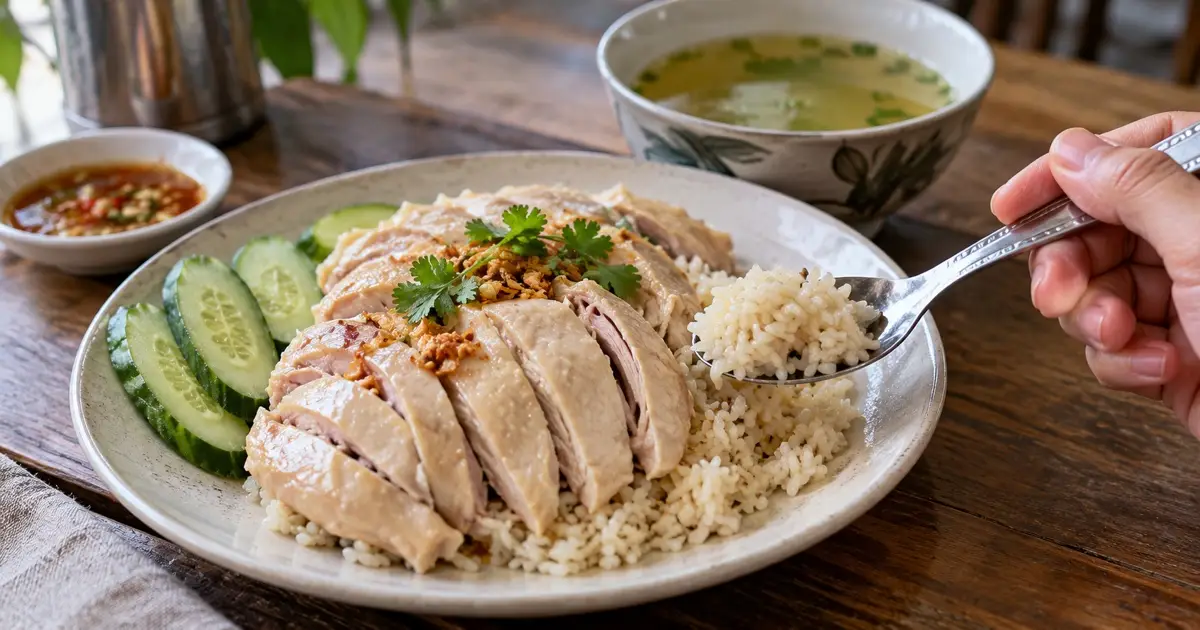
A quick checklist before choosing where to eat
- Confirm the exact dish appears on the current menu and is available.
- Read the cooking method and ask about the serving format.
- Check the sauce, broth and other accompaniments that are included.
- Discuss dietary requirements before the kitchen prepares your meal.
- Choose a restaurant that explains its own food clearly and suits your plans.
For Albany dining, browse Chanya Thai’s food and recipe articles for background, then return to its current menu to make your selection. Educational food writing helps you ask informed questions; availability still needs checking.
Order with a clearer picture of the whole meal
Khao man gai shows how Thai street food can build interest from familiar ingredients. Identify the dish, ask about the chicken and check the rice, sauce and broth. Those steps help you enjoy what the kitchen actually serves.
Planning Thai food in Albany? Explore Chanya Thai’s current menu and ordering options, or call 08 9800 1901 with questions about available dishes. Please check directly if you are looking specifically for khao man gai.
Frequently asked questions
Is khao man gai always spicy?
The chicken and rice may taste gentle, while the dipping sauce can contain chilli. Ask about the version served and request sauce separately if possible.
Is the broth poured over the rice?
It is commonly served alongside. Try the components separately first, then eat them in the combination you enjoy.
Can I order khao man gai from Chanya Thai?
Its availability is not confirmed. Check the current menu or contact the restaurant before planning an order around this dish.