

A meal can look affordable on the menu and cost more than expected by checkout. When searching for cheap Thai food, diners often compare dish prices before considering how the order will reach them. The overlooked difference may be a charge, a different menu variation, or simply an order that includes more food than the household wanted.
This guide troubleshoots a collection-versus-delivery comparison without assuming either method is always cheaper. Availability comes first: Chanya Thai advertises online takeaway, while this article does not verify a delivery service from the restaurant. Compare delivery only if a current service explicitly offers it for your address. The central question is which available method gives you the meal you want at a total cost and effort you are comfortable with.
Problem one: the two totals describe different meals
A low total is hard to interpret if one cart includes rice and another does not. Start by writing the complete intended order: dish names, variations, quantities and extras you actually want. Use the current Chanya Thai menu for the restaurant’s available choices. Then compare the same selection wherever it is genuinely offered.
Check proteins and portion descriptions carefully. A different variation may change the displayed price, while an extra item may explain a larger total without any difference in ordering method. If the menus cannot be matched, acknowledge that you are comparing two different meals. You can still choose between them, but a simple price ranking will not explain the whole decision.
Solution: make one neutral order list
Use a short list before opening several carts. This reduces the temptation to keep adding appealing extras while comparing options. Include rice or other accompaniments if they are part of the meal you want. Remove dishes that nobody requested unless they serve a deliberate purpose, such as providing a different option for another diner.
A useful test is whether you would choose the item without a promotion beside it. If the answer is no, pause before treating it as a saving. Spending more to reach a threshold can be reasonable when the added food is wanted, but it does not automatically make the original meal cheaper.
Problem two: the menu price is mistaken for the final cost
Read the total shown before payment. Where a delivery option exists, check every displayed charge and any conditions attached to a promotion. For collection, review its own final total rather than assuming there are no charges because no driver is involved. Use the information actually shown for the proposed order, date and method.
Do not copy a fee from a previous order or another address. Current availability and pricing may differ. If a promotion requires a particular order value, check what counts towards it and whether any items are excluded. Resolve an unclear charge through the provider or restaurant’s stated contact route before committing to the order.
Solution: compare complete payable amounts
Write down the final amount for each valid option after reviewing its conditions. Include a discount only when it is actually applied or clearly confirmed for your order. Avoid mixing a pre-discount total on one side with an eligible discounted total on the other. That comparison can make a method appear less affordable simply because the figures were captured at different stages.
If one route is unavailable, stop treating it as an active choice. A restaurant may offer collection without a confirmed delivery arrangement for your address. You can compare collection with another real meal option instead. An imagined delivery price cannot help you decide what to order tonight.
Problem three: collecting the food is treated as effortless
Collection may fit naturally when someone is already nearby, but a separate trip has practical demands. Consider the route, who can collect and whether any actual travel or parking cost applies. Use your own circumstances rather than an invented average. A walk past the restaurant and an additional drive are different situations even when the restaurant bill is identical.
Time matters as a personal preference too. One person may welcome a short outing; another may be managing children or finishing work. You do not need to convert every minute into money to acknowledge that difference. The choice should suit the household, rather than use a universal claim that collecting is always the best value.
Solution: choose a collection plan you can actually follow
Check the available collection arrangements before ordering, and assign the trip to someone who has agreed to make it. Keep the confirmation and location accessible. If the planned time is difficult, ask about another available arrangement rather than placing an order around an unrealistic journey. Convenience is useful when it is based on a workable plan.
Where delivery is explicitly offered, read the service details with the same care. Check the address and any relevant access instructions, then use the current information shown about the order. Do not assume that an estimated arrival is a promise or that a generic website reference establishes restaurant delivery availability.
Problem four: a cheap Thai food order includes too much repetition
Sometimes the method is not the main cost issue. The cart may contain several similar dishes because each diner added a favourite without reviewing the whole meal. Discuss what will be shared and what is individual. Keep dietary requirements and strong preferences visible so reducing quantities does not leave someone without a suitable confirmed option.
Consider replacing duplication rather than automatically adding more variety. Our guide to planning a balanced Thai menu selection can help you think about the order as a complete meal. The aim is not to meet an arbitrary number of dishes, but to buy food that the diners want and can use.
Solution: ask about portions instead of guessing
Ask the restaurant about current portions when that affects the decision. Photographs, especially illustrative images, cannot establish how many people a dish will satisfy. Appetite and the rest of the meal matter. Avoid building a budget around a fixed serving claim that the restaurant has not provided for the dishes you selected.
If you intend to keep leftovers, plan according to your household’s established food-handling guidance and available storage rather than ordering extra without a plan. A larger order is not automatically economical simply because the cost per listed item appears lower. Value depends on what is actually wanted and used.
Choose the restaurant, then run the final checks
Useful criteria for an affordable Thai meal include a clear current menu, readable totals, practical collection information and accessible contact details. Consider food preferences and dietary communication alongside price. Explore the Chanya Thai blog for more menu-planning ideas, then verify the actual order through the current restaurant and provider information.
- Both options are genuinely available for the proposed order.
- The dish names, variations and quantities have been matched.
- Final totals include the charges shown at checkout.
- Any discount is current, eligible and clearly applied or confirmed.
- The collection journey or offered delivery arrangement is practical.
- The meal fits the diners rather than an advertising threshold.
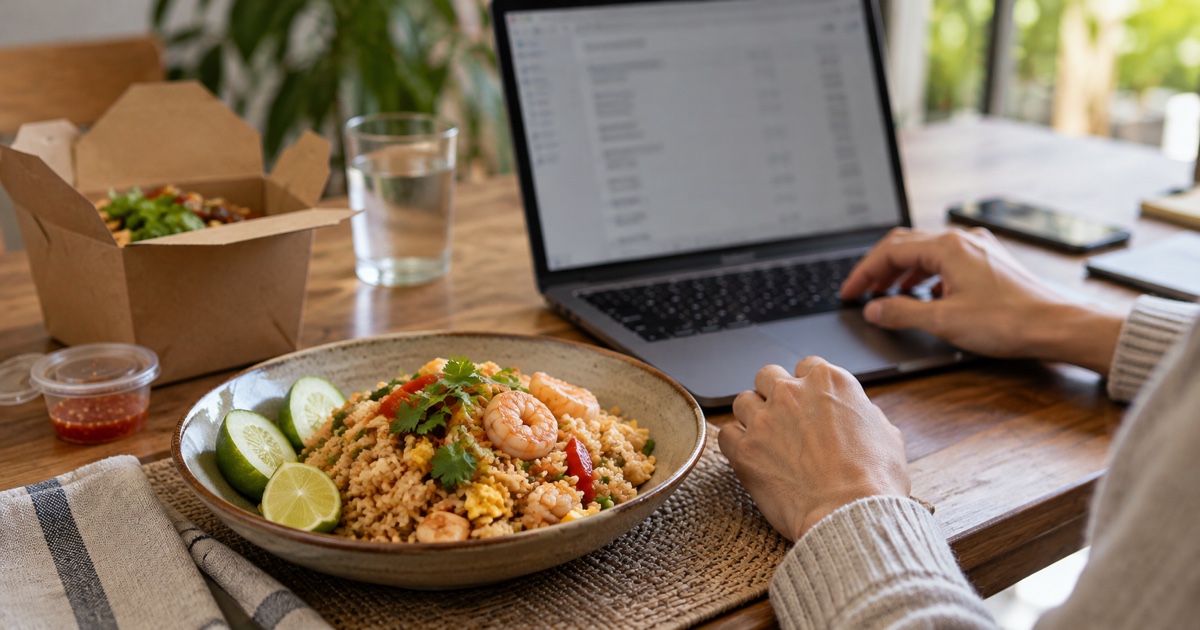
Make affordability a complete-order decision
Choosing cheap Thai food works best when you compare the complete meal and the method actually available. Review quantities, final charges and the practical effort involved. Collection can suit one evening and an explicitly offered delivery option can suit another. The useful result is a clear choice that fits your household’s plans.
For an Albany takeaway, visit the Chanya Thai website for current online ordering options, or call 08 9800 1901 to clarify menu and collection questions before paying.
Frequently asked questions
Is collection always cheaper than delivery?
Compare the final totals for matching meals and consider your own journey. The answer depends on the actual charges, availability and practical circumstances.
Does Chanya Thai deliver?
This guide confirms only the website’s online takeaway offering. Check current restaurant and ordering information directly before relying on delivery.
Should I add food to qualify for a promotion?
Check the conditions and complete total. Add food when it is wanted and useful, rather than assuming a larger order automatically reduces what you spend.