

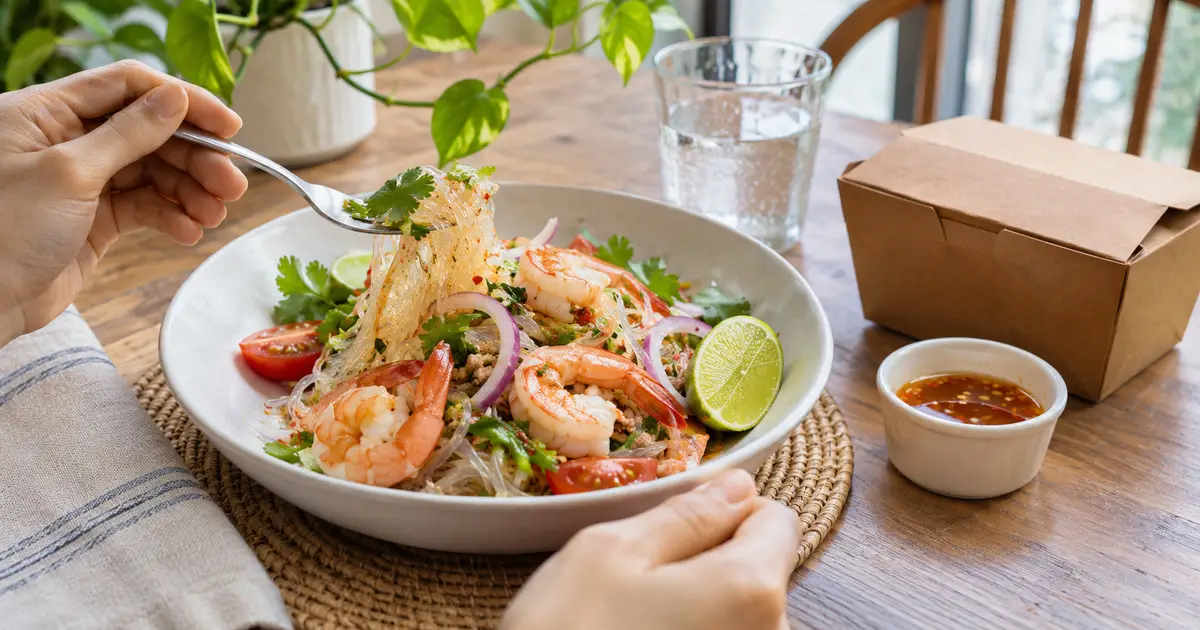
A Thai salad can bring bright flavours and a different texture to a takeaway dinner, but the finished dish depends on more than the main ingredient. Dressing, herbs, crunchy additions and the way you serve it all affect the first mouthful. Those details are easily overlooked when the takeaway order is placed alongside familiar noodles or curry.
The useful approach is to ask clear questions before ordering, then make the home table ready before opening the containers. This guide follows that process from choosing a salad to sharing it. What should you ask about dressing and garnishes, and which serving choices can you make yourself without assuming the restaurant can change every element?
Step one: identify the salad you actually want
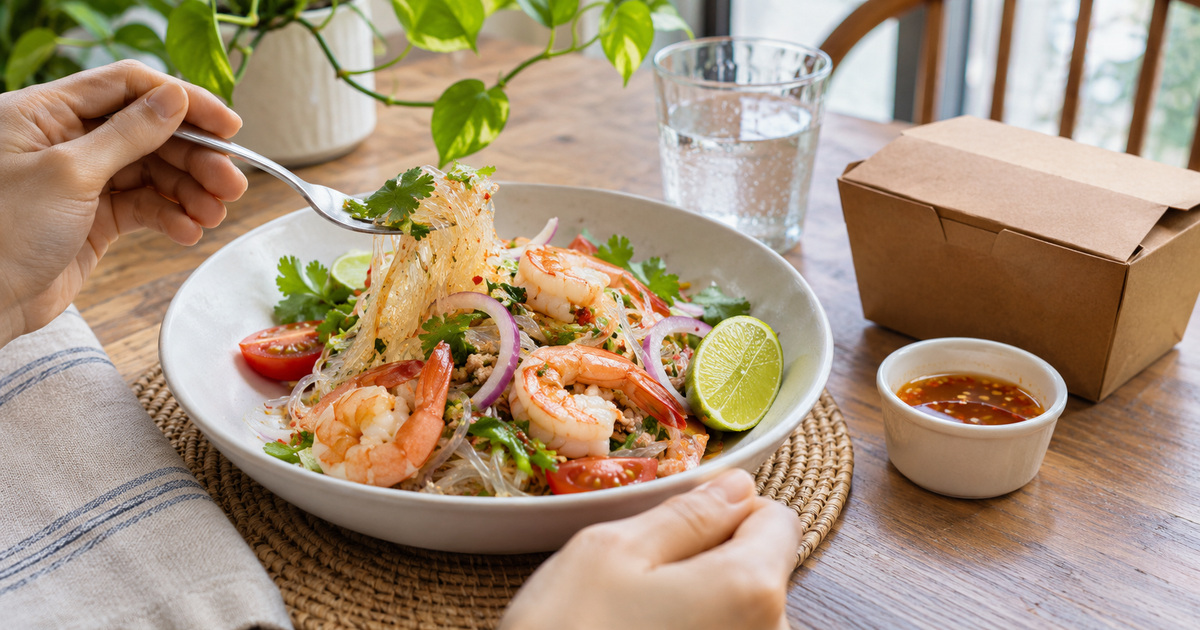
Start with the current menu description rather than treating all Thai salads as interchangeable. Chanya Thai lists a spicy glass noodle salad with prawns, chicken mince, fresh herbs, onion, Thai dressing and roasted peanuts. That is a different starting point from larb, whose listed choices include chicken, crispy chicken, pork belly and duck.
Consider what role the salad will play in the meal. A noodle salad may be one shared dish among several, while another diner may want a particular larb variation for their own plate. Agree which dishes are shared before deciding the quantities. Photographs can show useful serving ideas, but they do not establish the current portion size or exact garnish arrangement.
Read the current Chanya Thai menu and note the full dish name, selected protein and any specific question you need answered. “The glass noodle salad with prawns and chicken mince” gives staff a clearer reference than “the fresh salad”. Confirm availability rather than relying on an old order or a picture saved from another visit.
Step two: ask how the dressing is included
Salad dressing can already be mixed through the dish, added near serving, or packed separately when that arrangement is available. Ask how the selected salad is normally prepared. If separate dressing matters to your plan, ask whether it is possible for that particular order and wait for a clear answer.
Explain the practical reason for the request. Perhaps two people prefer different amounts, or the salad will be served after the other dishes have been plated. Staff can then tell you what can reasonably be changed. A note entered with an order is a request, rather than evidence that a preparation change has been accepted.
Keep ingredient questions separate from a texture preference. Asking for dressing on the side does not establish that the remaining food suits a dietary requirement. Sauces, seasonings or other components may already be part of preparation. Discuss relevant ingredients directly with the restaurant before deciding whether a dish is appropriate; do not use the appearance of a clear dressing as an ingredient guide.
Step three: clarify garnishes and accompaniments
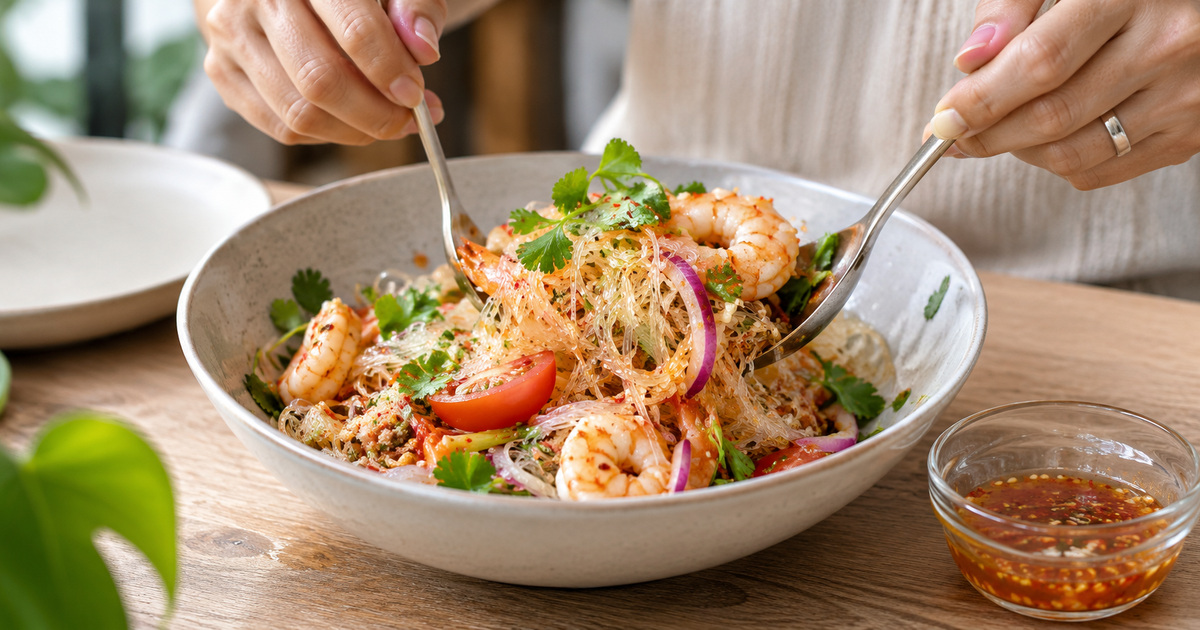
Garnishes can be part of the eating experience rather than optional decoration. Herbs contribute aroma, onion adds a different bite, and roasted peanuts appear in the listed glass noodle salad. Ask what comes with the chosen dish and whether any particular component can be packed separately if that is useful to the table.
Avoid making a general request such as “leave off everything on top”. It can remove features you actually wanted while failing to identify the ingredient that concerned you. Name the specific component and confirm what the restaurant can do. If the answer is uncertain, choose another suitable dish rather than trying to redesign the salad after collection.
For a shared meal, ask the group about ordinary preferences before placing the order. Someone who likes a more generous herb garnish can add a confirmed separately supplied component to their own portion. Another person may prefer a simpler plate. Keep any ingredient-related requirement explicit; separating garnishes at home is not a substitute for confirming preparation beforehand.
Step four: prepare the home table before unpacking
Make enough space for the salad, serving utensils and individual plates before the food arrives home. Choose a serving bowl that lets diners lift the contents comfortably without pushing everything over the edge. You may prefer to serve directly from a suitable takeaway container; the important point is stable, manageable access to the food.
Set aside a clean spoon or tongs for the salad rather than borrowing a utensil already used in curry. This keeps contrasting sauces from becoming mixed unintentionally. Where a specific dietary arrangement has been confirmed, follow the agreed separation rather than passing utensils around casually.
Plan the sequence with the other dishes. A shared plate of noodles, a salad and several rice portions can crowd a small table quickly. Put the items people need within reach and keep packaging out of the main serving area. Our guide to serving shared takeaway on separate plates offers more ideas for a table with different appetites.
Step five: taste before adding anything extra
If dressing is already mixed through the salad, begin with the dish as supplied. Taste a balanced mouthful containing more than one ingredient before deciding it needs another sauce. A forkful consisting only of noodles or only of onion gives a narrower impression than the complete combination.
Where dressing has been separately supplied, follow any guidance given by the restaurant. Add a modest amount, distribute it gently and taste before adding more. Keep the remaining dressing identifiable, especially if several takeaway containers and dipping sauces are on the table. Matching lids or similar colours can make hurried guesses unreliable.
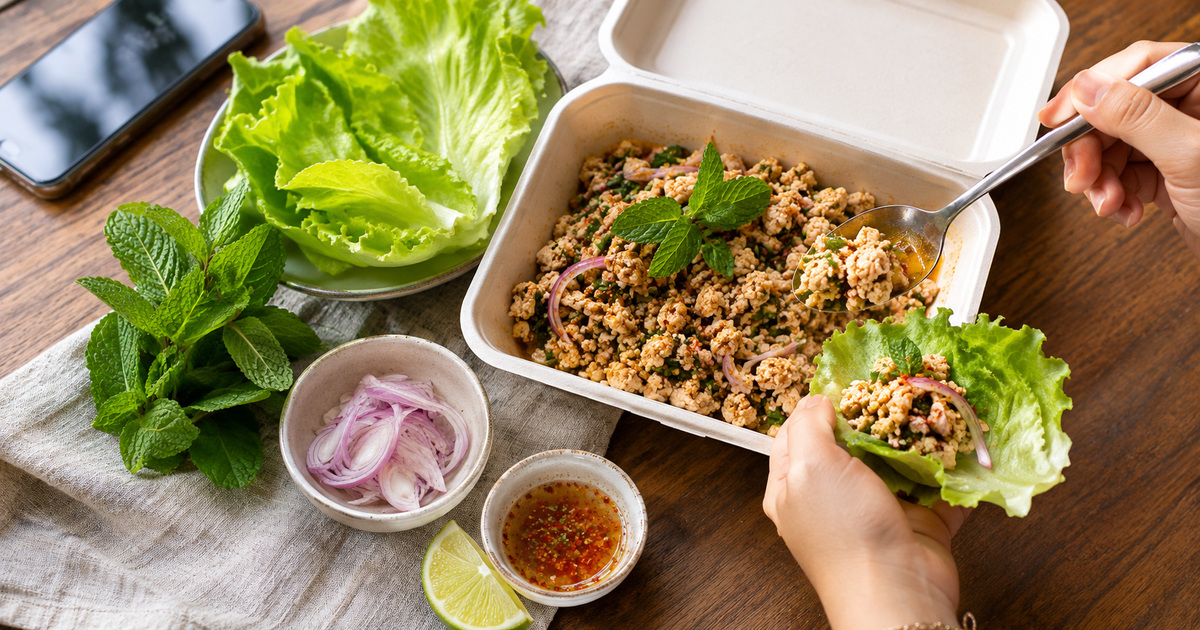
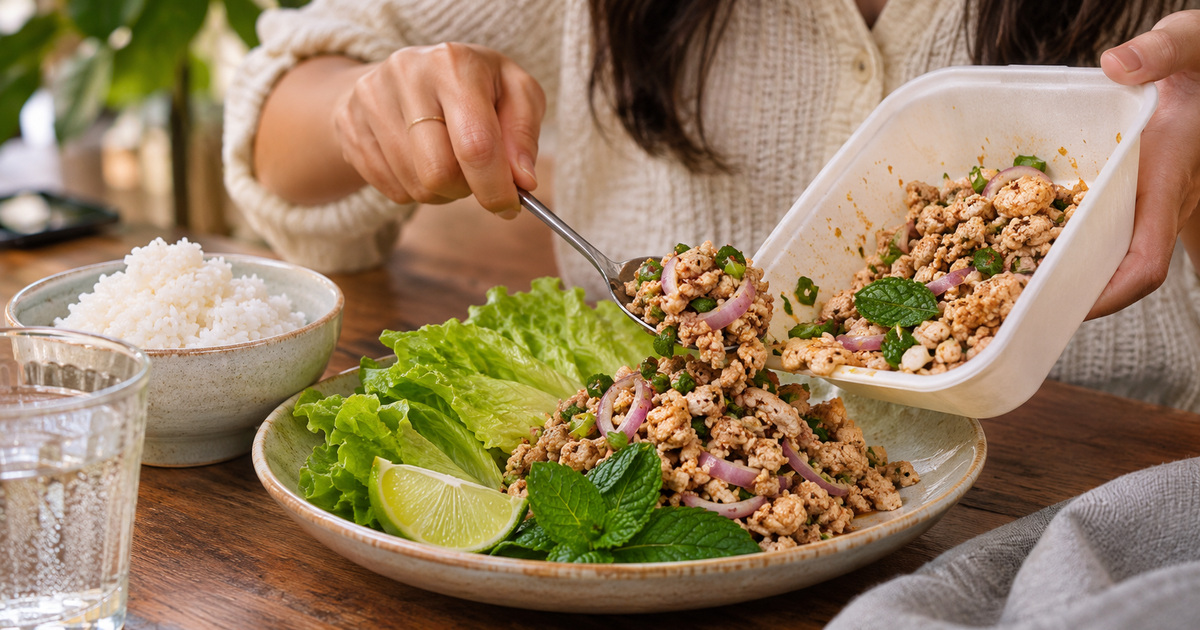
Chicken larb and glass noodle salad also behave differently when served. Lift manageable portions rather than repeatedly stirring the whole dish while everyone waits. Use the serving utensil to share a reasonable mix of ingredients. The goal is to preserve the dish’s contrasts while allowing each diner to choose how much they want.
Step six: resolve a mismatch with a specific question
Check the supplied order against the confirmed dish and requests before distributing everything. If you expected a separately packed component and cannot find it, check the containers first, then contact the restaurant with the order details. State what was agreed and what appears to be missing.
Do not add an unrelated sauce simply because it was included with another dish. Ask what the component is intended for if you are uncertain. A calm, precise description gives staff a practical issue to check. The guide to resolving a takeaway problem clearly explains how to keep that conversation useful.
Use a short salad checklist when choosing your meal
- Check the exact salad name and selected variation.
- Ask how dressing is normally included.
- Confirm whether a separate component request can be accepted.
- Discuss ingredient requirements directly before ordering.
- Prepare plates and dedicated serving utensils at home.
- Taste the intended combination before changing the seasoning.
Choose a restaurant that explains the menu and can give a clear answer about your request. A useful answer may include a limitation. Knowing what cannot be changed helps you select a better-fitting dish and keeps the meal focused on food you can confidently order.
Enjoy the salad as part of a well-planned meal
Good Thai takeaway planning starts with the dish description and ends with a table that is ready to share it. Clear dressing and garnish questions prevent avoidable assumptions, while gentle serving helps everyone enjoy the contrasting ingredients.
For your next Albany takeaway meal, review Chanya Thai’s current salads and call 08 9800 1901 with any preparation questions before ordering. Confirm the answer, choose your dishes and prepare the table around the meal you have actually arranged.
Frequently asked questions
Can I always get salad dressing separately?
No arrangement is guaranteed here. Ask about the selected dish before ordering and confirm whether the restaurant can accept the request.
Are all Thai salads vegetarian?
No. The listed glass noodle salad includes prawns and chicken mince. Check the full ingredients and preparation directly for any dietary requirement.
Should I remove every garnish before sharing?
Not automatically. Identify the specific preference or requirement first. Herbs, onion and other additions may be part of the intended flavour and texture.
Can I use another dish’s dipping sauce on the salad?
Check what each sauce is for rather than guessing. Taste the salad as intended before adding an unrelated accompaniment that may change its balance.