

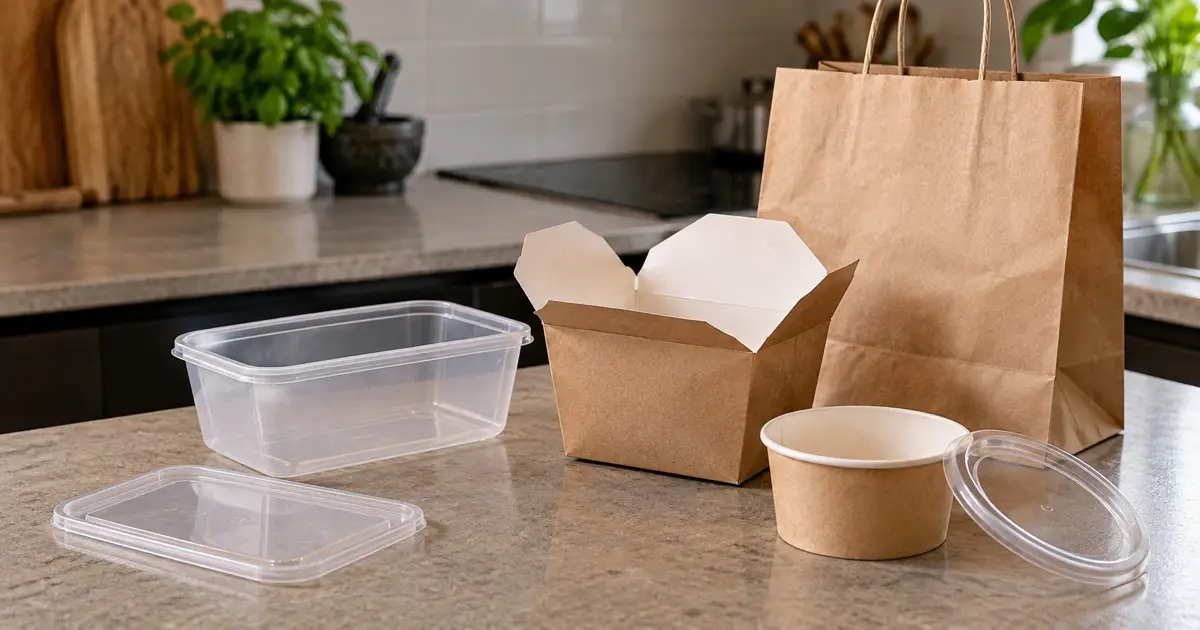
Dinner is finished, and the takeaway food containers are stacked beside the sink. One looks like ordinary plastic, another feels like cardboard, and a small sauce lid has a symbol underneath. Putting everything into the recycling bin is tempting, but the materials and local collection rules may not match that assumption.
The overlooked step is checking each part separately. A tub, lid, bag and liner can require different decisions even when they arrived together. A simple sorting routine helps you deal with the packaging confidently without turning the end of dinner into a research project. What should Albany households check first?
Which recycling rules apply to takeaway food containers in Albany?
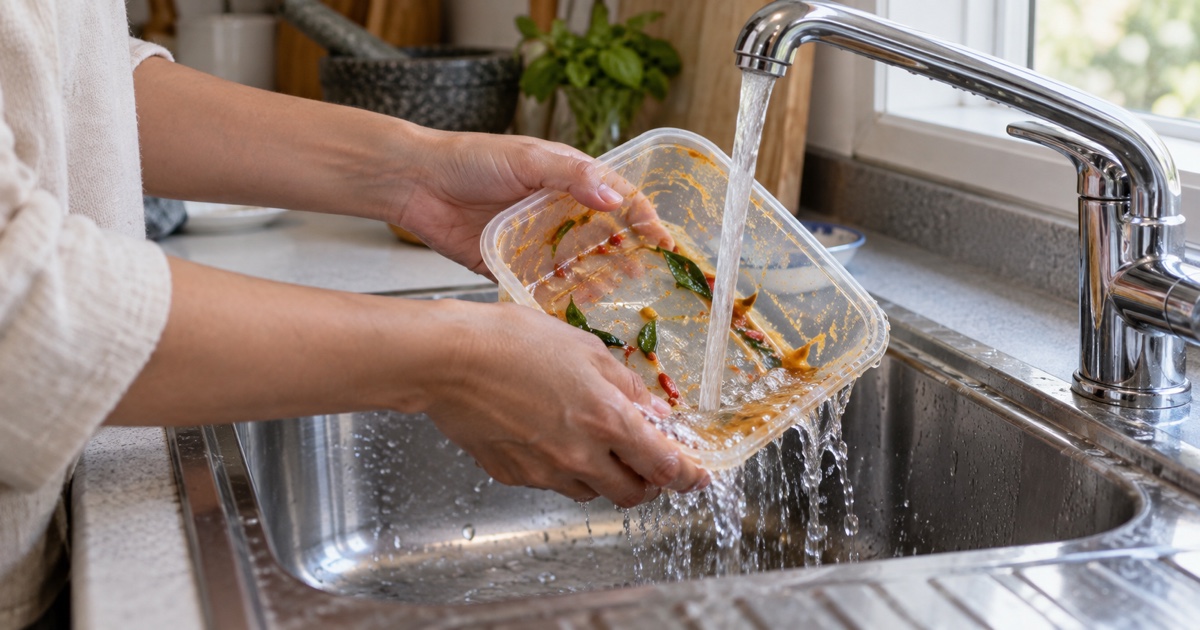
Start with the City of Albany’s current waste guide. It lists paper, flattened cardboard, plastic containers and bottles, glass jars and bottles, and aluminium and steel cans for the recycling bin. Containers should be rinsed, lids removed and items placed loose rather than in bags. Soft plastics and dirty containers are excluded.
That gives you a local starting point, not a reason to identify every object as one of those categories. If a container’s material or construction is unclear, look up the particular item. Avoid relying on advice remembered from another city or a previous holiday.
For accommodation, a workplace or a shared building, ask which collection arrangement serves the bins you are using. The host or building manager can explain the setup. You can then consult the relevant guidance instead of sorting according to the bins at your own home.
What exactly am I trying to identify?
Place the empty packaging where you can see its separate parts. Start with the main container, then its lid, any small sauce pot, the carry bag and loose extras. Resist the urge to decide about the whole stack in one movement.
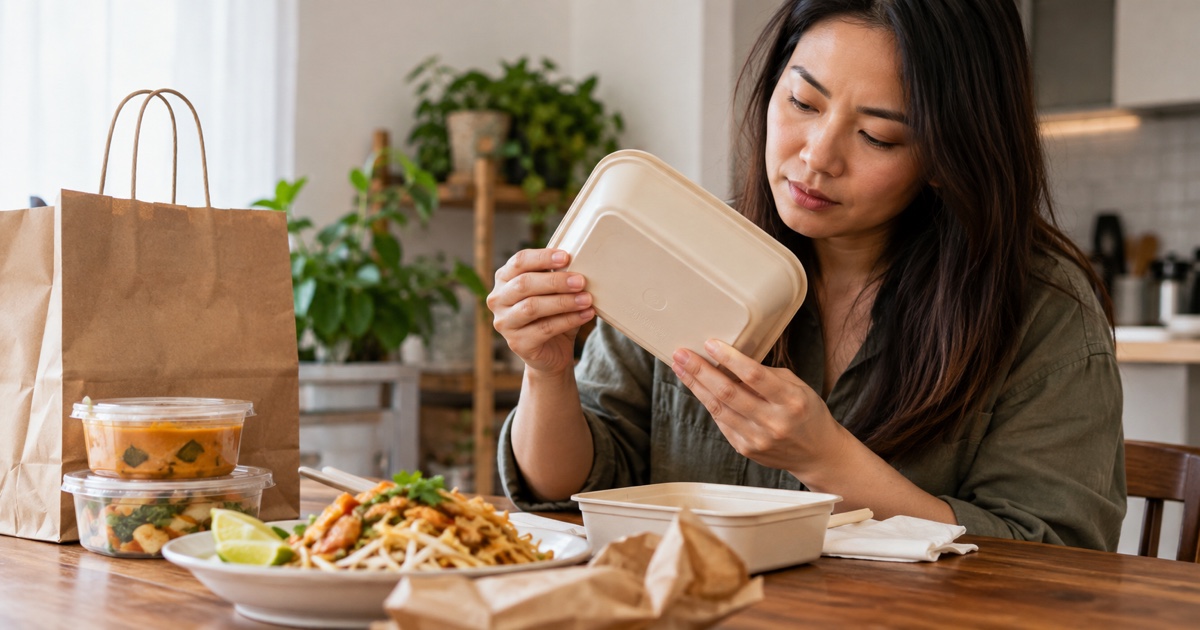
Look for a material description or disposal instruction on each component. A brown surface does not tell you everything about a container’s construction, and a clear lid does not necessarily share the material of the base. If you cannot tell, take a photograph of the item and any markings for a later enquiry.
Use precise search terms in Recycle Right’s Materials A–Z. “Plastic takeaway container” is a better starting description than “dinner rubbish”. Add details about a coating, attached film or other feature if present. The aim is to match the actual item to current guidance rather than find a general answer that sounds encouraging.
How can I make sorting a quick routine?
Begin by deciding what is still food and what is packaging. Keep any food you intend to save separate from the disposal task. Then clear one small space for empty items so that discarded sauce and clean packaging do not immediately become mixed again.
Work through the components in the same sequence each time. Identify the material, check the current instruction and place the item with the appropriate group. Save unfamiliar pieces for a specific lookup rather than repeatedly interrupting yourself to investigate everything at once.
Recycle Right’s three-bin FOGO guidance says recycling should be clean, dry and empty, with lids removed and items loose. Use its material guidance alongside Albany’s instructions when checking a particular package.
For a shared household, choose one place for unresolved items and agree who will check them. That is easier than several people making different guesses about the same lid. Once the question is resolved, share the answer and source so the next person knows what to do.
Does a symbol under the container settle the question?
Read the full wording and check whether it refers to the base, lid or complete package. Then compare it with the local collection guide. The useful question is whether this component is accepted in the system you are using, not simply whether it carries a familiar symbol.
If you contact the council about an uncertain item, describe its size, material information and any attached parts. A photograph can make the enquiry clearer than a vague reference to a plastic box. Keep the actual item available until you have the information needed to make a decision.
Do not infer an answer for every other piece in the order. One confirmed container does not establish the right destination for the sauce pot, flexible wrap or cutlery. Record the specific component that was checked.
What if the packaging says compostable?
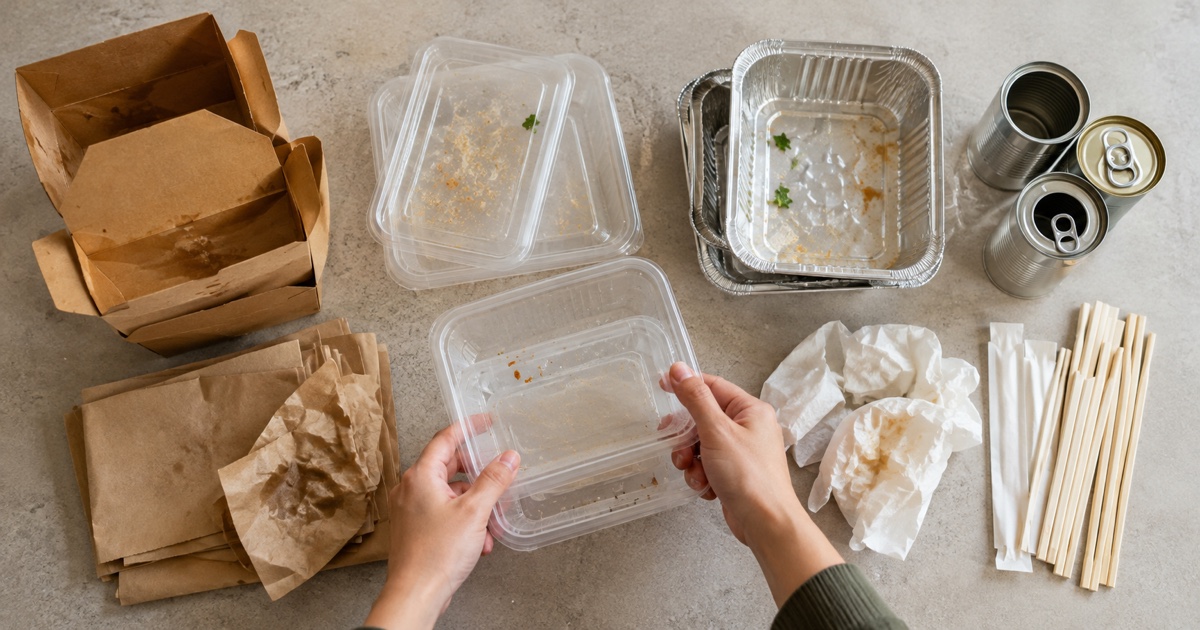
Check the current council instruction for that exact item. A label alone should not be treated as permission to put all takeaway packaging into FOGO. Albany’s guide specifically says food packaging must be removed from food waste and placed in the correct bin. Ask the council if the particular material remains unclear.
For mixed or coated packaging, describe what you actually have rather than deciding from its appearance. Keep any manufacturer information with the enquiry. This is especially useful when an outer package and an inner lining appear to be different materials.
If two pieces of guidance seem inconsistent, return to the collection authority responsible for your address. Explain the specific item and the advice you have found. A direct clarification is more useful than choosing whichever answer lets the most material into recycling.
How does this work after a shared takeaway meal?
At a games night or family gathering, set aside a clear spot for empty packaging before dinner starts. Ask guests to leave unfamiliar items there rather than placing them in whichever bin is nearest. The host can sort using the household’s actual collection guidance.
Keep the process manageable. One person can gather packaging while another clears plates. If several dishes came in similar containers, you may need to inspect only the unfamiliar component rather than repeatedly looking up an identical item already confirmed.
Planning the right amount of food also makes the evening easier. Our guide to choosing a varied Thai meal helps you think through the order, while the sorting routine deals with the packaging afterwards. Keep those decisions connected to what your group will actually eat.
Which mistakes are easiest to avoid?
Making one decision for the entire takeaway bag. Empty it and assess the components. A convenient carry bag should not hide a mixture of unresolved items.
Using an old answer indefinitely. Keep the source link, and check it again when the packaging or local guidance changes. An answer about a previous container may not describe the one in front of you.
Guessing from colour or texture. Inspect the material information and look up uncertain construction details. If the information is missing, ask a specific question rather than filling the gap with an assumption.
What should I ask before choosing takeaway?
- Does the current menu suit the people sharing the meal?
- Can I request fewer unnecessary extras when placing the order?
- Can the restaurant clarify the material of an unfamiliar container?
- Do I know which collection guidance applies where the meal will be eaten?
- Is there a simple place to sort packaging after dinner?
Choose a restaurant for its food, clear information and practical ordering arrangements. Ask about current packaging directly if it matters to you. This article does not claim particular containers are always used by Chanya Thai. Find more meal planning ideas in the restaurant’s blog.
Finish takeaway food with a clear sorting habit
Sorting takeaway food packaging starts with the actual item and the current local guide. Separate the components, follow confirmed instructions and check anything unfamiliar. A repeatable routine makes the task easier after the next meal.
Planning Thai takeaway in Albany? Explore Chanya Thai’s menu and online takeaway options, or call 08 9800 1901 with questions about your order and current packaging.
Frequently asked questions
Can every plastic takeaway container be recycled?
Do not assume so. Identify the particular item and check Albany’s current guidance or the relevant Recycle Right material entry.
Should I put recycling into a takeaway bag first?
Albany’s guidance says recycling should be loose, not bagged. Assess the bag separately from its contents.
Where can I check an unfamiliar package?
Start with the council’s waste guide and Recycle Right. If the item remains unclear, ask the council with a photograph and the material information.